
|
Getting your Trinity Audio player ready...
|
Photo Source: Sahara Reports
On August 7, 2026, the National Agency for the Prohibition of Trafficking in Persons launched the Sexual and Gender-Based Violence Media Corps in Abuja, disclosing that at least 21 per cent of Nigerian women aged 15 to 49 have experienced physical or sexual violence. Adding that 58 per cent of survivors never seek help or report their experiences.
The initiative, developed in collaboration with the International Institute for Democracy and Electoral Assistance and supported by the European Union, aims to equip journalists with the skills to report sexual and gender-based violence ethically and without further traumatising survivors.
The Media Corps was launched during a two-day capacity-building workshop for journalists covering SGBV, with reporters from the Federal Capital Territory and Kaduna State participating. The initiative is designed to address harmful media practices including victim blaming, sensationalism, breaches of survivor privacy, and the use of language and images that expose or further traumatise survivors.
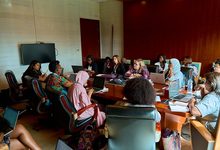

NAPTIP Head of Press and Public Relations, Vincent Adekoye, stated at the opening of the workshop that the media has a critical role in creating awareness, promoting accountability, and ensuring that survivors are not subjected to further victimisation through insensitive reporting.
He disclosed that NAPTIP has secured three life imprisonment convictions in SGBV-related cases, and warned that technology-facilitated abuse is creating new challenges in the fight against gender-based violence. He also disclosed that 34 states have domesticated the Violence Against Persons Prohibition Act, with Kogi and Delta states remaining the only states yet to do so.
Wynyfred Achu-Egbuson, Civil Society and Community Mobilisation Specialist at International IDEA, stated that the Media Corps was established to equip journalists with the knowledge and skills to report SGBV responsibly while supporting the implementation of laws and policies designed to protect survivors.
She added that the programme would strengthen institutions, improve coordination among stakeholders, and support the enforcement of the VAPP Act across Nigeria.
One of the workshop facilitators, Toyin Adewale-Gabriel, stated that the 21 per cent prevalence figure demonstrated the scale of violence against women in Nigeria and the urgent need for sustained media attention.
She stated that the 58 per cent of survivors who do not seek help or report their experiences further underscores the importance of responsible journalism that can build public trust and encourage survivors to come forward.
Another facilitator, Dr Tim Aniebonam, urged journalists to avoid reinforcing harmful gender stereotypes, advising reporters against treating SGBV as one-off news events and urging them to follow cases until justice is delivered. Dr Lauratu Abdulsalam warned that headlines, language, visuals, and story angles could either protect survivors or deepen their trauma.