|
Getting your Trinity Audio player ready...
|
A woman is accused of killing her three children during what her defence says was a severe psychiatric crisis, and because of that, the jury cannot reach a unanimous verdict. And somehow, thousands of miles away, men have decided the real lesson is that women should not have rights.
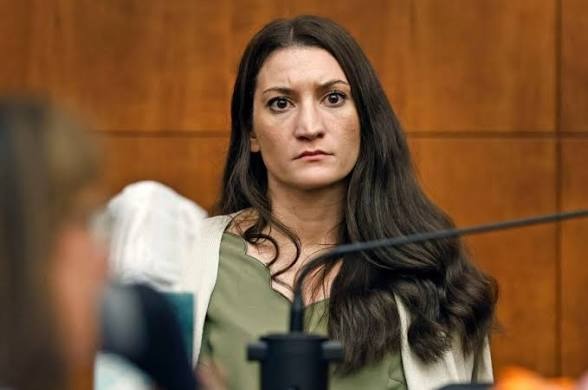
Lindsay Clancy, a former labour and delivery nurse in Massachusetts, was charged with killing her five-year-old daughter Cora, three-year-old son Dawson, and eight-month-old son Callan in January 2023, before attempting to take her own life. Her defence argued that she was suffering from severe postpartum psychosis and was not criminally responsible for what she did. Prosecutors argued that she understood her actions and had deliberately killed her children.
After nearly six weeks of testimony, the jury could not agree on a unanimous verdict. On Sept 4, after seven days of deliberation, the judge declared a mistrial when the jury remained deadlocked 11–1. Therefore, no verdict was reached on whether Lindsay Clancy was criminally responsible, and prosecutors can still seek a retrial. The entire case is horrific, and conversation is uncomfortable enough on its own. Postpartum psychosis is rare, severe and capable of producing hallucinations, delusions, mania and confusion. It is also treatable, which makes the question of how women experiencing it are identified and cared for a serious one. But another reaction to the case had remarkably little to do with maternal healthcare. For men online, Lindsay Clancy became evidence.
What is postpartum psychosis and what misogynistic evidence did men draw from it?


Postpartum psychosis is not an ordinary postnatal distress. The Royal College of Psychiatrists describes it as a severe psychiatric illness and medical emergency usually beginning in the first days or weeks after childbirth. It can involve mania, confusion, hallucinations and delusions and affects roughly one in every 1,000 women who give birth. That conversation is worth having, but another conversation is happening alongside it, and it has very little interest in mental healthcare.
For some men, the psychosis is not evidence that postpartum mental illness deserves more attention or that the healthcare system should examine how a woman who had repeatedly sought help ended up in such a devastating psychiatric crisis. Not even evidence, in their view, that one particular woman should face criminal consequences for what she did. “Repeal the 19th” began circulating in response to the case and to the women supporting Lindsay Clancy, referencing the 19th Amendment, which gave American women the constitutional right to vote.
Why men clamour for “Repeal the 19th?” and the irrationality within
Women have gathered outside the courthouse wearing pink. Some have spoken about their own experiences with postpartum depression, anxiety and other forms of maternal mental illness, while others have simply wanted the public to take postpartum psychosis seriously. The Atlantic reported that hundreds of women were drawn to the courthouse, many of them seeing some version of their own experiences in the story.
That does not mean these women think killing children is okay; it means they are asking a question about what happens when a woman becomes seriously mentally ill after childbirth and the people and institutions around her fail to recognise just how dangerous the situation has become.
However, for some men online, the problem is not simply that Lindsay Clancy may have killed her children. The problem is that women have responded to her with empathy, and generally just Women. And from there, the entire case is remarkably quickly reframed as a women’s rights case.
Kaitlin Bennett’s response to the entire case was blunt:
“Repeal the 19th Amendment.”
Myron Gaines posted the same demand. Evan Kilgore went further, tweeting
“Women shouldn’t vote. Women shouldn’t be judges. Women shouldn’t be politicians. Women shouldn’t be jurors. Women shouldn’t be cops”
Jordan Rachel said the trial had made her not want to “talk about a female president ever again.” Sean Strickland, the UFC fighter, was even more explicit with his reaction. Reacting to women in pink supporting Clancy, he wrote that their being allowed to vote was “insanity” and called for the repeal of the 19th Amendment.
The 19th Amendment, of course, is the constitutional amendment ratified in 1920 that prohibits the denial of the right to vote on the basis of sex. So men have gone from a woman allegedly killing her children while her mental state is being contested in court to whether women should be allowed to vote.
Because nobody has established that Lindsay Clancy’s case tells us anything about the political judgement of women as a sex. The jury is not deciding whether women are fit to vote; it is deciding a specific legal question about one defendant: whether she possessed the mental capacity required for criminal responsibility when she killed her children.
Yet the reaction has moved from the individual to the collective: “Lindsay Clancy is mentally ill; therefore women are unstable.”
Sexism and misogynistic contradiction of womanhood
The conclusion keeps getting larger while the evidence remains one woman, and this is where the language of biology becomes particularly revealing. The argument is not even that postpartum psychosis exists. Of course it exists; it is a documented psychiatric condition, and the biological and psychiatric realities surrounding childbirth deserve serious attention. The argument is that because women can experience something associated with childbirth, female biology itself becomes evidence against women’s capacity. But women have spent centuries being told that biology proves precisely the opposite.
We are told our bodies are designed for motherhood, our hormones make us nurturing, and our maternal instincts supposedly make us natural caregivers. The capacity to carry pregnancies is routinely treated as evidence that raising children is their most natural role. Women are expected to organise their lives around children, to sacrifice for them, to care for them and to absorb enormous amounts of unpaid domestic and emotional labour because apparently this is what women are biologically built to do.
Yet when women are discussed as voters, judges, executives, or presidents, the same biology suddenly becomes suspect. Now female vulnerability is apparently evidence that women cannot be trusted with responsibility. If female biology is going to be treated as a collective argument against women’s rights, then why is female biology not also an argument against the supposedly “natural” female role that requires women to be responsible for children?
If women are biologically too unstable to vote, why are they biologically stable enough to raise children? If a psychiatric vulnerability associated with childbirth can supposedly disqualify women from political authority and having rights, why does childbirth itself continue to be presented as evidence that women are naturally suited to caregiving?
Well, the answer, of course, is that “biology” is being used selectively. When women are being told what they are “ for,” biology is destiny, but when women are asking for power, autonomy or equality, biology becomes a limitation.
And there is an even more glaring problem with turning Lindsay Clancy’s psychiatric condition into a statement about women generally; men are not treated this way.
Men commit homicide at a higher rate, yet their human rights are not debated or repealed
According to UNODC, men made up roughly 90 per cent of people brought into formal contact with police for intentional homicide in 2021. Men are also overwhelmingly represented among homicide victims. Nobody responds to male homicide or violence by arguing that men, as a sex, should lose their rights to vote.
Nobody looks at a man who murders his children and concludes that perhaps male biology makes fathers inherently unfit to exercise parental responsibility, or even says a male perpetrator of horrific violence should not be judges, politicians, police officers or presidents because their sex appears disproportionately represented among violent offenders.
Male violence is generally allowed to remain attached to the individual man who committed it; meanwhile, it’s the complete opposite for women. One woman commits an atrocity, and suddenly the entire sex is being asked to answer for it.
Why women are angry, and you should be
Misogyny has always had a way of turning individual women into collective warnings. A woman commits a horrific act, and suddenly she is not simply a woman who did something horrific; she becomes a lesson and cautionary tale about all women.
Men commit the overwhelming majority of violent crimes, including homicide and sexual violence, yet male violence is understood as something committed by particular men. We do not respond to a violent man by asking whether men as a sex should lose political rights because male biology makes them inherently dangerous. We do not look at a man who murders his family and conclude that perhaps men are simply too biologically unstable to be trusted with authority. The individual remains an individual.
This is why the “repeal the 19th” reaction is more revealing than it is shocking. The people making these arguments are not really investigating Lindsay Clancy’s criminal responsibility. They are reaching for an old sexist political conclusion. Eric Conn made a post saying
“Women were not designed to rule. Not in the home, church, workforce, or politics. Not anywhere.”
At this point, it is agreeable to note that postpartum psychosis is almost beside the point. The case has simply provided another occasion to fantasise about female subordination. And, predictably, Nigeria has entered the conversation too.
How an incidence in far-away America becomes Nigerian women’s problem
In one particular exchange, an X user, 1niquity_, responded to feminist Uloma’s objection to the stripping of women’s rights by telling her that her rights “will get taken away” and that she would “do fuck all about it” because those rights were “given” to her in the first place.
He urged her to prove her feminist credentials in the real world rather than “riding the coattails” of the women who came before her. In another, X user kunle_kenny said the verdict was setting a wrong and dangerous precedent for women.
“If hormones become tools of excuse and a pathway to avoid accountability, it gives room to shut women out of powerful positions, because of the possibility of erratic behaviour due to the hormones.”
Nigerian social media has turned the case into another round of the country’s seemingly endless “gender war,” which is usually one-sided.
There is nothing strange about Nigerians discussing an American case; the internet has made other people’s tragedies into everybody’s discourse. What is worth noting is what Nigerian men choose to pick from this entire case and discourse.
Because the American “repeal the 19th” argument belongs to a particular political history, it is about an American constitutional amendment, an American jury and an American culture war. Nigerian women have their own political realities. They are living in a country where women still fight for political representation, where gender based violence remains pervasive, where femicide and domestic violence are repeatedly treated as trivial private matters, and where women’s authority is routinely contested in families, workplaces, religious spaces and public life.
And yet the American culture war version of misogyny travels remarkably well. A Nigerian man does not need to be powerful in America to understand the appeal of being powerful over Nigerian women. Race, class, and global status complicate power, but they do not erase patriarchy. A Black man can be racialised and economically disadvantaged in a global system while still benefiting from being male within his own society. Being subordinated along one axis does not prevent a person from participating in another hierarchy.
That is part of what makes the Nigerian reaction worth examining rather than simply laughing at. The men borrowing this rhetoric are not necessarily reproducing the exact same American politics. They are reproducing something more: the idea that women can collectively be judged by the behaviour of individual women, and that female failure is evidence that women should have less freedom.
One woman’s psychosis does not negate women’s human rights
The women in pink are not a jury for every woman on earth. Their compassion for a woman accused of a crime does not mean they condone that crime, and their interest in postpartum psychosis certainly does not require anyone to abandon the children who died, and Lindsay Clancy’s psychiatric defence does not turn every woman who has ever experienced postpartum mental illness into a potential murderer.
Most importantly, Lindsay Clancy does not need to become a symbol of what all women are for us to take the deaths of her children seriously. The court can decide what Lindsay Clancy was responsible for, doctors and researchers can continue examining postpartum psychosis and how women experiencing it are treated, and feminists can demand better maternal mental healthcare without surrendering their human rights.
The basic fact that women are individuals, not just a biological collective whose rights rise and fall with the behaviour of whichever woman happens to be in the headlines for whatever crime that has been committed. Women’s human rights are not up for debate or negotiation, any more than men’s rights are. They are not a privilege; they are a constitutional guarantee based on being human.
The most revealing thing about the reaction to Lindsay Clancy may have nothing to do with whether she is ultimately found criminally guilty; it’s how quickly men saw one woman’s psychiatric crisis and reached for the political subordination of all women. It is why male behaviour towards women is worth paying attention to, why feminism exists, and why female solidarity is now more than ever essential.