|
Getting your Trinity Audio player ready...
|
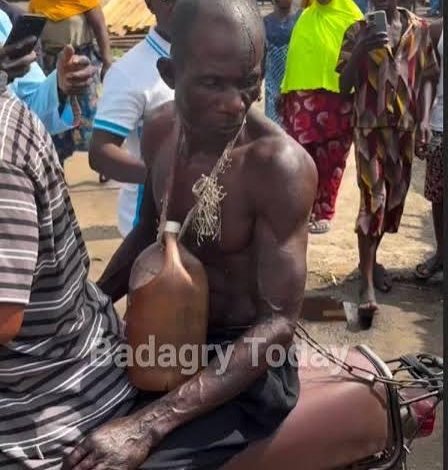
Madarikan Emehinola, a 56-year-old man, has been arrested by the Ogun State Police Command over the suspected arson that killed his 40-year-old wife, Igbagbo Erobe, in Igbo-Edu, Ogun Waterside Local Government Area of Ogun State.
According to the Ogun State Police Command’s statement released on Sunday, October 18, 2026, the incident was reported to the Abigi Divisional Police Headquarters after information was received that a residential building had been set ablaze, resulting in Erobe’s death.
The statement partly reads,
“The deceased’s body has been deposited at a mortuary for post-mortem examination. The case is being processed for transfer to the State Criminal Investigation Department, Eleweran, Abeokuta, for further investigation,” Commissioner of Police Bode Ojajuni said.


The police confirmed that Emehinola was taken into custody in connection with the incident. Erobe’s body was deposited at a mortuary for a post-mortem examination, while the case was being processed for transfer to the State Criminal Investigation Department (SCID), Eleweran, Abeokuta, for further investigation. The Commissioner of Police in Ogun State, Bode Ojajuni, assured the public that the case would be investigated diligently and professionally.
Erobe’s death comes amid a femicide crisis that continues to claim the lives of women and girls across Nigeria. The scale of the violence is documented in research by DOHS Cares Foundation, which has called for stronger legal protections and accountability for gender related killings. In its June 1, 2026 report, Femicide in Nigeria: An Urgent Call for Legislative Action, DOHS Cares Foundation reported that it had documented more than 150 women and girls killed in gender-related violence in 2024. By December 2025, its records had surpassed 350 cases across the two years. It also reported more than 40 gender-related killings of women and girls in the first five months of 2026.
The report identifies intimate partner violence, family violence, sexual violence, misogyny and harmful gender norms among the contexts in which femicide occurs. It also highlights how women’s deaths are routinely described as domestic disputes, relationship problems or crimes of passion, language that can dismiss the gendered nature of the violence.
DOHS Cares has called on the National Assembly to consider femicide data from their respective states, hold public hearings and develop legislation that explicitly recognises femicide. Its recommendations include dedicated femicide response units within law enforcement agencies, improved prevention and accountability mechanisms, and stronger procedures for investigating and prosecuting these killings.
Its Femicide Observatory tracks gender-related killings of women and girls in Nigeria, helping document the scale and geographical spread of the violence. Its research identifies Lagos, Delta, the Federal Capital Territory, Ogun, Kano, Ondo, Oyo, Rivers, Edo and Abia among the states recording some of the highest incidences of femicide. The data on Ogun State is very relevant to this case. The state’s inclusion among the areas with high recorded incidences of femicide shows why each case must be understood within the wider pattern of violence against women, rather than reported as an isolated domestic tragedy.
The nature of how the deceased was killed demands a thorough investigation and accountability for the person responsible. Women deserve to be safe in their homes, and suspected killings must be investigated and charged.