Still Giving Birth Under Bridges: Why Nigerian Women Face Unmediated Labour in 2026
|
Getting your Trinity Audio player ready...
|
In 2026 Nigeria, childbirth can still unfold without medical mediation under a Lagos bridge, in a bus, or on the roadside because awareness of emergency care remains low and reliable emergency services are often unavailable when they are needed most.
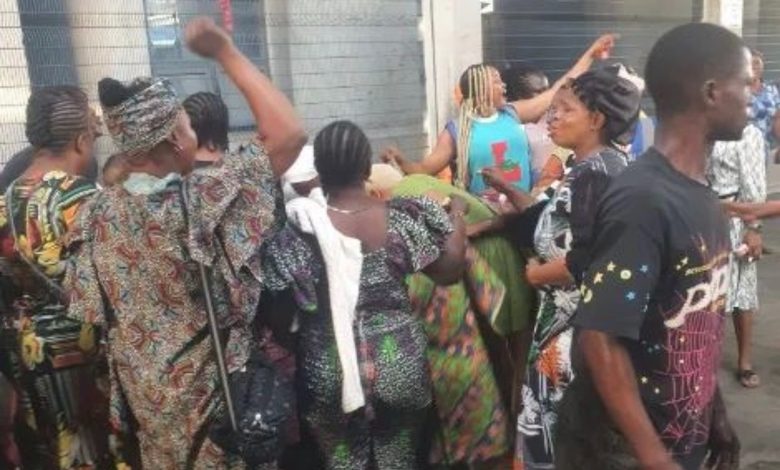
On Monday morning, 23 November 2026, a heavily pregnant woman at the Oshodi underbridge bus stop in Lagos went into sudden labour. She told those around her she could no longer move. Commuters and traders gathered. Women quickly formed a protective circle with wrappers, shielding her from the crowd and onlookers while helping her deliver a baby girl.
Social media accounts celebrated the “bouncing baby girl” and praised the good Samaritans. Some reports noted that mother and child were later taken to a nearby hospital for checks. The scene was raw, public, and unmediated by trained emergency responders or a hospital delivery room.
This was not an isolated curiosity. Similar roadside or in-transit deliveries occur with worrying regularity in Nigeria’s crowded cities and hard-to-reach communities. They expose a persistent gap: many women still lack timely access to emergency obstetric care, and large numbers of people do not know how or cannot effectively reach the systems that exist to help them.


The human and systemic reality
Labour can begin unexpectedly. When it does in a public space like Oshodi one of Lagos’s busiest transport and commercial hubs minutes matter. In a well-functioning emergency system, a call to a known number would dispatch trained responders with an ambulance equipped for obstetric emergencies, coordinate with a facility ready for delivery or caesarean section, and protect the woman’s dignity.
Instead, bystanders improvise. Privacy becomes a circle of women. Medical assessment, sterile conditions, management of haemorrhage or other complications, and neonatal care arrive later, if at all, via private vehicle or delayed public services.
Nigeria continues to carry a heavy maternal mortality burden. Estimates place the maternal mortality ratio well above the Sustainable Development Goal target of fewer than 70 deaths per 100,000 live births; figures cited in recent reporting range from around 572 to higher World Bank/WHO-linked estimates near 993 in earlier years, with northern states accounting for roughly three-quarters of facility-recorded maternal deaths. The country contributes a disproportionately large share of global maternal deaths.
Roughly 26 per cent of pregnant women still receive no antenatal care, according to WHO and the 2024 Nigeria Demographic and Health Survey data referenced in late 2026 reporting. Urban-rural, wealth, and education gaps remain stark: skilled antenatal care is far higher in cities and among the better-off and educated than in rural areas or among the poorest.
Specialist capacity is thin. The Society of Gynaecology and Obstetrics of Nigeria has warned that only about 2,200 obstetricians and gynaecologists serve a population exceeding 240 million and roughly seven million births a year far short of the estimated need. Many deliveries still occur outside health facilities. Post-complication care is often missed.
Emergency services: progress and persistent shortfalls
The Federal Government has expanded free emergency obstetric care. By late 2026, officials reported roughly 80,900 free caesarean sections, nearly 100,000 total free emergency obstetric and newborn services, thousands of fistula repairs, and measurable reductions including a 22 per cent drop in deaths from obstetric emergencies in participating facilities and larger declines (reported as high as 60 per cent in some Maternal and Newborn Mortality Reduction Innovation Initiative/MAMII areas).
Emergency transport schemes now operate in most of the targeted high-burden local government areas, moving tens of thousands of women and newborns. Facilities have been re-equipped for basic and comprehensive emergency obstetric and newborn care.
Yet availability and awareness lag behind need. National emergency number 112 and state lines (including Lagos’s 767/112 for LASAMBUS) exist, but coverage and reliability are uneven. Lagos, a mega-city of well over 20 million people, has long operated with a severely limited public ambulance fleet relative to population historically cited in the range of roughly 100 or fewer functional units when private operators are included.
Response times are frequently lengthened by notorious traffic congestion (a leading cause of delay), poor location descriptions, and coordination gaps. Public ambulances handle only a small share of emergencies; many people still rely on taxis, commercial vehicles, motorcycles, or private cars.
In obstetric emergencies, those delays can turn manageable complications into life-threatening ones.
Awareness compounds the problem. Many ordinary Nigerians do not know the correct numbers to call, do not trust that a response will come quickly, or simply have no realistic expectation of timely professional help in a public emergency. Community education on recognising danger signs in pregnancy and labour, birth preparedness, and emergency referral pathways remains incomplete, especially among those least likely to access regular antenatal care.
Why unmediated labour persists in 2026
The Oshodi delivery illustrates the intersection of three failures:
• Awareness: Limited public knowledge of emergency pathways and birth preparedness means many women and families have no practiced plan when labour begins away from a facility.
• Availability and speed: Insufficient ambulances, traffic, and uneven facility readiness mean professional help often cannot reach a woman in time.
• Underlying access gaps: Incomplete antenatal coverage, specialist shortages, geographic and financial barriers, and uneven quality of primary care leave too many pregnancies unmonitored until crisis arrives.
Government programmes have produced real gains in targeted areas and free life-saving procedures. These are important. They have not yet closed the gap for the woman whose labour begins on a bus stop in Oshodi, in a commercial vehicle, or in a remote community far from a functional referral chain.
A dignified, safe birth should not depend on the presence of compassionate strangers willing to form a human shield. It requires that emergency obstetric care be both known and reachable through rapid, coordinated transport; adequately staffed and stocked facilities; and widespread public understanding of what to do when labour begins unexpectedly.
Until those elements reach ordinary women in ordinary public spaces, scenes like the one under the Oshodi bridge will continue to recur in 2026 and beyond.