Debunking the Myth of Women’s Endurance in ‘Chasing Butterflies’
|
Getting your Trinity Audio player ready...
|
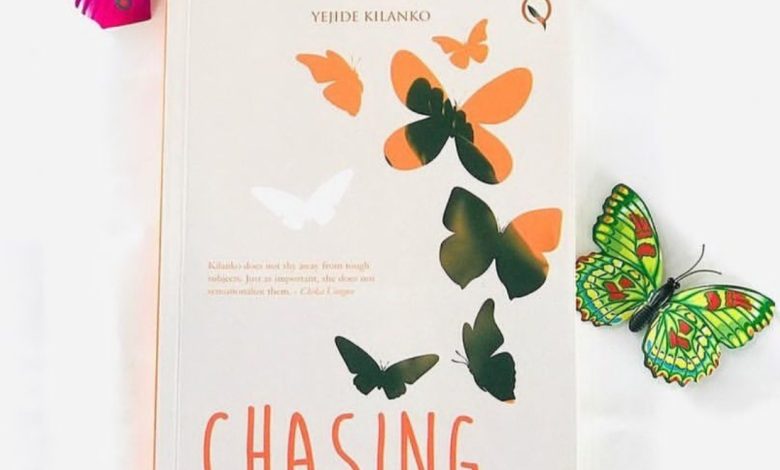
Summary: Yejide’s novella, Chasing Butterflies, tells the story of a Nigerian immigrant, Titilope Ojo, who lives in constant fear of Tomide, a charismatic man with severe anger management issues who subjects her to regular verbal and physical abuse.
In African culture, a woman is defined by marriage, endurance of hardships, and procreation. It’s no wonder that her safety is jeopardised in the face of an abusive husband. In the fictional novella “Chasing Butterflies,” Yejide tells a simple yet nuanced story of domestic violence. She reveals the darkness of domestic abuse, classic acts of manipulation, cultural expectations, and a woman’s journey toward survival and freedom.
The story centres on Titilope Ojo, a Nigerian immigrant living in the United States with her husband, Tomide, and their young son, T.J. Titilope lives in constant fear of Tomide, a charismatic man with severe anger management issues who subjects her to regular verbal and physical abuse. Torn by her mother’s words, who had ingrained in her the belief that a good mother does not run from her child’s home, Titilope endured years of assault and abuse.
In Chasing Butterflies, Yejide Kilanko masterfully illustrates how domestic violence is not a private conflict, but a systemic issue fueled by cultural expectations. For instance, when Titilope’s mother learns of her daughter’s abuse, she does not offer a way out. Instead, she offers proverbs. She tells Titilope that “a woman who keeps her head down and endures will eventually reap the fruits of her labour.” This frames Tomide’s violence as a “test” of Titilope’s character. It suggests that if she is good enough or patient enough, the abuse will stop. This places the burden of the abuser’s behaviour entirely on the victim’s shoulders.
Interestingly, Yejide reveals how the perception of a good mother sustained domestic abuse. Many victims of this abuse always cite motherhood and the illusion of a complete family to continue to endure domestic abuse. The truth is, the bullied end up becoming the bully, just like Tomide’s father abused his mother.
“His mother had been a punching bag for his father while he was alive, yet she endured and stayed for the children, just as tradition demands.” Thus, his quest for a wife like his mother made him believe that a typical African woman must succumb and adhere strictly to the African cultural expectations. When he does not find those attributes in Titilope, he becomes temperamental and consistently abuses her.
Yejide Kilanko also explores survival and resilience through Titilope’s journey. She moved from being a victim trapped by cultural duty to a survivor who reclaims her agency. A near-fatal assault by Tomide makes Titilope acknowledge the rejection of the cultural facade of a successful marriage and perfect mother. By rejecting her mother’s teaching that a woman’s accomplishments are nothing without a home, Titilope identifies it as a tool of violence and control. Her survival becomes an act of political resistance against a culture that views a woman’s body as a site of infinite endurance. Her journey is not just about escaping a man; it is about dismantling the internalised patriarchal structures that define her worth through endurance.
Additionally, the novel tackles the concept of patience/endurance, portraying it not as strength, but as a death sentence. Tomide, the abuser, thrives because he knows the community prioritises the privacy of the home. The introduction of the Women’s Academy Center is a pivotal feminist statement: it suggests that while culture may isolate women, sisterhood and systemic resources provide the necessary support for their safety.
Conclusively, Yejide uses Titilope’s experience to show that while cultural norms can follow women across borders, the search for a safer climate is a universal right. The novel concludes that for women in Titilope’s position, resilience is not the ability to withstand a storm, but the courage to fly toward a different horizon entirely.