Exposing the Facade of Bride Price through Buchi Emecheta’s Novel
|
Getting your Trinity Audio player ready...
|
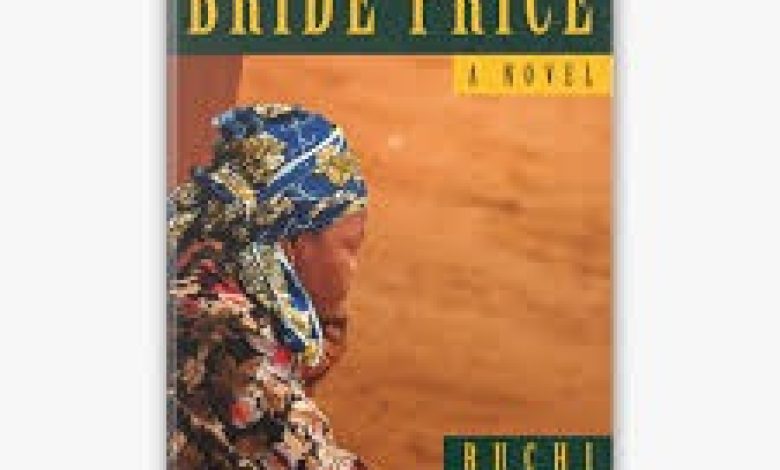
Summary: Buchi Emecheta’s novel, The Bride Price, tells the story of Aku-nna, a young girl whose bride price becomes a determining factor in her life. In this novel, Buchi exposes the hypocrisy of Nigerian culture, where the bride price is used as a patriarchal tool to protect men’s authority, desires, and ownership.
The major purpose of attaching price tags to the things we buy is to show their value and significance. However, reducing women to marketable products all in the name of marriage is a dehumanising act that equates them to properties meant to be owned by men. In the poignant novel “The Bride Price” by Buchi Emecheta, the author boldly criticises how Nigerian patriarchal culture reduces women to financial assets. Yes, the culture will preach the goodwill of marriage as a standard for a good family. But beneath the facade, the woman is sold as an asset and collateral to begin the said family. Buchi Emecheta uses the story of Aku-nna to expose the injustices women face when it comes to marriage, and the cultural deception of a bride price.
The story follows the life of Aku-nna, a young girl whose father’s untimely death led her to the ancestral village of Ibuza, where she and her family were inherited by her uncle, Okonkwo. Okonkwo’s desire to take the higher title of Eze made him turn Aku-nna’s identity and existence into a bride price, where the highest bidder takes the trophy home. To fulfil his dream of getting a high bride price, her uncle allows her to continue her education. However, Aku-nna rejects a forced marriage with Okoboshi and instead chooses Chike, a school master whom she foresaw would help her get an education.
Just like its title, the theme of the “bride price” becomes the central tool through which Buchi explores the commodification and devaluation of women. Interestingly, Aku-nna’s very name means “father’s wealth,” symbolising her primary role as a source of financial gain for her family. Maybe this is why the author consistently challenges the practice of the bride price. She wants to reject the name given to the protagonist, making her the controller of her life, not the male figures in her family. Also, the author exposes the manipulative nature of men who only see women as a tool to enhance their power, authority, or social status. This is clearly seen in Aku-nna’s uncle’s agreement to continue her education, only because an educated girl will fetch him a higher bride price. He turned a tool of empowerment into a transactional asset.
The novel also uses the bride price to critique the double colonisation African women faced– the colonial forces’ oppression and their own patriarchal culture. For instance, Buchi uses the Ibiza traditions to expose the disproportionately patriarchal burden women carry while granting men near-total freedom. These double standards are systemic, affecting everything from education and sexuality to social mobility. A man who cannot afford a bride price can sneak out of the bush and cut a lock of a girl’s hair. This act makes her his property for life, and no other man can touch her.
Also, the bride price is a patriarchal tool that protects male ownership. When Aku-nna’s father dies, her mother (Ma Blackie) is inherited by her brother-in-law as a fourth wife. She ceases to be an independent person and becomes a household property.
The superstition that a woman will die in childbirth if her bride price remains unpaid is a tool of patriarchal control, one that transcends social law and attempts to colonise the female body itself. Aku-nna’s death is not a supernatural event, but one that occurs as a result of psychological trauma and social isolation. Aku-nna has been conditioned since birth to believe this superstition. Maybe the intense stress and guilt of disobeying her culture likely contributed to her physical decline during labour. Additionally, Okonkwo’s refusal to accept her bride price from Chike made the community withdraw the traditional support systems (midwives, family care, emotional safety) that a woman needs to survive childbirth. This effectively led to her death to prove the tradition right.
Ultimately, the Bride Price is a powerful, essential novel that calls for the dismantling of systems that prioritise customs, patriarchy, and men’s authority over female identity and autonomy. The novel concludes that as long as a woman’s worth is measured by a price tag, true liberation remains a life-and-death struggle.