Failed by government’s insurance schemes, Niger female-farmers go spiritual
|
Getting your Trinity Audio player ready...
|
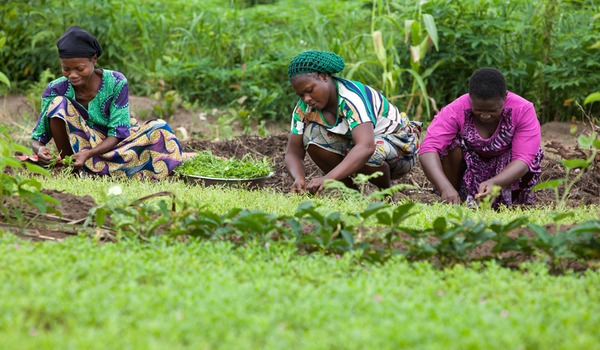
When termites invaded her soya beans farm in Paikoro Local Government Area (LGA) of Niger State, Jummai Makama thought help would come. She had registered for insurance through the state’s Agricultural Development Project (ADP), now known as the Niger State Agricultural and Mechanisation Development Agency (NAMDA), and paid the required premium. But when she called her extension officer to report the loss, the response shocked her: “You didn’t report within 24 hours,” she was told.
“In my farm, for soya beans, you plant, and they come up with good flowers; but termites get into them, and you won’t know until you harvest. At the end of the day, the seeds do not come out fine. When I complained to the insurance company so that they could offer me a percentage, they did not respond, and I eventually grew tired and left them. One day, when they finally answered, the insurance company stated that I did not report within 24 hours, so I could not receive any benefits.
“How could I know my farm had failed within 24 hours?” she asked, her voice cracking in disbelief.
By the time I saw that the crops were not producing, it was already too late. It is only when the seedlings start coming out that I would know it did not produce fine. But they said the insurance had expired.”


Now, Jummai says what many other women farmers in Niger State have concluded: “God is our insurance.”
Across Niger State, hundreds of women farmers say they have lost faith in the state government’s agricultural insurance scheme, which is meant to protect them from crop failure, drought, or pest invasion. Meanwhile, others have not even heard of the agricultural insurance scheme or its purpose. Many say they either never heard back from insurance officers or were denied claims for technical reasons they barely understood.
Distance, paperwork, and mistrust
For many rural farmers, the idea of insurance feels like another government promise that ends at the city. Some say they are asked to take photos or fill forms in English, and the majority of them cannot read, write or speak English. They always need someone who can interpret for them in any situation where English is needed. Others do not even have phones that can capture images, a key requirement for evidence of damage.
Jummai complained of inadequate sensitisation about what is expected of them when disaster strikes on their farms, adding that even the extension officers from NAMDA come to their farms and register them, but do not respond to distress calls when they encounter challenges on their farms.
“The extension officers are the ones; when you plant, they come and survey and advise on what they do, but our problem with them is that when you have a problem in the farm, they will say you have paid for insurance, so you should go to the insurance office, while the insurance office in Minna does not assist. We feel maybe we do not know the right channel to follow. When it is time to pay the premium or assist you with insurance registration, you will meet with the extension officer and the insurance company. But when you need them, you won’t see them.
“Since my soya bean experience, I have not registered with them because they will collect the money, but refuse to assist when you have challenges in your farm. My farm is located along Lapai Road, approximately 20 kilometres from my house; I don’t visit it every day. When you plant your crops and see them coming out with green leaves, you have the belief that they will produce well. If, later, you go to your farm and see the same leaves changing colour like they are being set on fire, there is little you can do. However, when you call on them to come and see it, and they tell you that you did not report within 24 to 48 hours, what can you say?
“There was no training on what to do when things like this happen; that you have to report within 24 or 48 hours. No sensitisation or training at all, all they want is the registration fee and payment of premium”, she said.
Comfort Joseph, a maize and rice farmer in Dikko community in Gurara local government, said the process of registering for insurance is tiring. Distance is also an issue for many of the farmers who have to travel long distances from their villages to town for registration.
“As a farmer, we don’t like what wastes our time. The procedure of going to insure your farms is what discourages us. You cannot leave a village and go to the town that you want to insure your farm, where they will waste your time and give you conditions you will not be able to meet. The transport (cost) alone is enough to discourage anyone.”
“Then, when you register, they come with plenty of papers. But when you have a problem on your farm, they vanish. They will tell you that you did not report in time.
The few who tried to benefit from the Anchor Borrowers’ Programme say the experience made them wary of any formal financial scheme. “They gave us seedlings that didn’t germinate,” said Martha Baba, a rice farmer in Katcha local government area, “When we complained, they said it was insured, but we never saw a kobo till today.”
A system that forgets its users
Agricultural insurance was created to protect farmers from risk, but its design seems made for urban bureaucrats, not rural women who cannot read and write or afford to travel far from their farms. In addition to these, the perceived 24-hour loss-reporting rule, complex documentation, and absence of field officers have left most farmers excluded.
Women farmers say that until insurance companies decentralise their operations, build local trust, and simplify claims, the scheme will remain a paper promise. For now, Jummai and her peers have found their own mode of protection.
“Like my people in the village, most of them do not know how to make complaints or document this loss, and as such, they lose out on the insurance benefit. In this case, nothing is usually done, so we no longer go for it. What we do is contribute a little money to our cooperative, so if anything happens, we help one another. But as for government insurance, it has failed us. It is only God that has not failed.” Many women farmers now rely solely on faith and solidarity.
“When we face any problem, we pray,” said Comfort. “We are used to depending on God because government people always disappoint us.”
While some are sceptical about the agricultural insurance, the women in Agaie LGA, whose farms have been ravaged by herders who led their cattle to eat up their crops, causing them tremendous losses, are optimistic that getting insured can help them back on their feet after their crops have been eaten up by the cattle.
Halima Mohammed, the SWOFON Coordinator in Agaie, expressed optimism that if they had registered for the agricultural insurance, they would have been able to recoup some of the money they invested.
“We have raised the issue of insurance in our various meetings, but our people are not used to the process of registration. I believe that if I had insurance, I would not have lost it all when those Fulani allowed their cows to enter my farm. It would not have affected me much. I believe that the insurance would have helped me cover some of the loss.
“The insurance registration takes time, and as I have learnt from the insurance registration, as soon as the incident happens, you will take a picture and send it to them. You can’t give them an ordinary letter; you have to show proof of evidence. But what about those of our women who do not have phones that can take pictures? In Agaie, we, the women farmers, are not used to insurance, but we are working to see how we can register for it very soon.”
Same attitudes reflected in accessing bank loans
The attitude the women farmers have towards agricultural insurance is the same as they have in approaching commercial banks for loans. Several of them claimed that the banks have not been understanding of their plight whenever they experience loss in their farms. They cannot understand why they have to pay heavy interest even when they have experienced losses.
As a result, the women farmers now rely on their community cooperatives or associations, while others have vowed never to collect loans either from the bank or their various cooperatives.
Agnes Aynadanyi in Gurara had this to say. “I collect loans from my community cooperative because it is when you have it that you will return it. I never go to the bank to collect money because their interest is too much, and you must pay at the time they ask you to pay back.”
Talma Baba, also in Gurara, said: “I have never collected a loan from any cooperative or bank. I sell my product, from which I get the money to use for my farm. As regards insurance, I don’t know about it; it is only God that is my insurance.”
Comfort Joseph, who is the SWOFON Treasurer in Gurara, said they have a cooperative meeting with about 25 women where they save money weekly, and from the savings, anyone who needs money is given from the purse.
“We pay it back. It is given for a minimum of three months to six months, and at a low interest rate. I don’t go to the bank because their interest rates are very high, and if you do not pay on time, you will be sorry. I have tried them before, and the conditions they gave include payment of interest every month, and they do not wait. If you don’t meet up, they go for the collateral. I can’t collect their loan for farming because it is seasonal, as you cannot get the money immediately and use it to pay for the loan.”
For Halima, failure to pay back the loan collected from the cooperative would limit the chances of the defaulter from accessing any other loan.
“In our cooperative, we do weekly contributions, and when you have a need, you can borrow money and pay with interest. Whoever did not pay on time will not be given any loan again, and the person will forfeit any money she has contributed so far. There is a duration of the loan. The cooperative is helping us. What we give out is determined by what we have in our purses. For banks, the procedure is long, and if you take a loan from them and refuse to pay, the interest will keep increasing. That is why in Agaie, we do not buy the idea of a loan from the bank.”
Why farmers are not accessing agricultural insurance despite its benefits – NAIC
The Nigerian Agricultural Insurance Corporation (NAIC) is the primary agency of the Federal Government of Nigeria under the Federal Ministry of Agriculture, responsible for providing insurance coverage to farmers.
NAIC’s main goal is to implement and manage the federal government’s official Agricultural Insurance Scheme, which is designed to protect farmers from the financial losses caused by natural disasters and other hazards. The Corporation helps stabilise farm incomes and encourages farmers to continue investing in their operations. This coverage includes subsidised insurance, which is for major crops and livestock, whereby the government (federal and state) subsidises the insurance premium by 50%. This makes it affordable for small-scale farmers.
It covers staple crops such as maize, rice, yams, cassava, sorghum, and cotton, as well as livestock, including poultry, cattle, sheep, goats, and piggery. It covers losses due to fire, drought, floods, pests, diseases, windstorms, and other natural hazards.
There is also the commercial insurance, where NAIC offers commercially priced insurance for large-scale agricultural investments and other related assets. By insuring a farmer’s project, NAIC reduces the risk for banks and other financial institutions. This makes lenders more willing to provide credit and loans to farmers, as the loan is protected even if the farm fails due to a covered disaster.
NAIC also functions as a general insurance company, offering policies for farm buildings and machinery, motor insurance for tractors, vehicles, fire & special perils, burglary and housebreaking, livestock and crop policies outside the subsidised scheme.
The NAIC Manager in Niger State, Mohammed Al-Amin, explained that for the standard Nigerian Agricultural Insurance Corporation (NAIC) subsidised scheme, a farmer typically pays 2 per cent to 2.5 per cent of the total value of their investment, which is the sum insured; adding that this is possible because the Federal and State Governments pay a 50 per cent subsidy on the premium for approved crops and livestock.
“For instance, if you invest ₦1,000,000 to plant maize, the total insurance premium is ₦40,000 (4 per cent). You pay ₦20,000 (2 per cent) while the government pays ₦20,000 (the remaining 2 per cent).
He admitted that most women farmers do not know much about agricultural insurance and how to access the insurance policies, which is why the majority of them are not covered. He added that several women farmers and other farmers generally find it difficult to part with the meagre premium required for the registration of the insurance policy, as they will not offer them anything which would affect their incomes.
Whenever we go and talk about agricultural insurance to women (farmers), the first thing they ask is what is their gain? When we try to tell them the gain, they say it will not benefit them. Most women farmers are usually small-scale farmers who feel it is not important for them to come for insurance.”
Speaking about the claim process, which the women farmers complained about, he said these are paid after full documentation, which includes loss notification, loss assessment and final report. He faulted the 24-hour report claim by the women, explaining that it is within 72 hours that they will need to report their loss.
“If there is a loss, the clients have been told to inform the NAIC office either through phone call, email or text message within 72 hours. Failure to do that would result in non-compliance. The farm should not be tampered with until our physical verification of the damage. Some of these farmers do not inform us about the loss they have until after two or three months, or after harvest, where there would be no evidence to substantiate such a claim.
Therefore, such a claim cannot be compensated. This is what usually happens with our farmers in the rural areas.
There are different types of claims in agricultural insurance. Once they inform us within the stipulated time, we go to the farm and assess it. If it is a pest, we attempt to identify the type of pest it is. If it is a flood, a picture is taken when the flood occurs, and after the flood recedes, we assess the damage to determine its type. After full documentation, we send our final report to the claims department, and the claim is processed within 30 days.”
Al-Amin highlighted the importance of insurance, stating that it is a transfer of risk that gives the farmer peace of mind and helps them return to prosperity after suffering any loss on their farm.
He disclosed that in 2025, NAIC registered 9,325 farmers across Niger State, pointing out that the majority of those who signed up are large-scale and livestock farmers, who take insurance very seriously.
Why agricultural insurance is important – Niger government
The Permanent Secretary of the Niger State Ministry of Agriculture, Dr. Mathew Ahmed, explained that farming is a business and insurance is essential to protect farmers from losses, pointing out that the state government has been sensitising farmers across the 25 LGAs through radio and media campaigns on the importance of farm insurance, while some development partners also support this initiative by paying insurance premiums for some farmers.
Insurance is part of business, and farming is a business. We have encouraged all our farmers across the state to insure all their farms across the 25 local governments. In fact, we have gone to radio houses to sensitise our farmers on the importance of insuring their farms. Now, some of our development partners have demonstrated the importance of insurance by paying for insurance for our farmers.
“Agricultural insurance is to help our farmers get back to business when they have any challenges – if there is any endemic disease outbreak, floods, droughts, or fire incidents. If a farmer has spent, for example, N1 million, the insurance company may not be able to pay him that N1 million, but they can pay the farmer up to N400,000 to N500,000 so that he can use that money to go back to the field to reinvest. So, the insurance helps the farmer to adjust his shocks so that he doesn’t lose everything that he has invested.”
Ahmed said the ministry continues to emphasise insurance awareness during training and community engagements to ensure farmers understand its value and benefits.
The Managing Director of Agency (NAMDA), Muhammad Ali Baba, confirmed that the extension officers of the agency assist women farmers in registering for agricultural insurance, but because it is not free, the women farmers do not take advantage of it.
“You know, insurance is not free, and the average farmer, because they have resource constraints, might be looking at payment for the insurance premium as if they are precious money down the drain. But it is an idea that is gaining ground. We continue to spread the message across.”
He also noted that several farmers do not know the importance of agricultural insurance because sensitisation is low, especially in rural communities. He said that if there are sensitisation, one of the key messages by the officials would be explaining why they need to go for insurance, the premium they need to pay. Another key message, he said, would be explaining that it is the premium that validates the insurance, as if they do not pay a premium, there would be no cover for their farm or livestock.
Most of our farmers, because they have limited resources, would rather focus on buying physical inputs, such as fertiliser or chemicals. So, they will see expenditure on insurance as throwing away good money. But we continue to sensitise them. But they have to pay. That is just the crux of the matter.”
Across Niger State, the message from women farmers is clear: government insurance schemes have failed them. They are not asking for miracles, only fairness, proximity, and a system that listens when their crops die. Until then, their faith will remain rooted not in paperwork, but in prayer. When the next planting season comes, Jummai will still return to her farm. She will pray against pests, drought, and loss, not because insurance protects her, but because her faith does. For her and many others, survival in the field has become a matter of belief, not bureaucracy.
“This report was made possible with support from the International Centre for Investigative Reporting (ICIR).”
Editor’s Note: This story was first published on The Nation newspaper.