
|
Getting your Trinity Audio player ready...
|
Every action has consequences—and for many women across Nigeria and beyond, those consequences are deadly. From gender-based violence (GBV) to wartime abuses, millions of women continue to fight for survival in environments where their rights, safety, and dignity are routinely threatened or dismissed.
One of the least acknowledged dimensions of this crisis lies in the silent struggles of women who have survived wars, terrorism, and displacement. Caught between trauma and inadequate mental-health support, they battle not only for personal healing but for the chance to participate fully in society as citizens deserving protection and justice.
Women as Easy Targets: Trauma with Permanent Scars
Data has shown that one woman is killed globally every 10 minutes, with Africa recording the highest rate of femicides committed by intimate partners or family members. In Europe and the Americas, more than 50% of female homicides are linked to intimate-partner violence. Despite slight fluctuations in data over the years, an average of one woman or girl is killed every 11 minutes by someone within her own household.
The Gender Equality Observatory for Latin America and the Caribbean (GEO/ECLAC) also records an average of 11 gender-based killings of women every day. Across regions, cultures, and socioeconomic classes, femicide remains a global emergency. For survivors of extremism, particularly in conflict-ridden areas, the aftermath includes psychological trauma, sexual violence, displacement, and irreparable loss.

The Nigerian Reality: Terror, Tradition, and Systemic Failure
Africa records the highest number of femicides that span across gender based violence to intimate partner killing, including the aftermath of wars and attacks. The continuous derailing activities of terrorism in Nigeria also instigate this plight for affected women. A certain percentage of Northern Nigeria females continuously fall victim to abuse, including abductions, sexual slavery, coerced marriages, sexual violence, and religious conversions, originating from bandits and terrorist acts since 2009. In a defence mode of protection, these women had resorted to foregoing education and other important aspects of living as human rights due to fear of being abducted, raped, forced into marriages, and subjected to sexual terrorism.
At the structural level, Nigeria records 300–350 female killings annually, committed mostly by husbands, boyfriends, or male relatives. Shockingly, 70% of these cases are dismissed by police, often labelled as “insignificant” or lacking the “evidence” required for prosecution. This systemic negligence allows perpetrators to go unpunished and reinforces a culture of silence that is dangerous.
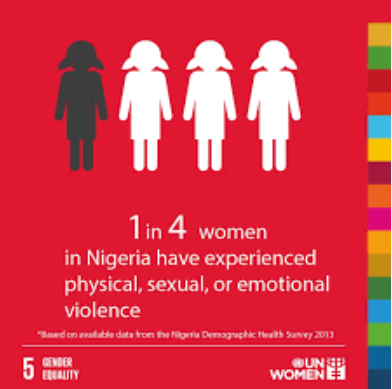
As of February 2025, Document Women reported 13 cases of femicide across four geopolitical zones. Non-intimate partner violence was the highest reported case at the rate of 76.9%, followed by 15.4% domestic violence and 7.7% unknown cases where victims were found dead. Intimate partner violence affected women whose ages were unknown and non-intimate partner violence women and girls between the ages of 21 and 74. Gathered data showed an increase in the femicide trend from 13 to 28 extra cases in June and July. This occurrence shows an observable increase, with each incident occurring at twice the initial rate.
According to DOHS records, a total of 150 cases were reported, while 211 deaths were documented across Nigeria in 2025. Of these fatalities, 32% were unspecified, 14% resulted from stabbing, 7.3% from physical beating, 22% from beheading, and 4% involved poisoning. Additionally, less than 20% of the deaths were attributed to other forms of violence, including machete attacks, suicide incidents, rape-related killings, gunshots, hammering, burning, hacking, strangulation, and other unspecified methods.
Further analysis of the data shows that 20.7% of the deaths were committed by individuals whose identities remain unknown, while 15.3% were perpetrated by husbands of the victims. Acquaintances accounted for 14%, boyfriends for 9.3%, and sons for 4% of the cases. Less than 16% of the murders were linked to community members, intimate partners, fathers, fiancés, ritualists, doctors, strangers, and other unnamed perpetrators.
Ochanya’s Story: A Reflection of Institutional Neglect
The resurfacing of Ochanyá’s case, seven years after her death, exemplifies the Nigerian police’s long-standing failure to protect victims of gender-based violence. At age 13, she was repeatedly raped and assaulted by her uncle and cousin—abuse that eventually led to her death.
Despite multiple reports at the time, police dismissed the case without a proper investigation. Today, one of the alleged perpetrators lives freely in Lagos, pursuing a music career, while justice remains stalled and the case remains unopened.
Recent Killings: The Case of Success Ugochie
In another tragic incident, 34-year-old Success Ugochie was raped and murdered by her neighbour. The case gained public attention on Wednesday, November 5, 2025, when a friend posted the information on X, noting that no police authority had responded. It was only after significant online pressure that the suspect was arrested, eventually confessing to the crime.
War and Sexual Violence: The Benue Attacks
Following the herdsmen attack in Benue State (July 2025), several women recounted how they were raped during the assault. One woman narrated that she was raped eight times in seven hours. While there were losses of life in the attack, women suffered compounded losses—sexual violence, trauma, displacement, and lifelong psychological scars; as they are often the first targeted for the gain of sexual abuse, forced marriages and coerced relationships that promote continuity of a life chain.
The recent abduction of schoolgirls in Kebbi State on Monday, November 17, 2025, further highlights the continued vulnerability of women in conflict zones and the persistent failure of security structures.
Culture, Religion, and Patriarchy: Root Causes of Systemic Vulnerability
Cultural religion and practices under the patriarchal structures play a significant role in promoting effective management of females who are susceptible to weakness and other abuse. The practice of women being limited to a specific role, such as housewives, child bearers, and caregivers, automatically creates a restrictive barrier to a purpose-driven life. This leads to difficulty for some women in stepping into the light of living beyond a certain purpose and gaining access to unlimited education that will create awareness and enlighten their mindset on the value that can be promoted as a woman. These beliefs are a besetting challenge that enhances the weakness associated with being a female in society while fueling the perpetrator’s courage in perpetrating these inhuman acts. Leveraging on their desires to be economically stable and thirst for a better life, the female gender is seen as a “weaker vessel” that can easily be targeted.
The Office of the Minister of Women Affairs, Plateau State, has announced that one of the major barriers women face is a result of cultural barriers.
Plateau State Ministry of Women Affairs Highlights Ongoing Challenges and Reforms for Women in Rural Communities
At the State Ministry of Women Affairs, officials say gender inequality remains a persistent challenge, particularly across rural communities where cultural norms continue to restrict women’s rights and limit access to justice.
It was, however, emphasised that the government is actively working to implement new policies designed to protect women’s property rights. Widows and affected women are now encouraged to report cases directly to the ministry. Awareness campaigns are ongoing, but community resistance remains a significant barrier.
“In most rural communities, they hardly agree with the idea of women owning land properties or reporting such cases,” she added.
Addressing Sexual and Gender-Based Violence (SGBV), the ministry acknowledged a long-standing gap in justice for survivors—but emphasised that progress is being made. The Ministry of Women Affairs for Plateau State has affirmed that dedicated hotlines and reporting channels have been established to ensure that victims can seek help discreetly and safely, even in communities where such cases are often covered up.
These interventions have resulted in increased reporting, more arrests, and a more assertive stance against SGBV. “Women are being sensitised to speak out, and we are already seeing positive outcomes,” the official said.
She also referenced ongoing amendments to key legal frameworks, the Women’s Provision Law and the Child Rights Law. One of the changes includes revising penalties for parental abandonment. Initially punishable by three years in prison, the sentence has been reviewed to one year to ensure offenders can still fulfil parental responsibilities afterwards.
Citing a recent case, she mentioned a police officer who amputated his wife’s hand over a dispute involving ₦3,000. The officer is currently serving a prison sentence, with the state providing support for the survivor. According to the ministry, this and similar actions are part of a broader effort to demonstrate that gender-based violence will not be tolerated.
Conclusion
Nigeria’s femicide crisis is far more than a collection of tragic incidents—it is a national emergency deeply rooted in cultural norms, systemic negligence, and a long history of institutional silence. Behind every data point is a woman whose life was cut short by a society that failed to protect her long before the violence occurred. The stories of Ochanya, Success Ugochie, the women of Benue, and countless unnamed survivors remind us that gender-based violence leaves scars not only on individuals but on the nation’s collective conscience.
While agencies such as the Ministry of Women’s Affairs are pushing through reforms—from property rights protections to improved reporting systems and stronger legal frameworks—lasting change requires more than policy adjustments. It demands a fundamental shift in societal attitudes, unwavering accountability from law enforcement, and the political will to ensure that women’s rights are respected everywhere, from rural communities to conflict zones.
Communities must challenge harmful traditions; security institutions must act with integrity; and policymakers must prioritise the safety, dignity, and equality of every woman and girl. Until justice becomes consistent, protection becomes reliable, and the female voice becomes impossible to silence, the cycle of violence will persist.
Nigeria now stands at a critical turning point. Choosing the path of protection, accountability, and genuine empowerment is the only way to break this cycle and build a society where no woman’s life is ever treated as expendable—and where every woman can live, speak, and thrive without fear.
Editor’s note: This story is produced as part of Naija Feminists Media’s (NFM) 2025 Editorial fellowship. NFM is an organisation committed to advancing gender equality in Nigeria and beyond.