|
Getting your Trinity Audio player ready...
|
Summary: Feminism must consider class because a woman’s socioeconomic status shapes her risks, opportunities, and access to justice. Poor and vulnerable women often bear the heaviest burdens in a global economy that exploits inequality.
Class is not a side conversation in feminism; it is not an optional chapter that can be skipped; it is the structure beneath the structure, shaping risk, safety, and voices. Yet, feminism is often discussed as though it were a neat idea, contained, exportable, untouched by the weight of the world economy.
Meanwhile, the economy is precisely where gender lives and breathes, where it tightens its grip, where it decides who survives comfortably and who survives at all. The global economy is arranged in layers, and women occupy those layers differently. A wealthy woman faces sexism in corporate spaces, a middle-class woman negotiates paid work and unpaid care, and a poor woman stands at a sharper edge because poverty removes insulation and choice.
Feminism does not dismiss rich women or middle-class women. It also refuses to abandon poor women to the margins, because gender does not operate in isolation from income, and pretending otherwise only protects comfort.
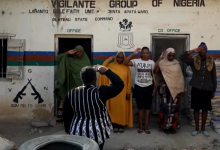
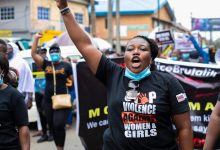
A poor girl is more likely to be trafficked. Exploitation studies vulnerability and then positions itself beside it.
In communities with high unemployment and weak social protection, an offer of work abroad sounds like a rescue. A promise of income sounds like hope. Desperation is easily manipulated.
Traffickers do not randomly select their targets. They follow economic fault lines and target families under financial strain. Gender makes girls the commodity, poverty makes them accessible, and the global economy absorbs the profit without asking who paid the price.
Even something as ordinary as menstruation reveals class inequality. For some girls, buying sanitary products is are routine purchase. For others, they are unaffordable. Cloth is reused. Cotton wool is folded. Tissue, or even leaves, becomes a substitute.
The economy does not record the cost of a girl sitting at home because she cannot afford pads. It does not calculate the long-term income loss from repeated absences. Yet, that absence shapes her trajectory in ways that are not accidental.
Nutrition tells a quieter story. In households where food is scarce, distribution reflects hierarchy. Women and girls often eat last and least. They become the buffer between shortage and hunger for everyone else.
Iron deficiency, fatigue, complications in pregnancy, and reduced physical stamina. These are framed as health issues, but they are also economic outcomes. A body that is undernourished is expected to labour and care. When it falters, the blame rarely travels upward to the system that engineered the deprivation.
Sexual violence intersects with class in ways that are difficult to ignore. Poor women face greater exposure in overcrowded housing, unsafe public spaces, and informal work with no protection. When violence occurs, justice is not freely available; it is mediated by cost.
In Nigeria, pursuing a rape case requires money. Legal fees, transport fares, and time away from paid work all accumulate. Some officers demand bribes before filing complaints, and perpetrators sometimes use money or influence to distort outcomes.
Justice reveals its price tag in those moments. When systems require payment to function, poor women begin at a disadvantage. The inequality starts before the case even does.
Feminism looks at all of this without flinching. It requires an intersectional lens that examines gender and class across healthcare, education, policing, labour markets, and policy. Selective progress that leaves structural inequality intact is not progress.
Class runs through every dimension of gender inequality. It determines who is protected and who is exposed. It shapes who can relocate, hire representation or access care. A feminism attentive to class does not soften its demands. It calls for livable wages, accessible healthcare, affordable menstrual products, accountable policing, and legal systems that cannot be bought. Anything less leaves the most vulnerable women absorbing the heaviest shocks of a global economy built on their insecurity.