|
Getting your Trinity Audio player ready...
|
Summary: Responding to ageist stereotypes sparked by a celebrity remark, this article explains that feminism is not defined by age or appearance but remains a vital, cross-generational movement driven by persistent gender inequality in Nigeria and beyond. Drawing on data and lived realities, it shows that feminism continues to matter because structural barriers still limit women’s economic, political, and social opportunities across generations.
On January 11, 2025, Afro-pop artist Paul Okoye, popularly known as King Rude Boy with the username (iamkingrudy), raised a controversial question in his Instagram story: “Why are feminists always above 30 and believe they have inner beauty?” Stereotyping statements like this are made to infuriate women. They are based on assumptions and not facts.
Feminism is not an age-exclusive identity, nor is it related to beauty standards. It is a global movement that advocates gender equality across all spheres, including the social, economic, and political. To understand who feminists are and what they believe, we need to examine data and lived realities, rather than relying on stereotypes. The reason these statements exist is that individuals still do not fully understand the core concept of feminism.
For clarity and to understand the actual concept of feminism, it is essential to recognise that feminism is the belief in equal rights and opportunities for all genders, particularly women who are underrepresented. It has been a driving force behind major social reforms, from women’s suffrage to workplace protections, for over a century. Feminism isn’t a stereotype tied to age or self-esteem; it is a movement for equality, regardless of gender, and it encompasses people of all ages who recognise the need for justice and fairness in society.


The claim assumes that all or most feminists share the same age and mindset, which is false. In reality, feminism is a belief system, not a demographic group. It comprises individuals of different ages, backgrounds, and experiences who support feminist ideas. Making a misleading claim about millions of people based on anecdotal impressions is logically flawed.
Through feminism, women can exercise their voting rights, increase access to education and employment, secure equal pay (which is still ongoing), and gain many more opportunities. While there isn’t robust data on the ages of people who identify as feminists in Nigeria, academic research on media representations and youth perceptions shows that the majority of respondents engaged in discussions about gender ideas were under 30, with only a small fraction being older than 30 in that specific survey.
The use of ageism to dismiss legitimate concerns. Nigeria still struggles with gender inequality, so feminist ideas are relevant at any age. Research by Forbes reveals that women account for 70 % of the extremely poor, despite being roughly half the population, and have lower labour force participation (56 %) with significant wage gaps compared to men. Only around one-quarter of Nigerians believe the government is doing well in promoting equal rights, and fewer than half believe women truly have equal opportunities to secure a job.
Furthermore, according to ActionAid research, 77.1% of women are active in the workforce, with most confined to self-employment and informal work. Only 13.4% have ever used a computer, compared to 21.8% of men, highlighting how structural barriers limit women’s access to opportunities.
In the area of politics, it has been a tug of war; women’s voices remain weak in governance, with Nigeria scoring poorly in gender equality rankings and historically low representation in legislative bodies.
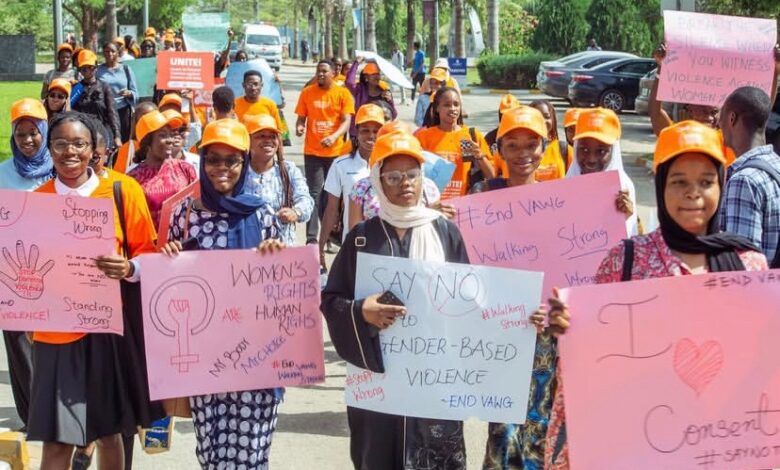
However, the assumption that all feminists are always above 30 is not true. Women of all ages and tribes are feminists in Nigeria. Across the world, including in Nigeria, younger people popularly known as Gen Z, 53% of them, according to an international study, show that they are actively engaging with feminist ideas through student movements, online advocacy, and workplace conversations around consent, pay equity, and representation.
In fact, global surveys consistently show that younger women are among the strongest supporters of gender equality. Many may not always adopt the label feminist, often due to stigma or misinformation, but they support its core principles. This reality exposes the flaw in assuming feminism is something people grow into after a certain age, rather than something people embrace when they become aware of injustice.
Also, for those who are over 30, some have been feminists for years before or are just becoming. It is not because they are unwanted and have lost track of time; these women have gone through a systematic experience in various aspects of their lives and have decided to stand tall to fight against the system that disrupts women’s existence.
In a society where women still struggle for economic independence, legal protection, and equal representation, dismissing feminism as an age-related identity ignores the structural problems that necessitate advocacy in the first place. Feminism persists because inequality persists.
The inner beauty myth is problematic, as Paul Okoye tries to imply that feminists are not physically attractive, hence they decide to validate themselves by saying they have inner beauty. As such, the narrative is fundamentally flawed and exhibits poor reasoning. As women are becoming more aware of their rights and are not conforming to the stereotypes placed on them in society, the easiest way men choose to silence women’s voices is by making unthinkable statements about the age factor and physical appearance, believing it is an insecurity for all women.
Also, the statement still misreads what feminist thought actually challenges. For emphasis, feminism also critiques social systems that devalue women based on their physical attractiveness or youth. When feminists reject those standards, it does not imply self-worship or ego; rather, it asserts that a woman’s worth is not determined by how closely she conforms to societal beauty ideals. It teaches that no one should be treated as lesser because of gender, age, or beauty; perhaps the misinterpretation has raised an assumptive narrative.
Conclusion
To reduce feminists to people above 30 who think they’re beautiful inside is mockery, and it is untrue and unhelpful. Feminism is not about age, beauty, or self-image; it is about fairness, justice, and equal opportunity. Public conversations about gender equality should be more projected and respectfully engaged than dismissive caricatures.