|
Getting your Trinity Audio player ready...
|
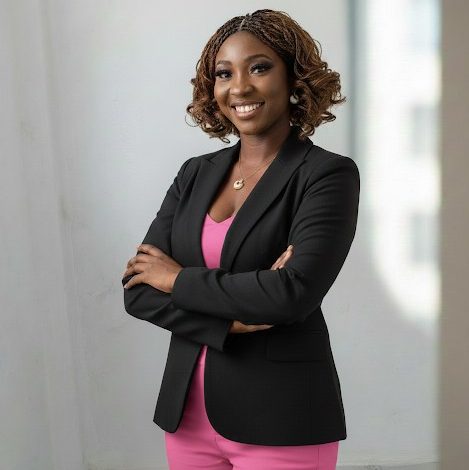
Summary: In this interview, Tinuade Mary reflects on her feminist journey, shaped by lived experience, survivorship, and advocacy, while calling for urgent policy reforms from reserved legislative seats for women to subsidised reproductive healthcare. She speaks candidly about solidarity, collective action, and why younger feminists must never apologise for taking up space.
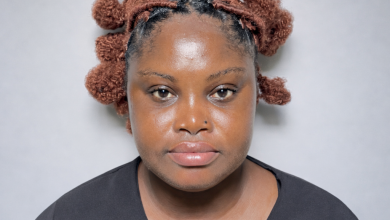
Tinuade Mary is a Nigerian feminist and gender and Sexual and Reproductive Health and Rights (SRHR) advocate. She is the Executive Director of Women Too Africa Foundation and a co-founder of Her Healing Space NG, where her work focuses on women’s health, education, and political inclusion. In this conversation with Naija Feminists Media, she speaks about her journey into feminism, how her health experiences shaped her activism, and why women’s voices must be present in policy, healthcare, and leadership spaces in Nigeria.
Insights from Tinuade Mary on Policy, Healthcare and Leadership
- When and how did you personally come to feminism? Was there a moment, experience, or process that shaped your feminist consciousness?
I like to say that I was born a feminist. From my earliest memories, I have always possessed an innate, unshakable feeling of equality with my male counterparts. To me, the idea that my gender should dictate my potential or my right to occupy space was never a logic I accepted.

However, as is the case for many African women, I lived the experience long before I had the vocabulary for it. I officially “discovered” the name for who I was, and who I had always been, during my undergraduate years at the University. It was there that I realised my personal belief in equality wasn’t just a private feeling, but part of a global, historical movement.
However, my feminist consciousness truly deepened and became “politicised” through my leadership roles in the social development space and my own health journey. Navigating the Nigerian healthcare system, firstly as a Fibroids survivor and now as an Endo Warrior, forced me to see how patriarchy manifests in medicine.
When my pain was dismissed or when I felt invisible in clinical spaces, I realised that fighting for my health was a radical feminist act. This process of moving from a personal sense of equality to an active advocacy for SRHR (Sexual and Reproductive Health and Rights) solidified my stance: feminism isn’t just about what I feel; it is about the collective work of dismantling systems that ignore women’s pain and silence our voices.
- What issues affecting women and girls are you most focused on right now, and why do you believe these issues require urgent attention?
My current focus is a tripartite approach to women’s empowerment, addressing the systemic, physical, and political barriers that limit us. Firstly, through Women Too Africa Foundation, I am heavily invested in Education for the Girl Child and Sociopolitical Inclusion.
As Nigeria prepares for the upcoming 2027 elections, the urgency for women’s inclusion in leadership has never been greater. We are working to ensure that women are not just voters, but active participants in the sociopolitical space. If we do not intentionally clear the path for women to take up leadership roles now, we risk another cycle of
governance that ignores the specific needs of half the population. This aligns directly with SDG 5 (Gender Equality) and SDG 4 (Quality Education), as an educated girl today is a political leader tomorrow.
Secondly, through Her Healing Space NG, I am focused on Mental Health Support for Reproductive Health Challenges. We are creating a sanctuary for women navigating the psychological toll of conditions like Endometriosis and Fibroids.
This is an urgent issue because “Pain Poverty” and health-related stigma are currently sidelining millions of Nigerian women from being economically and politically active. By focusing on these areas, I am advocating for a holistic feminist future in which a woman’s body is healed, her mind is supported, and her voice is heard in the halls of power.
- From your perspective, which law, policy, or systemic change should be prioritised to improve the lives of women and girls, particularly in Nigeria?
To truly move the needle before the 2027 elections, we must prioritise the passage of the “Reserved Seats for Women Bill (HB-1349).” Systemic change in Nigeria requires more than just goodwill; it requires legislative teeth. We need reserved seats that guarantee women a place in the National Assembly to ensure our health and education are prioritised in the national budget.
Additionally, I advocate for a policy shift within the National Health Act to subsidise the diagnosis and treatment of chronic reproductive illnesses. We cannot talk about “inclusion” if women are being bankrupted by their own biology.
True progress means a Nigeria where a woman’s health is protected by law and her right to lead is guaranteed by the constitution. Beyond this, we must legislate for free or subsidised accessible menstrual products, paid work leave for women during their periods, and aggressive measures to bridge the gender pay gap and end child marriage.
- What does feminist solidarity and collective action look like to you, and what message would you like to share with younger feminists?
Feminist solidarity is the radical act of collective belief and shared burden. To me, it looks like the community we are building at Her Healing Space NG, where women’s pain is validated rather than questioned. It is the power of collective action I see when we use platforms like Naija Feminists Media to move individual struggles into the public discourse. Solidarity is the bridge that turns a single survivor’s voice into a national movement for legislative reform.
My message to younger or emerging feminists is this: Do not apologise for the space you take up or the intensity of your fire. Your lived experience is your most powerful tool for advocacy. Whether you are navigating a health crisis or fighting for political inclusion, remember that you are part of a long lineage of Nigerian women who refused to be silent. Build your sisterhood, protect your mental health, and never let the system convince you that your rights are a luxury. The future we want is one we must build together, starting today.