|
Getting your Trinity Audio player ready...
|
Eight years ago, Fatima Abatcha was a little girl living in Baga, a small town in Borno state, Northeastern Nigeria. She lived with her family, being the oldest of seven siblings. She got her Primary School education in Baga, and she dreams of being a health worker. Fatima has known the Boko Haram insurgency all her life, but it has never quite hit home until her hometown, Baga, was attacked, which led them to flee in 2017.
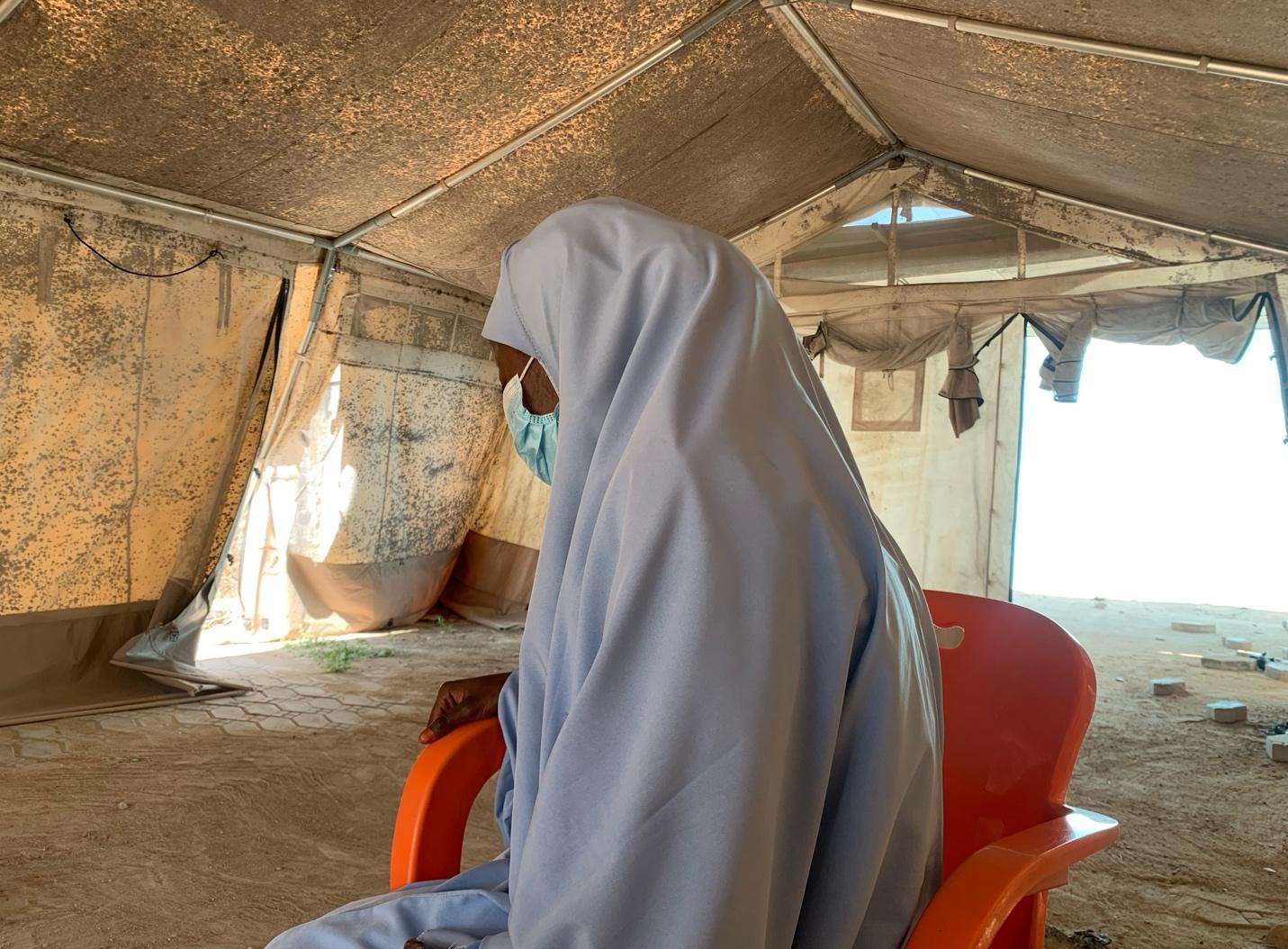
She sought refuge at the Gubio internally displaced persons (IDP) camp, which used to be one of the largest in Maiduguri, but little did she know, her life was about to take a turn. Over one-third of women and girls globally will experience some form of violence in their lifetime. However, this rate is higher in emergencies, conflicts, and crises, where vulnerability and risks are increased, and most often, family, community, and legal protections have broken down. Camps such as this, in crisis-ridden communities, are often known for crimes, including sexual and gender based violence (SGBV) due to the vulnerability of the demography as well as factors such as poverty, displacement and the breakdown of security and health systems, which accelerate SGBV. In Maiduguri’s IDP camps, teen pregnancies and unsafe abortions are rampant. Gubio camp was no different. Fatima has heard stories of sexual abuse circulating in hushed tones around the camp, frequent yet quiet and close yet faraway.
At just 17 years of age, Fatima found herself in the same predicament. She narrates her ordeal with trembling hands, and her eyes cast down,
“It was 10 pm, in April 2025, and I was home alone with my siblings. We couldn’t sleep because of too many mosquitoes, then I decided to step out to buy some mosquito coils,” she paused, taking in shaky breaths.


“I saw a man, but I couldn’t make out his face because it was at night, and he flicked something like a handkerchief toward me. From then, I couldn’t remember anything but waking up alone, drenched in my blood” She held the hem of her hijab against her eyes as she continued, “I carried myself home and cleaned up. I was able to tell my mom 2 days later, after she returned from a trip to Kano, and that was when I got medical attention still within the camp.”
Fatima was taken to a clinic within the camp, where she was attended to and given emergency drugs to prevent STIs and pregnancy, which is typical in such cases. Afterwards, the treatment just comprises a hot water and salt sit bath. Physical wounds may have healed, but the psychological trauma remains long after Fatima and her family moved out of the camp.
Stories like hers are not new, and young girls of her age live with the constant fear of sexual abuse. According to Hauwa Gwoza, who has stayed for 12 years at the Elmiskin IDP camp, also in Maiduguri, parents sleep with one eye open, afraid that their daughters might be ambushed in the night.
“Recently, we had to send some of them into town to protect them. Some with relatives we know and others as domestic workers. It is safer for them where the perpetrators will not see them,” she added.
On one hand, Fatima had a family, she had support, and she got the medical care needed; however, her friend, Falmata, didn’t. According to her, Falmata was a child with special needs, and although they promenaded often across the camp, she never got to know her parents or the tent she lived in.
Falmata, also a young girl of 16 years, was raped and taken to the same clinic as well. As Fatima narrated,
“I didn’t even know what happened to her except that I had not seen her for a few days before I learnt of her death.” Falmata had died from complications after an overdose of the emergency drugs she was given. And just like that, her life had come to a tragic end as a result of the abuse she was subjected to. Femicide is the gravest form of Gender based violence, and cases like Falmata’s, although not largely spoken about, happen to be common. While some are bound to eternal psychological trauma as a result of sexual abuse, young girls like Falmata pay the supreme price, with their lives.
In Nigeria, 401 women reportedly died as a result of Gender based violence in 2022 alone. One hundred and thirty-three in 2024 and 88 between January and June of 2025, according to the DOHS Cares Foundation. Despite the Violence Against Persons Prohibition Act (VAPP), which is meant to protect against such violence, many of the victims remain without justice.
In both Fatima and Falmata’s cases, the unidentified perpetrators remain at large, and no justice has been served whatsoever. This is mainly due to two factors. The first of which is the fear of stigma. Victims of sexual violence are often met with hostility from members of the community, which leads to a feeling of shame and guilt. For this reason, many prefer to keep their woes to themselves, which impedes justice. The second reason is the unpleasant and nonchalant attitude often displayed by the authorities, who are meant to protect victims and bring perpetrators to justice, which can prompt reconciliation between victims and perpetrators.
The simple, tragic truth is this: when families are displaced by conflict, vulnerability soars, and the social contracts designed to protect women and girls are brutally torn apart. The stigma surrounding sexual violence cannot be allowed to silence victims, and the culture of impunity is a moral crime. The lives of individuals like Falmata are important and deserving of the basic human right to live.
Editor’s Note: This story is produced for the 2025 Naija Feminists Media Editorial fellowship as a part of the 16 Days of Activism Campaign.