In ‘My Sister Killjoy,’ Ama Ata Aidoo Skillfully Explores African Feminism
|
Getting your Trinity Audio player ready...
|
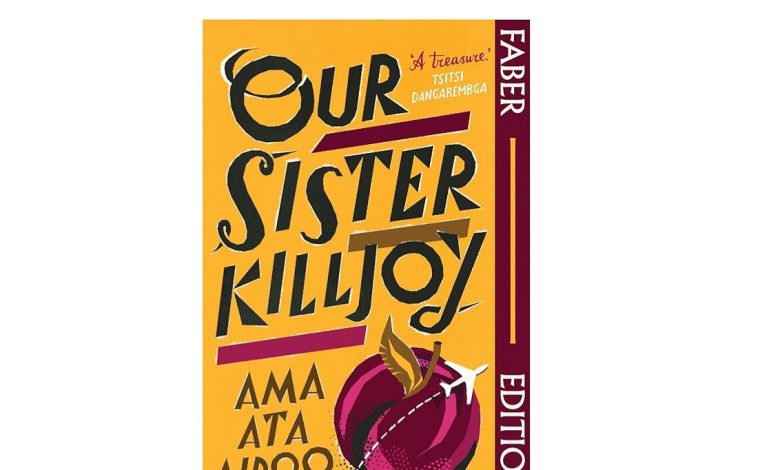
Summary: Ama Ata Aidoo’s debut novel, My Sister Killjoy, explores the story of Sissie, a Ghanaian student who travels to Europe on a scholarship. In the novel, Ama exposes how Africa and the Western world breathe a patriarchal structure in which women struggle to survive.
In her interview with BBC HARDtalk, Ama Ata Aidoo stated, “I am a feminist, yeah.” This public declaration became the theoretical lens through which scholars and readers analyse her work. She is considered a pioneer African feminist author because she didn’t just write about women; she revolutionised how African women were written.
While the “First Generation” of African authors focused on the male-led struggle against colonialism, Ama carved out a space where the African woman’s mind was the primary battlefield.
In her 1977 novel My Sister Killjoy, Ama revealed that women were among the pioneers of Africa’s struggle for independence. She rejected the common belief that feminism comes from the West, but argued that it comes from market women, farmers, traders, and grandmothers, who have always been breadwinners and decision-makers in society.
My Sister Killjoy follows the story of Sissie, a young Ghanaian student who travels to Europe (specifically Germany and London) on a government scholarship. As she navigated the western world, she witnessed the lived realities of the African diaspora, the legacy of colonialism, and the hypocrisy of African elites. In addition, Ama highlights how African Feminism is inseparable from anti-colonialism.
The novel is structured into four sections, which mirror Sissie’s journey: Into a Bad Dream, the plums, from our sister Killjoy, and a lover’s letter. In every section of the novel, Ama uses Sissie to expose gender inequality and the patriarchal structures that African women faced in their home country and abroad.
Sissie’s refusal to be meek and obliging in the face of racism and patriarchy earns her the nickname “Killjoy.” Still, it’s a profound feminist statement that negates the African belief in a patient wife, a virtuous woman, or an agreeable African girl who smiles and stays silent in the face of injustice.
Throughout the book, Sissie speaks up about hush topics, including criticism of the German-biased hospitality and the delusions of African male intellectuals in London. Ultimately, Sissie uses her voice as a tool of resistance, serving as a scholar. Ama presents her as the primary observer and critic of the world, reversing the traditional dynamic where men are the thinkers and women are the subjects.
Among Sissie’s feminist traits is her refusal to be the sexual object of Marija Sommer, her German neighbour. Although Marija is a woman and thus shares a gendered bond with her. Her refusal shows that sisterhood is complicated by racial and historical hierarchies. The mimics of European aesthetics by African women are a form of self-erasure of African identity. Sissie’s feminism criticises it and chooses to embrace her natural self.
In Our Sister Killjoy, Ama proves that the liberation of a nation is impossible without the liberation of women. As Sissie rejects the lonely seductions of the West and the apathy of her peers, she emerges as a symbol of self-actualisation. She is a woman who belongs, first and foremost, to herself and her heritage, making the book a timeless manifesto for feminist autonomy.