|
Getting your Trinity Audio player ready...
|
Summary: Princess Abiodun Oyefusi has petitioned President Bola Ahmed Tinubu on Monday, February 2, 2026, to sign the Amended Electoral Bill into law, warning that holding party primaries under outdated electoral laws could undermine candidate legitimacy, spark litigation, and erode public trust in Nigeria’s democracy.
Princess Abiodun Oyefusi has petitioned President Bola Ahmed Tinubu to sign the Amended Electoral Bill into law, warning that further delay will threaten the credibility of the 2027 general elections.
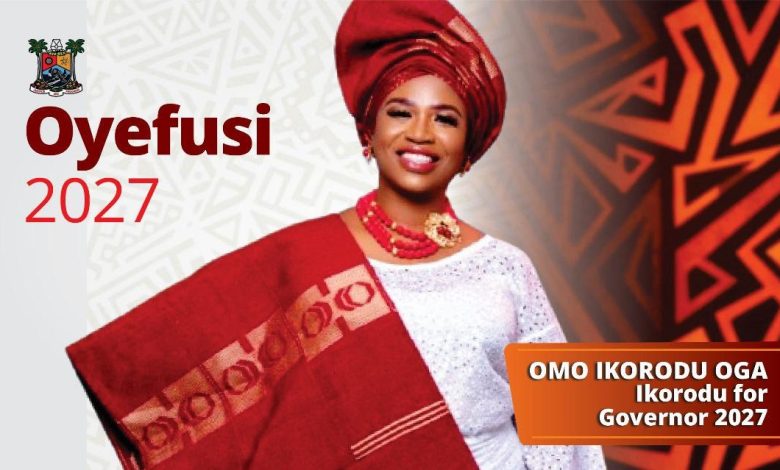
The 2027 Lagos State Governorship Aspirant made this known in a memorandum released from the Royal Castle of Mercy, Lowa, Ikorodu, on Monday, February 2, 2026. Princess Abiodun, popularly known as the “Upright Princess” for her humanitarian services and advocacy in Lagos State, detailed the consequences of using flawed electoral laws in her petition to the president.
The amended Electoral Bill is currently pending before the National Assembly, with the House of Representatives passing it in December 2025 and the Senate setting up a committee to review it. The bill proposes significant reforms, including electronic transmission of election results, stricter penalties for vote-buying, voting rights for inmates, and sanctions for delegates who manipulate party conventions.


Princess Abiodun warned that holding party primaries under outdated laws could undermine candidate legitimacy, spark litigation, and erode public trust in Nigeria’s democracy. In her memorandum, she posed three key questions: whether failure to enact the Electoral Act amendment prior to party primaries undermines legal certainty and the rule of law; whether delayed enactment increases the risk of pre-election litigation and electoral disruption; and whether full enforcement of the amended Act is necessary to safeguard internal party democracy and electoral integrity.
Princess Abiodun cited the Constitution, emphasising the sovereignty of the people and citizens’ right to participate in politics. She argued that electoral laws must be clear before party nominations begin, warning that unclear laws invite disputes and judicial challenges.
“Delaying the amendment weakens the Independent National Electoral Commission (INEC), making its guidelines vulnerable to legal challenges,” she stated.
According to Princess Abiodun, most pre-election disputes stem from flawed primaries. She warned that delaying the amendment would encourage forum shopping, lead to conflicting court decisions, and strain the judiciary. She stressed that internal party democracy is a legal obligation, not a political ideal, and urged enforcement of rules on delegate eligibility and nomination procedures.
She urged President Tinubu to sign the bill, INEC to issue guidelines, and political parties to comply strictly with the amended electoral laws.