|
Getting your Trinity Audio player ready...
|
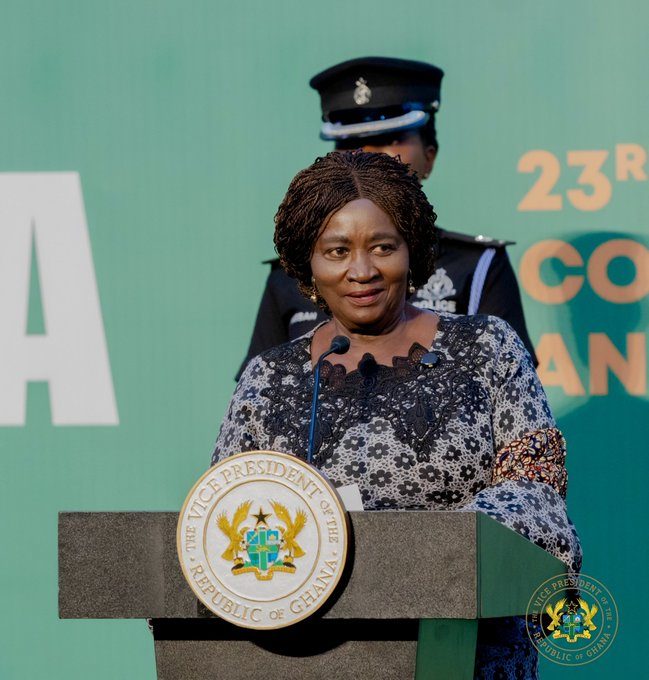
Professor Naana Jane Opoku-Agyemang, the Vice President of the Republic of Ghana, has urged African countries to take full ownership of their public health priorities. She made the call on December 4, 2025, while delivering opening remarks at the 23rd International Conference on AIDS and STIs in Africa (ICASA 2025).
She highlighted Ghana’s progress in HIV response and broader health reforms while stressing the need for sustainable, Africa-driven solutions.
She warned that declining global support makes it urgent for African governments to lead their own healthcare agenda.
“At a time when global shifts have reduced donor support for healthcare, Africa must step forward, confront hard truths, and set our own agenda,” she said.


The professor welcomed delegates from across the continent, including the First Lady of The Gambia, H.E. Fatoumatta Bah-Barrow, and the First Lady of Sierra Leone, H.E. Dr Fatima Maada Bio. She noted that 65% of people living with HIV in Ghana now know their status and many are on lifesaving treatment, though stigma and gaps in access persist.
Prevention, she stressed, must guide all interventions, alongside empowering communities to design locally rooted solutions.
She outlined Ghana’s broader health-sector reforms, including rising enrollment under the National Health Insurance Scheme, the rollout of Free Primary Healthcare, and the Ghana Medical Trust Fund (MahamaCares), which aims to improve treatment for chronic conditions, such as cancer.
She urged participants to remain committed to long-term reforms that will secure the continent’s health and future.
“Africa has the capacity to end the threat of AIDS, but only if we prioritise long-term resilience over short-term responses,” she stated.