Why Female Circumcision in The Gambia is still FGM. No Harm and Happy Marriage Claim Fails
|
Getting your Trinity Audio player ready...
|
Summary: In a recent post by BBC News Africa reporting the news on the Gambia government lifting the ban against female genital mutilation, a Gambian user commented saying that in Gambia they don’t practice FGM but rather female circumcision, and it causes no harm as the women are happily married with kids. NFM further fact-checks this comment, and it reveals the claim is incorrect, FGM is the same as female circumcision, it is extremely harmful, and so many women have lost their identity with several complications affecting the acclaimed happy marriage.
Claim
On February 6, 2026, Muhammed Sillah, a Gambian social media user, made a comment on a post on Facebook by BBC News Africa saying that Gambia’s Supreme Court is considering a case to re-legalise Female Genital Mutilation (FGM) after a failed 2024 parliamentary attempt. If overturned, it would be the first country ever to reverse an FGM ban. Muhammed says FGM is not practised; instead, what exists is female circumcision (FC), which is described as a long-standing cultural tradition that allegedly causes no harm, with claims that 98.9% of women who underwent it are happily married and have children.
“In the Gambia, we do not practice FGM; we do female circumcision FC. And this has been part of our culture since time immemorial, it causes no harm to anyone, and 98.9 per cent of people who went through FC are happily married and having their kids,” Muhammed said.
The post has 1.5k likes, 779 comments, and 259 shares.”
FGM practice has existed for decades, with no benefit but rather destroying the promising lives of young girls.
NFM Checks
According to the World Health Organization, female genital mutilation (FGM) refers to all procedures that involve partial or total removal of the external female genitalia, or other injury to the female genital organs for non-medical reasons. It is internationally recognised as a harmful practice with no health benefits and a violation of the human rights of girls and women. FGM is usually carried out on young girls, can cause severe short- and long-term health problems, and reflects deep-rooted gender inequality. Equally, female circumcision is a term sometimes used to describe the traditional practice of cutting or altering the external female genitalia for cultural, religious, or social reasons.
In many contexts, including The Gambia, this term refers to the same set of procedures that international health organisations like WHO classify as female genital mutilation (FGM), meaning there is no medical benefit, and the procedures can cause health risk complications.
For overall clarity, female genital mutilation and female circumcision are the same thing. The DHS and health research show the Gambian practice includes: type I (clitoridectomy), which involves some removal of clitoral tissue, type II (excision), the removal of clitoris and labia minora, and type III (infibulation), a narrowing/sewing of the vaginal opening. It leaves tens of millions of girls and women affected globally and in The Gambia.
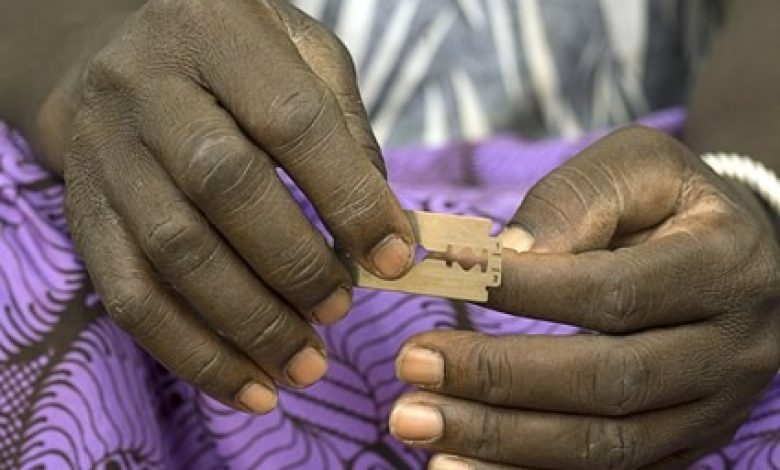
Most girls in Gambia are cut before age 5, often in early infancy (some as young as before their first birthday). Traditional circumcisers (older women in communities) carry out 95% of procedures. These procedures are generally done without anaesthesia, sterile conditions, or medical oversight. Traditional cutters often use knives, razor blades, scissors, or other sharp objects that are not sterilised to cut young girls. To carry this out, the girls are typically held down by family or community members during the cutting, amplifying trauma and risk of complications.
Statistics also estimate that FGM in Gambia is high, around 73 to 76% of women aged 15–49 have undergone the procedure. It’s practised across ethnic and religious lines, though most practitioners are traditional circumcisers. The claim that there is no FGM in Gambia is false and misleading.
The statement that FGM/ Female circumcision causes no harm is inaccurate. NFM conducted extensive research that contradicts the medical data supporting the no-harm claim. It shows the harm from these procedures both immediately and long-term. The national clinical study of 871 cases across The Gambia says 34.3% of girls and women examined showed immediate or late complications (infections, severe bleeding, healing problems). Even Type I FGM/FC, considered the least extensive, resulted in complications in 23.7% of cases.
A separate Gambian study found women with FGM/C had higher rates of long-term problems such as painful menstruation, sexual dysfunction, scarring, and delivery complications, including perineal tears, obstructed labour, caesarean sections, and stillbirths. UNICEF and WHO estimate that more than 230 million girls and women worldwide are living with the consequences of FGM/C. There are serious outcomes which include: infection, permanent scarring, chronic pain, sexual health issues, infertility, psychological trauma, and even death. The evidence clearly shows that non-medical cutting of female genitals carries significant health risks. Another observational study found that women who had undergone FGM/C faced significantly higher risks of postpartum haemorrhage, the need for neonatal resuscitation, and perinatal death compared to women who had not experienced the procedure
Are women happily married and having children after circumcision? No! This is a social observation, but it’s important to interpret it accurately. Research reveals that, because the practice is very common, many women who have been cut do go on to marry and have children, but this does not mean the procedure is harmless. High marriage and fertility rates in a community with widespread circumcision do not scientifically prove safety or lack of harm; they simply reflect existing social norms and expectations
No matter what name it is given, it is about control over women’s bodies. It is based on ideas about purity, marriageability, and regulating female sexuality. Calling it culture does not erase the fact that girls are subjected to a harmful procedure without their consent. Feminism stands for bodily autonomy, dignity, and the right of every girl to grow up whole and unharmed.
Experts Opinion
For more factuality, Naija Feminists Media consulted a Public Health Professional, Queen Ndubisi, who says that there is no difference between FGM and female circumcision.
“I want to be very clear: whether it is called female circumcision or FGM, the medical reality does not change. There is no health benefit to cutting the female genitalia for non-medical reasons. Over the years, I have seen girls and women suffer severe bleeding, infections, childbirth complications, and long-term psychological trauma as a result of this practice.”
She further adds that tradition means a lot to some communities, but tradition should not put girls at risk. “If the evidence is clear, women who have undergone FGM face higher risks during pregnancy and delivery, including heavy bleeding and even the loss of a baby.
She concludes by saying the conversation isn’t about disrespecting culture but about protecting the health, rights, and future of girls.”
Social Media Users React
The post’s comment generated differing opinions among other users.
“Muhammed Sillah, as a man, I don’t think you know much about this. The biggest problem in this debate is that it’s mostly men talking about something that they are not really open to listening to what the women honestly have to say about. All circumcision is painful, no matter what you choose to call it and has no beneficial purpose. And the conditions under which it is done are often harmful themselves. There is a big risk of side effects and consequences. So why this cruelty to small kids who do not understand?” Charlotte West commented.
Another user, Lisa jester, “Muhammed Sillah, it was not practised pre-Islam, I’d bet. It is a male invention to control women. No man will have any procedure done that prevents his enjoyment of sex.”
Conclusion
Calling female circumcision instead of FGM does not change what it is; the practice is the same, and the harm is real. The fact that many women go on to marry and have children does not erase the physical and emotional damage, nor does it prove they are unharmed or happy. For many, compliance was shaped by societal pressure rather than choice. Protecting culture should never come at the cost of girls’ lives. We must prioritise safeguarding young girls above all else.
Naija Feminists Media is committed to fighting gendered disinformation and misinformation that concerns women.