|
Getting your Trinity Audio player ready...
|
Summary: NFM hosted an X Space on January 23, 2026, featuring over 150 listeners across three countries to raise awareness of endometriosis in Nigeria, focusing on its symptoms, impact, and the stigma surrounding the condition. Speakers shared personal experiences, discussed medical and cultural challenges, and called for better public education, healthcare training and supportive policies for women living with endometriosis.
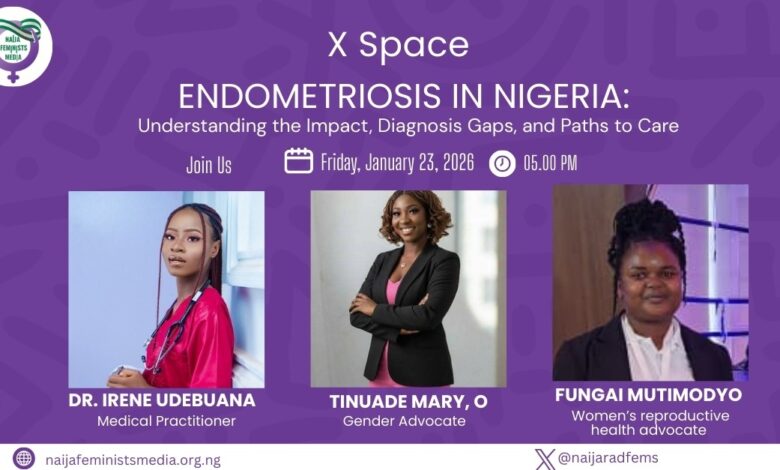
Naija Feminists Media hosted its first X Space of the year on January 23, 2026, at 5:00 p.m. WAT. The conversation, titled “Endometriosis in Nigeria: Understanding the Impact, Diagnosis Gaps, and Paths to Care,” raised awareness about women’s reproductive health and challenged silence around chronic illnesses affecting women. With over 150 listeners across three countries, South Africa, Nigeria, and Zimbabwe, it also highlighted the interconnection of women’s health experiences across borders.
Endometriosis is a chronic and painful condition in which tissue similar to the lining of the uterus grows outside the uterus, commonly affecting the ovaries, fallopian tubes, and pelvic lining. Globally, one in ten women lives with endometriosis.
The X Space featured seasoned advocates and professionals, including Tinuade Mary O., Executive Director of Women Too Africa Foundation and an endometriosis advocate; Fungai Mutimodyo, a women’s reproductive health advocate from Zimbabwe; and Dr. Irene Udebunana, a medical doctor, medical robotics developer, feminist, and founder of Kids in LET. The conversation also welcomed contributions from participants with lived experience of endometriosis.

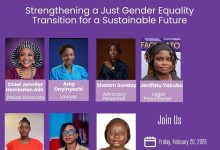
Tinuade Mary O., an endometriosis warrior, opened the discussion by sharing her personal experience. She described endometriosis in one word: pain. She noted that the condition is chronic, has no cure and can only be managed, making it especially difficult to live with.
She lamented that although endometriosis was named over 100 years ago, there is still limited research, awareness and access to care. Tinuade explained that endometriosis is a full-body disease, not limited to menstruation or ovulation and that symptoms can be triggered with or without periods. These symptoms include pelvic pain, heavy bleeding, digestive issues, fertility challenges, inflammation and nerve pain.
She also spoke strongly about medical misogyny, explaining how endometriosis is often treated solely as a fertility issue rather than a broader health condition. Within the Nigerian context, she highlighted deep-rooted social biases and cultural expectations that discourage women from speaking openly about pain. According to her, breaking the silence is key to reducing stigma. She called on the government to introduce policies that centre women’s reproductive health and improve access to care for people living with endometriosis.
Offering a clinical perspective, Dr. Irene Udebunana explained that endometriosis is linked to hormonal imbalances and environmental factors, with possible genetic influences. She noted that this is an area that remains under-researched globally. She stressed that endometriosis should rightly be referred to as a disease, and noted that medical training often does not adequately cover it, contributing to delayed diagnosis and dismissal of patients’ pain.
Dr. Irene also addressed common myths, including the false belief that pregnancy can cure endometriosis or that the condition automatically prevents women from getting pregnant. She emphasised the need for better education within medical schools and ongoing training for healthcare professionals.
Fungai Mutimodyo highlighted the importance of sustained advocacy and public education. She called for conversations about endometriosis in schools, women’s spaces, the media, and community settings, stressing that lived experiences should be at the centre of awareness efforts. She also recommended improved reproductive health education, healthcare worker training, policy advocacy and grassroots community sensitisation.
Advising women living with endometriosis, Fungai offered reassurance:
“It is not your fault. Your pain is real, and it deserves attention,” she encouraged women to speak up, seek community and know they are not alone.
Contributor Ajibola Bambgose, also an endometriosis warrior, spoke about the invisible nature of the illness and its changing symptoms, as well as its impact on mental health. She noted that while specialised endometriosis care exists, it is expensive and inaccessible. Ajibola emphasised the role of social media in building supportive communities and raising awareness.
She called on Nigerian organisations and employers to be more empathetic and accommodating toward women living with endometriosis, particularly in the workplace. She also urged medical practitioners to listen to women, take their pain seriously, and avoid dismissing their experiences.
The X Space concluded with participants agreeing on the urgent need for awareness, improved medical training, supportive policies and open conversations about endometriosis in Nigeria. By centring lived experiences alongside professional insights, the discussion highlighted that addressing endometriosis is not just a health issue, but also a matter of dignity, equity and reproductive justice for women.