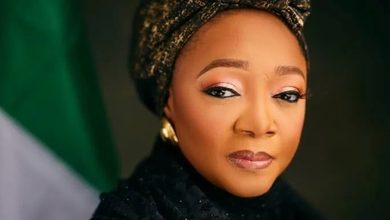
Rachel Okonkwo Challenges the “Too Successful for Love” Myth
|
Getting your Trinity Audio player ready...
|
Summary: A viral video of Rachel Okonkwo posted on X on March 26, 2026, shows the Nollywood star responding to a remark by her colleague Zubby Michael, who suggested her success may be why she hasn’t attracted suitors. In her response, Rachel challenged the claim, pointing out that she also didn’t have an influx of suitors during her earlier struggles, including when she sold roasted corn in Nsukka, which has raised a wider conversation about success, gender expectations, and relationships.
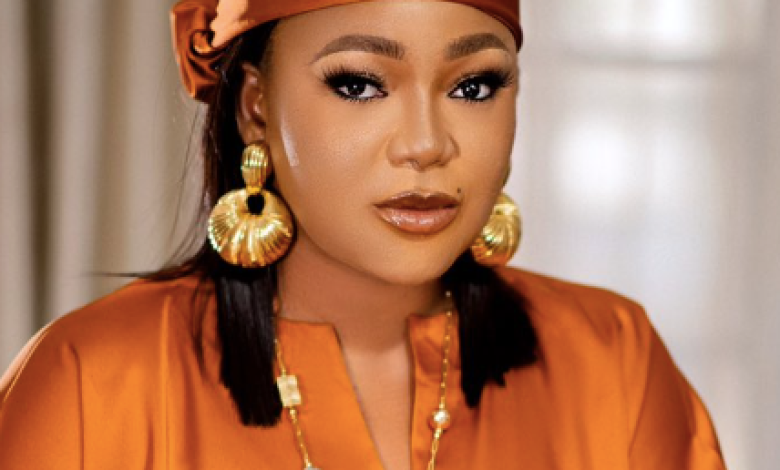
Rachel Okonkwo, popularly known as Nkoli Nwa Nsukka, is a celebrated Nollywood actress known for her resilience and rise from humble beginnings. Recently, she found herself at the centre of a cultural conversation following a remark made by her colleague, Zubby Michael, a prominent figure in the Nigerian film industry.
In their exchange, Zubby suggested that Okonkwo’s visible success, her home, her car, and her financial stability might be the reason she has not attracted suitors. Her response was both sharp and thought-provoking: she questioned why, if success is indeed intimidating, she was not overwhelmed with suitors during her earlier days of struggle, when she sold roasted corn in Nsukka.
This moment did more than start an online debate; it exposed a deeply ingrained societal belief that continues to shape how women navigate success and relationships. The post on X generated 353.2k views, 190 comments, 3.7k likes, and 651 comments.
However, despite society’s stereotypical views of women’s wealth, most users agreed with what she said.
“The woman is too wise. Truly, if men are scared away by a woman’s success, why are all the poor women not married? Better to keep working on yourself to become the best version of who God made you to be than to fold your hands and wait for a messiah. Men sef are not finding,” OChisomeje commented!
Another user expressed disgust, “That Zubby asking her a stupid question, is he even married, even with the little change, he has no woman wants to manage that, his bad character.”
“You can’t win with these men o. So, my dear women, please keep working hard and securing your success. A man can leave you, but your certificates and success will not leave you because they are yours,” Debbie advises women.
At its core, this narrative implies that a woman must remain small to be desirable, that her ambition must be tempered, and that her success must be negotiable. It quietly conditions women to believe that love is contingent upon self-reduction and that achievement may come at the cost of companionship. This is not merely a personal opinion; it is a social script that has long dictated how women are expected to navigate both success and relationships.
This narrative is also rooted in patriarchy, which historically positions men as providers and women as dependents. When a woman disrupts this dynamic by becoming financially independent or even more successful than her male counterparts, it unsettles traditional gender roles. The discomfort that follows is often reframed as intimidation, placing the responsibility back on the woman rather than interrogating the system that produces such insecurity.
This expectation that women should not be too ambitious themselves is a form of social control. It polices women’s ambitions and subtly punishes those who refuse to conform. By suggesting that success may lead to loneliness, society attempts to regulate women’s choices through fear. It is a warning disguised as advice.
However, women are entitled to full, expansive lives that include success, autonomy, and, if they choose, fulfilling relationships. It rejects the notion that women must barter their achievements for affection. Instead, it calls for a redefinition of desirability, one that values confidence, independence, and authenticity rather than submission and limitation.
To dismantle this narrative, there must be a conscious effort to re-educate society on what partnership truly means. A healthy relationship is not built on imbalance or dependency, but on mutual respect, shared growth, and emotional compatibility. The idea that a woman’s wealth or success could “intimidate” a man reveals less about women and more about the fragility of certain constructions of masculinity.
Women must be reminded that their achievements are not liabilities. Owning property, building a career, and attaining financial independence are not barriers to love; they are indicators of discipline, resilience, and self-worth. The burden should not be on women to dilute these qualities to be chosen. Rather, the conversation should shift to encouraging men to evolve and see partnership not as a hierarchy but as a collaboration between equals.
Furthermore, young girls and women must be socialised to aspire without fear. When success is framed as a threat to romantic fulfilment, it creates an unnecessary dichotomy: choose ambition or choose love. This is a false choice, and one that must be actively challenged in homes, media, and public discourse. The issue is not women’s success, but the persistence of outdated expectations that some individuals have yet to unlearn.
A real estate mogul, Geraldine Bamiduro, Naija Feminists Media spoke to, shared a similar perspective: that a woman’s wealth does not deter the right man from choosing her.
“This harmful narrative that a woman’s success reduces her chances at marriage must be completely dismantled. It does more damage than good, creating limiting beliefs that hold women back from fully becoming,” she said. “To every woman: keep building, keep growing, keep being productive. If you desire partnership, the right man will meet you where you are, regardless of your status.”
Rachel Okonkwo’s response serves as a powerful reminder that success should never be a source of shame or a barrier to love.
Women must be encouraged to expand, not shrink, as “Chimamanda Adichie would say, women have been told not to aspire for too much success, to shrink themselves to fit a man” This statement analogises itself in this situation. Love, in its truest form, does not require diminishment. It thrives in spaces where both individuals are free to be fully themselves.
Conclusion
Ultimately, the question is not whether successful women can find partners, but whether society is willing to evolve enough to embrace partnerships that honour equality, growth, and mutual respect. Until then, women must continue to choose themselves fully, boldly, and without compromise.