Redefining Success Beyond Marriage: A Review of The Marriage Monitoring Aunties’ Association
|
Getting your Trinity Audio player ready...
|
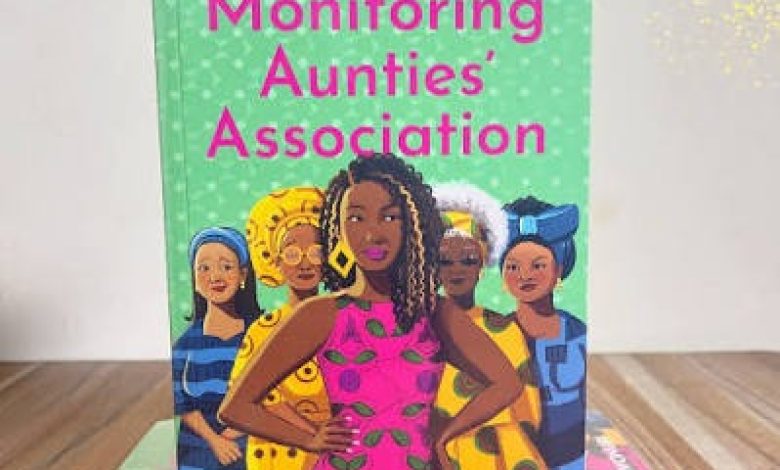
Summary: The Marriage Monitoring Aunties’ Association follows the life of Sade Sodipo, a successful, witty, and intelligent 50-year-old woman who, according to traditional societal expectations, has an incomplete life because she is single and childless. Through her, Awonubi radically refutes the long-standing societal myth that a woman’s existential validity, social currency, and ultimate completion are contingent upon the institutions of marriage and motherhood.
In many African societies, a woman is considered complete or successful only when she becomes a wife and mother. Ola Awonubi’s 2025 novel, The Marriage Monitoring Aunties’ Association, offers a sharp, necessary feminist critique of patriarchal structures that reduce women’s worth to marriage and fertility. The novel exposes how women are often conditioned to act as the gatekeepers of their own subjugation, pressuring younger generations to conform to marriage at all costs.
The narrative follows the life of Sade Sodipo, a successful, witty, and intelligent 50-year-old woman who, according to traditional societal expectations, has an incomplete life because she is single and childless. By centring the story on an older woman, Awonubi radically refutes the long-standing societal myth that a woman’s existential validity, social currency, and ultimate completion are contingent upon the institutions of marriage and motherhood. Moreover, her character is a foundational feminist narrative choice that women do not exist as fractions waiting for a partner to make them whole, but rather as a valid, vibrant domain of autonomy.
Through the titular title Marriage Monitoring Aunties’ Association, the novel explores how patriarchal structures are often policed and enforced by other women, especially older generations. The “Aunties” in the novel include Sade’s mother, sister, and friends, who act as self-appointed guardians of tradition, using guilt, religious pressure, and hyper-surveillance to enforce conformity. The book highlights how patriarchy successfully co-opts women to police other women. Throughout the novel, these maternal figures deploy guilt, religious manipulation, and relentless meddling under the guise of love and well-meaning cultural duty to control and condemn Sade’s singlehood. By analysing their behaviour through a feminist lens, the novel exposes how women are conditioned to impose their internalised timelines on younger generations. Sade’s journey is not merely about finding a partner; it is an uphill battle to establish rigid, healthy boundaries in the face of collective societal pressure. Her resistance to their blind dates and unsolicited interventions highlights the feminist necessity of rejecting community beliefs when they compromise personal agency.


The climax of Sade’s feminist arc lies in her refusal to settle for societal expectations. Many women would have opted for marriages of convenience under the weight of societal pressure, age, or desperation to silence societal critique. Sade flatly rejects this path. Even when she met Jimi, her eventual romantic partner, she did not consider him as a saviour or a missing puzzle piece designed to fix her life. Instead, her approach to the relationship is careful, unhurried, and deeply rooted in mutual respect. She negotiates this romance entirely on her own terms and timeline. By refusing to compromise her high standards, her peace, or her identity for the sake of social conformity, Sade redefines romance not as a desperate survival mechanism, but as an optional, enriching addition to an already complete life.
Feminism cannot be complete without female relationships. This theme was heavily demonstrated in the novel. Despite Sade’s singlehood and African-biased beliefs against it, she still maintains a strong sisterhood and friendship with her friends and sister who are married. Their relationship shows how women supporting each other can be a grace and unique in a patriarchal society. It also shows the ultimate power of genuine, unconditional sisterly support when structural challenges arise.
Ultimately, The Marriage Monitoring Aunties’ Association is a profound feminist work because Ola Awonubi did not penalise her protagonist for her independence; instead, she rewards her with a narrative that validates both her autonomy and her capacity for love. The novel stands as an empowering manifesto for women of all ages, asserting that a woman’s timeline belongs strictly to herself, and that true fulfilment is self-authored, self-sustained, and entirely independent of patriarchal validation. Moreover, Sade’s character arc is that of an admirable, successful woman who accepts herself exactly as she is, while redefining her value outside of patriarchal timelines.