|
Getting your Trinity Audio player ready...
|
Historically, menstruation has been treated as a shameful experience that must be hidden and a taboo topic that should rarely be discussed in public. Despite the advancements we have made over the years in understanding women’s menstruation and reproduction, this idea persists in our culture; the people who menstruate are still shamed for it.
In many households, parents fail to educate their female children on their periods; because of this, many girls don’t even know about it before menarche (the first period). Some parents will even punish them for having it, because it is somehow seen as a sign of impurity or promiscuity. In some cultures, girls and women are not allowed to cook for men, must use separate utensils, cannot touch religious texts, and will even be quarantined in a separate room during their periods. Societally, telling a woman “she must be on her period” as a way to dismiss her opinion is common. Generally, women having periods is seen as an inconvenience at best and an impure experience worth shunning and punishing at worst.


This cultural repulsion towards menstruation is extremely harmful to women, as it is not only a completely normal biological process but is also essential for their reproductive health and ability to get pregnant! It is very ironic that culturally, a woman’s value is based on their ability to bear children, but menstruation– which is a signal of that ability– is shamed and treated as disgusting.
It’s not just something that exists on the home front either. How girls are treated in their homes and by their cultures will fundamentally shape how they are perceived by society at large, including the medical world. Although medical practitioners work in one of the most mentally and physically taxing fields in society, they’re still people who are just as susceptible to cultural bias. As a result, women’s reproductive experiences being considered shameful and unworthy of respectful acknowledgement has made its way into the medical field. In fact, it was there from the very beginning. Many prominent physicians, doctors, and gynaecologists who shaped the medical field as we know it have been guilty of this.
“Hysteria” and Its Influence on Modern Medicine
“Hysteria,” for example, was a medical diagnosis with its roots in ancient Greece. This was a society that viewed women’s bodies as inferior to men. Aristotle, a widely recognised and influential philosopher, believed that female bodies were weaker, mutilated, inverted, and incomplete versions of male bodies. Thus, “hysteria” was used to diagnose any woman who experienced symptoms ranging from depression and anxiety to infertility and abdominal pain. Plato, another monumental Greek philosopher, described hysteria as a ‘uterus wandering around the body, longing for conception.’
This misconception, arising from patriarchal Greek society, continued to shape Western (and thus global) medicine for centuries. It took over 2000 years after the term was originally coined for it to be officially removed from the DSM (Diagnostic and Statistical Manual of Mental Disorders) in 1980.
The term “menstrual madness” was another example of this influence. It was a 19th-century diagnosis, and the symptoms of this illness included emotional instability, “erratic” behaviour, and the aforementioned “hysteria.” This “madness” was blamed on menstruation, and an ovariotomy or Battey’s Operation was the popular prescription for this so-called “menstrual madness.” This operation involves the complete removal of both ovaries. As a result, several women were essentially sterilised if they experienced symptoms ranging from mood swings and post-partum depression to epilepsy and PTSD. Some women would even be sterilised if they argued with their husbands, as it was seen as them deviating from their “natural” state of submission.
This was the genesis of the phrase “she must be on her period,” which is used as a dismissal of women’s opinions, real emotional struggles, and pain.
The direction of medicine would continue to be led by patriarchal men, and male bodies remained the default for medical practice. Medical misogyny was rife, and medical diagnoses would centre male experiences, while discounting and trivialising female experiences, using misogynistic and inaccurate diagnoses like “hysteria” and “menstrual madness” to explain a myriad of symptoms.
Misunderstandings of female reproductive health have had dire consequences for women, as the real issues they have are either ignored, misdiagnosed, or simply unrecognised due to these patriarchal ideas. It’s depressing to imagine the many women in history who had undiagnosed illnesses like depression, anxiety, PTSD, PMOS, endometriosis, etc., and couldn’t receive sufficient care because their illnesses were simply misdiagnosed as “menstrual madness” or “hysteria.”
This still has consequences in today’s medical world. It usually takes about 7 to 10 years before a woman is diagnosed with endometriosis. Endometriosis is a condition in which cells that are similar to the uterine lining (i.e., the endometrium) grow outside the uterus, particularly in the ovaries and fallopian tubes. This illness causes heavy bleeding, immense pain (including during intercourse, bowel movements, and urination), irregular periods, fatigue, diarrhoea, etc. Endometriosis takes so long to diagnose due to the normalisation and dismissal of women’s pain in medicine.
Many women may not even seek medical care because of the cultural idea that periods are meant to be debilitating, irregular periods are normal, and that sex is meant to be painful for women. Thus, it not only takes longer to identify endometriosis, but it is also incredibly underdiagnosed.
The 1920s “Menotoxin” Myth
Menstruation wasn’t just seen as a scapegoat to explain away women’s illnesses. Historically, it was also perceived as a way for a woman to purge bodily impurities, thereby making period blood “impure.” Some even viewed menstruation as an illness or a disability. This is because female bodies were viewed through the same Aristotelian lens—where male bodies were considered the default, and female bodies were simply faulty versions of them.
In the 1920s, a new theory was proposed by Béla Schick, a paediatrician. He claimed that menstrual blood contained an invisible substance called “menotoxin” that could wilt flowers, prevent bread from rising, and kill insects. Therefore, it was commonly advised that women on their periods should not cook, do gardening, bake bread, or preserve meat. A later development of this theory in the 1940s also claimed that menstruation affected perms, and that the perm wouldn’t “take” (i.e., work properly) if a woman applied it while on her period.
The culture of stigmatising female reproductive processes remained embedded in medicine for decades, and women’s periods were and are one of the most stigmatised topics. This belief that women’s periods are unclean and dirty isn’t just a myth that exists in a vacuum; it influences people and creates heavy bias, including in medical practitioners and researchers.
Medical Institutions (still) Don’t Take Women’s Health Seriously.
Throughout the 20th century, research on female reproductive biology and health was incredibly underfunded. Private institutions primarily funded it in the early 20th century. By the mid-20th century, public grants for female reproductive research had increased, but they were limited to fertility and pregnancy. From 1977 to 1993, women “of childbearing potential” were excluded from clinical drug trials by the FDA. This resulted in decades of drugs primarily being tested on men.
This created an imbalance where most of the research that is done on female reproductive biology is largely centred around pregnancy and fertility. Thus, non-pregnant women who have serious reproductive health issues like PMOS, PMDD, vaginismus, etc. are constantly
sidelined in medical research. Not only that, even the general understanding of other non-pregnancy-related reproductive processes, especially menstruation, has not been expanded properly.
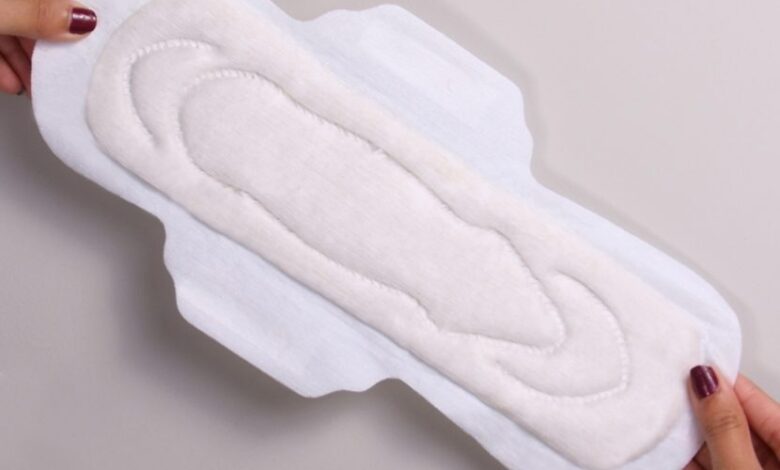
For example, up until 2023, sanitary pads were only tested using saline solution: a combination of water and salt. You don’t need to hold a biochemistry degree to know that saline solution is very different from menstrual fluid. That means the standard for what’s considered “heavy flow” during a period is very skewed, as saline solution is much lighter than period blood. This has consequently led to women being underdiagnosed for various reproductive illnesses, including PMOS and endometriosis, as heavy bleeding is a key symptom.
The cultural disgust for menstruation and the devaluation of women’s bodies as inferior to men’s bodies has led to the systemic exclusion of women from medical research and practice. This system treats female biology as a deviation from the default of male biology
and creates an environment in which female bodies are considered secondary to research priorities.
Menstrual Blood Has What?
It took over 4 decades after stem cells were originally discovered in 1963 for them to finally be discovered in the endometrium in 2004 by Dr Caroline Gargett, and it took 9 years after stem cells were isolated from embryos in 1998 for them to finally be isolated from menstrual fluid in 2007 by Dr Xiaolong Meng.
Stem cells are unspecialised, self-replicating cells that can develop into specialised cells that function in specific organs. These cells are necessary for tissue maintenance and organ repair.
Certain adult tissues and donated embryos are commonly used as sources of these cells, but they have limitations. Bone marrow, a standard source, is limited in the types of cells it can differentiate into, is finite in supply, is very invasive to extract, and can cause unwanted immune reactions.
Embryos can differentiate into all types of cells, but are an ethically controversial source as the extraction process will destroy the embryos. They are, like bone marrow cells, in limited supply and notorious for causing unwanted immune reactions.
Menstrual fluid is the complete opposite, as it freely flows from billions of women every month, and can easily be collected through a menstrual cup. It’s just baffling that for so long nobody even thought to look at the uterus: the organ that literally creates these embryos in the first place!
Not only were these cells found in menstrual fluid, but the fluid contained a unique and complex set of proteins not found in regular blood, which accelerated the tissue repair process. According to research led by Dr Gemma Evans, plasma isolated from menstrual fluid had completely healed wounds on human skin in 24 hours. Regular blood plasma healed only 40% of the wounds within the same time frame.
What’s more, the stem cells found in menstrual fluid were able to differentiate into more varieties of cells than those obtained from bone marrow, including nerve, cardiac muscle, bone, liver, and pancreatic cells. These cells, found in menstrual fluid, also pose no risk of tumours and are less likely than bone marrow and embryonic stem cells to be rejected by the body’s immune system.
This has exciting implications for stem cell research. It can help us find new, more efficient ways to treat a variety of conditions like Alzheimer’s, parkinson’s, diabetes, endometriosis, and liver cirrhosis. It also challenges centuries of the demonisation and cultural shaming of
menstruation. Menstrual blood is the opposite of toxic and unclean; it gives life and can renew what has been lost due to disease and injury. If male bodies could produce fluids rich in rapidly regenerating cells, it would be the anthem of the patriarchy; we wouldn’t stop hearing about it for centuries.
Currently, there are a few menstrual blood banks that keep donated menstrual fluid for research on their stem cells. They are quite few and far between, though, because menstrual research isn’t very popular. In fact, only 0.25% of stem cell research studies menstrual fluid. Popular examples include LifeCell in India, Cryo-cell in the USA, and BioGrad BioBanking in the UK.
The Reality Ahead
Unfortunately, female reproductive biology is still incredibly understudied compared to the male counterpart. There’s so much more to learn, but very little funding actually goes into that research. Thus, we still have a long way to go in understanding female reproductive biology.
However, there have been some efforts made to aid the research of female reproductive biology, specifically menstruation. MIT, for example, has formed the $10 million Fairbairn Menstruation Science Fund to ‘advance pioneering research on the human uterus and its impact on sex-based differences in human immunology.’ The NIH has also allocated $28 million towards research on endometriosis. The White House Initiative on Women’s Health Research raised nearly $1 billion in total funding.
The world must understand that women are people too; their medical issues and biology should be given just as much consideration as men’s. One can only imagine the progress we would’ve made in understanding female reproductive health if it weren’t for the misogynistic narratives that have been embedded in our society. Our culture and personal interactions shape how women are treated institutionally. So, the next time you learn a woman is on her period, be a bit more mindful of how you treat and speak to her.