Nigeria’s 2027 Presidential Race: Here’s What To Know About Ada Okwori and Esther Okereke contesting for the seat
|
Getting your Trinity Audio player ready...
|
Of the 18 presidential candidates on the Independent National Electoral Commission’s (INEC) final list for Nigeria’s January 16, 2027 election, two are women. In a country that has never had a female president, in over six decades of independence and 26 unbroken years of democratic rule, their emergence as candidates is worthy to note.
Ada Okwori: From Suing INEC to Get Her Party Registered, to Running for President
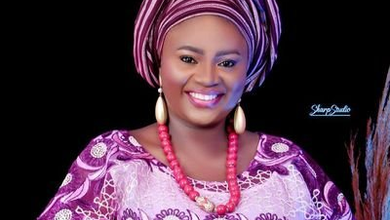
Ada Elizabeth Frederick Okwori, 48, is running under the National Democratic Party (NDP), a party she founded and had to take to court to bring into existence. An Idoma woman from Otukpo, Benue State, her political history sits in grassroots organising rather than establishment politics; she previously worked within the Peoples Democratic Party before founding Ward2Ward, an initiative focused on expanding political participation at the community level.
When INEC initially rejected the NDP’s application for registration, Okwori took the matter to court. A Federal High Court ultimately ordered INEC to issue the party’s certificate, and the NDP was formally registered in March 2026, barely six months before the presidential candidate list closed.
She emerged as the party’s flag bearer through a consensus arrangement at its primary and is contesting alongside running mate Uchenna Anthony Chukwuemeka. INEC lists her qualifications as the First School Leaving Certificate, Senior Secondary School Certificate, and a Higher National Diploma in Accountancy.


Her campaign centres on structural gender inclusion within political parties, not just symbolic representation. She has proposed that women occupy at least 40 per cent of positions across party executive structures and candidate slates, a concrete quota rather than a general appeal to “more women in politics.” Her broader platform includes grassroots participation, youth inclusion, social welfare, infrastructure development, and public opposition to money politics and political godfatherism, the informal patronage networks that have long shaped candidate selection in Nigerian parties, often to the exclusion of women without existing political capital.
Dr Esther Okereke: The First Actress to Run for President in Nigeria’s History
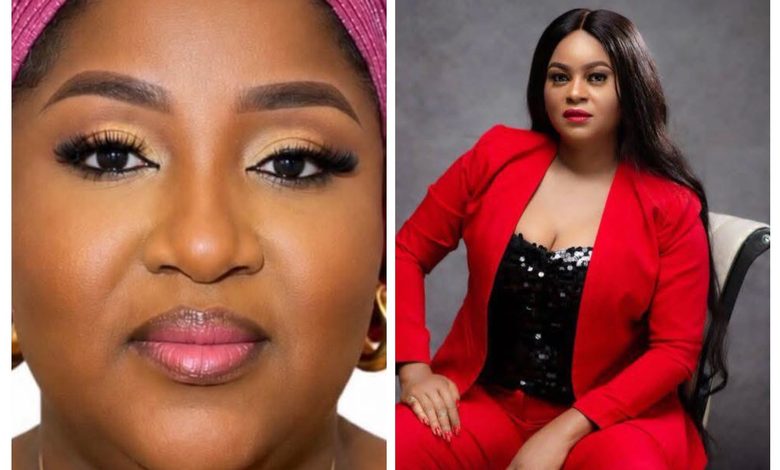
Dr Esther Nkem Okereke, 43, is the first Nollywood actress in Nigerian history to contest the presidency itself, not a supporting or deputy role. Before entering politics, she built a career as an actress, film producer, and entrepreneur, appearing in films including A Woman’s Plight, Wedding Saga, Venom, Enigma, Silent Sound, The Revealing, Crux, and Muqabala, alongside actors such as Mofe Duncan, Francis Duru, and Ivie Okujaye. She has also worked in philanthropy, investment, and business, and serves as CEO of the Gliding Stars Football Club.
She emerged as the National Rescue Movement’s (NRM) presidential candidate at the party’s national convention in Abuja on May 29, 2026, becoming its first female presidential flag bearer after defeating former Labour Party Hopeful Joseph Faduri and UK-based businessman Ademola Onigbokun in the party primary. She is contesting alongside running mate Nasir Muhammed Sulaiman, 35.
Her platform, branded the “ESTHER Agenda,” an acronym for Education, Security, Technology, Housing, Entrepreneurship, and Restitution, identifies insecurity, poverty, unemployment, corruption, and weak institutions as Nigeria’s central challenges. In her acceptance speech, she described her nomination not as personal ambition but as “a sacred assignment,” language that echoes a broader pattern among newer entrants to Nigerian politics: framing candidacy as public duty rather than political conquest.
Her transition mirrors, and outpaces, a wider trend of Nollywood figures moving into electoral politics ahead of 2027, including Funke Akindele and Tonto Dikeh, both of whom ran for deputy governor in 2023, and current aspirants Foluke Daramola-Salako and Eniola Badmus. Where those campaigns sought supporting office, Okereke places hers at the very top of the ballot, a position no Nigerian actress has attempted to occupy before.
A Candidacy Set Against a Country That Has Never Had a Female President
Neither of these women’s aspirations happens in a vacuum. Since 1992, when Sarah Jibril became the first woman to contest a presidential primary in Nigeria, the pattern has remained that women enter the race and lose, often badly, in their own parties before the ballot ever reaches the public. Sarah ran four times, in 1992, 1998, 2003, and 2011, at one point receiving a single vote out of 5,000 delegates.
In 2023, Uju Kennedy-Ohanenye became the first woman to contest for the presidency under the APC, before stepping down for Bola Tinubu. No woman has ever secured a major party’s presidential ticket in Nigeria’s history.
Against that record, Ada and Dr Esther represent two distinct routes around the same wall. Okwori built her own party from nothing because the existing ones offered no room; her candidacy argues that access has to be constructed, not requested, and her proposed 40 per cent quota turns that argument into policy, gender inclusion written into party structure, not left to a leader’s discretion.
Dr Esther, by contrast, took the more conventional route through an existing party’s primary, and won it, proof that the machinery can produce a woman at the top of the ticket when it chooses to, even if it rarely does. One candidate is rebuilding the house; the other has walked through its front door for the first time.
Women make up just 11.1 per cent of Nigeria’s 18 presidential candidates for 2027, and neither is favoured to win. But visibility on the ballot is nothing in a country where, as recently as 2023, “woman” and “presidential candidate” still read as a contradiction to most voters.
Ada’s candidacy is unusual in one more respect: she is both the presidential candidate and the founding chairman of her party, meaning her run isn’t backed by an inherited machine but by a structure she built after fighting the electoral commission just to get on the ballot, a distinction not shared by any of Africa’s five women who have gone on to serve as president, including Ellen Johnson Sirleaf of Liberia and Namibia’s Nandi-Ndaitwah, both of whom rose through existing party structures rather than founding their own.
Whether either woman emerges in January is one question. Whether the mere fact of two names, out of eighteen, does something to the next generation of Nigerian women weighing whether politics is a room they’re allowed in, is another one.