|
Getting your Trinity Audio player ready...
|
Sixty-six years after independence, Nigerian women are still being locked out of their fathers’ houses with the justification that it’s a family matter.
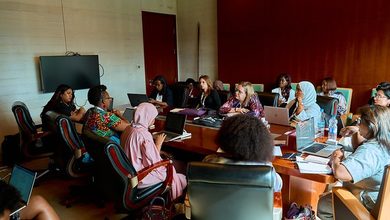
That was the weight of the message from Prof. Ezeilo Ngozi Joy, founding Executive Director of the Women Aid Collective (WACOL), who spoke at a WACOL press conference in Enugu marking Nigeria’s 66th Independence anniversary.
WACOL said it recorded more than 120 cases of disinheritance involving women and girls in Igboland in 2026. It called the trend a “near pandemic” that now reaches widows and, in some cases, mothers stripped of property by their own children.
Prof. Joy said the consequences go beyond property. Women can be left homeless and economically exposed, and inheritance disputes can open the door to intimidation, violence and abuse.


The women behind the numbers
Oge Ike, one of the women whose cases were presented, alleged that after she went to court over her late father’s house, she was beaten before a community chairperson and taken in handcuffs to the Federal Neuropsychiatric Hospital, Enugu, where she said she spent 15 days before escaping.
“My brother called me mad and took me to a psychiatric hospital,” she said. The Guardian noted that her allegations could not be independently verified.
Prof. Joy also cited the cases of Florence Umuoga, Ekwutosi Ezeonyekwere, Esther Nebo and Chinenye Odo. She alleged that Ezeonyekwere was locked out of her late husband’s shops and that traditional divorce rites were performed in her father’s home. She alleged that Nebo’s stepson locked her out of the family home and that she was issued a fake divorce letter in her dead husband’s name.
Of Odo’s case, she said: “It has become a pattern for sons to disinherit their mothers.”
Prof. Joy said she knows the pattern from home. After her parents died without a male child, she alleged, her uncles tried to demolish the house she built for her father and take his land, because women were not regarded as legitimate inheritors in Ehamufu.
The law is not the problem
Prof. Joy pointed to Section 42(1) of the 1999 Constitution, which prohibits discrimination on grounds of sex. She also cited the Supreme Court’s 2014 decisions in Ukeje v Ukeje and Anekwe v Nweke, which rejected customary practices that deny female children inheritance rights.
The gap, she said, is between the judgment and the village. “The Supreme Court of Nigeria has decided, and that is really the law,” she said. “But it’s just that it’s so disconnected with the realities that people, even in our rural areas, are not aware of the judgment.”
Way Forward
Prof. Joy urged traditional and community leaders to publicly reject discriminatory inheritance practices, and called on law enforcement to stop treating disinheritance, forced eviction and related violence as “family matters.” She asked for speedy resolution of inheritance and gender-based violence cases, stronger enforcement of existing laws, more legislation at national and state levels, and Nigerian ratification of the African Union Convention on Violence Against Women.
Prof. Joy said WACOL remains committed to pro bono cases and free legal aid for women, vulnerable children and persons with disabilities. She closed on what equality should look like. “At 66, Nigerian women should walk high, their shoulders high,” she said, “and have equal rights to equal inheritance, to land, to housing, to everything that is due to them as full citizens.”