Witchcraft Accusations: Why Are Older Women Still Being Beaten, Humiliated and Hunted in Nigeria?
|
Getting your Trinity Audio player ready...
|
An elderly woman in Amanfu, Ugbawka, Enugu State, was reportedly flogged, paraded and forced to eat faeces after being accused of witchcraft. A video circulated on social media on October 7, 2026, showing the woman subjected to degrading treatment. This incident has drawn attention to the persecution of older women accused of witchcraft in Nigeria, where such allegations have been linked to physical violence, social exclusion and killings.
The incident came to wider attention after Chuks Eric-E shared the video on X. It was also shared on Gistmania. According to the Advocacy for Alleged Witches (AfAW), which received the footage on October 7 and sent a representative to investigate, the woman was accused of pouring faeces on the grave of her stepson’s late wife. AfAW’s representative reported that the woman said the deceased had appeared in her dreams and tormented her, but denied killing her. The organisation also reported that she fled to Emmanuel Anglican Church in Amanfu, where the parish priest, Pastor Michael Chukwunonso Ezeude, refused demands from about 30 other women who wanted her handed over to the community.
In response to the incident, AfAW director Dr Leo Igwe called for the woman’s protection and the arrest and prosecution of those responsible for the abuse. The organisation also said it had contacted the police, the National Human Rights Commission and the International Federation of Women Lawyers (FIDA).
Older Women Are Accused of Witchcraft While Older Men Are Called Wise

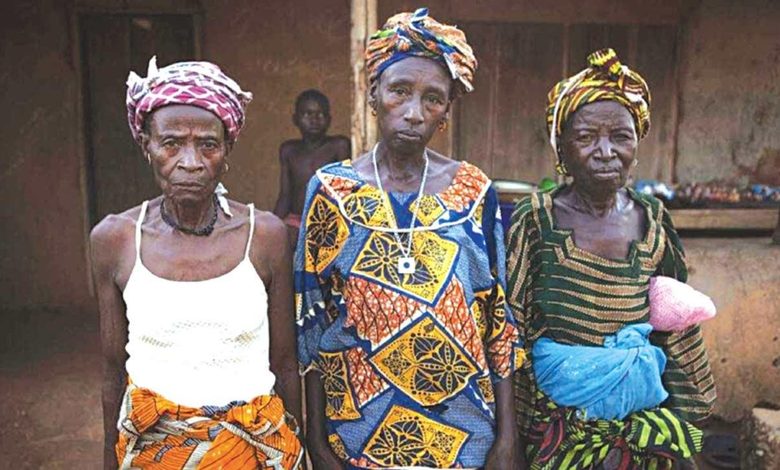
In many communities, an older man’s age strengthens his standing as a respected elder or some sort of custodian of knowledge, Age does not carry the same social meaning for women and men. An older woman on the other hand is regarded with suspicion. Instead of being seen with the same respect, she is being accused of jealousy, wickedness or possessing supernatural powers that supposedly explain the misfortunes around her. The targeting of older women accused of witchcraft has been documented in research on Nigeria for years. In a study, Aged Women, Witchcraft, and Social Relations Among the Igbo in South-Eastern Nigeria, published in the Journal of Women & Aging, sociologist Scholastica Ngozi Atata examined the experiences of older women labelled witches and the effect of those accusations on their relationships with relatives. Her research drew on 20 interviews with affected older women and their family members and places the accusation within the social relationships surrounding these women, where a label can change how relatives perceive and treat someone they have known for years.
These gendered assumptions and accusations surrounding old age are different, Researcher Friday A. Eboiyehi documented some of the consequences of this pattern in Convicted Without Evidence: Elderly Women and Witchcraft Accusations in Contemporary Nigeria, published in the Journal of International Women’s Studies in 2017. He examined the persecution of older women accused of witchcraft and the human rights violations they face despite the absence of credible evidence against them. In communities where an accusation carries social authority, a woman’s denial may count for very little.
Economic insecurity can expose older women to this kind of persecution. Women who have little independent income, depend on relatives for shelter or lack people prepared to defend them may have fewer ways to escape these accusation. Once neighbours and family members begin treating them as a threat, they will also lose access to the relationships and resources she needs to survive.
The damage goes beyond the moment of an attack, a woman who is labelled a witch may be rejected by relatives, driven from her home, deprived of support or left afraid to return to her community. Her reputation will be destroyed by an allegation, and even if she survives the immediate violence, the stigma can follow her for years. The persecution and humiliation of older women is unfair, older women should not have to prove their innocence to retain their homes, their relationships or their right to live without violence.
Other Cases
The woman in Amanfu is not the first older Nigerian woman to be attacked after being branded a witch, unfortunately they’re many such cases, In June 2023, Martina Okey Itagbor was accused of causing the deaths of two young men who had died in a road accident in Cross River State. A mob interrogated her, tortured her with stones and other objects, then burned her alive by the roadside. Amnesty International documented her killing in its report.
Three years later, the same kind of allegation preceded another killing. On July 28, 2026, Habse Ubale, a 30-year-old woman in Garin Malam village, Gamawa Local Government Area of Bauchi State, was reportedly hacked to death after being accused of witchcraft. Her two children were also injured in the attack. Police said one suspect had been arrested and two others were being sought. The case was reported by The Punch, even though she wasn’t an elderly woman ,her killing belongs in this category because it shows that accusations of witchcraft can expose women to violence at different stages of life.
In Edo State, a 75-year-old widow was publicly assaulted by a traditional leader in July 2024 after being accused of witchcraft. The attack left her with serious facial injuries. According to the European Union Agency for Asylum’s report on people accused of witchcraft in Nigeria, bystanders did not intervene, and an attempt by a witness to record the assault was suppressed. These cases show how quickly an allegation can become a death sentence or an excuse for public torture. Women have been beaten, stripped, paraded before crowds and driven from their communities. In some incidents, the accusation follows a death or illness; in others, a woman’s behaviour or family relationships become grounds for suspicion. The supposed offence changes, but the victim is made to answer for misfortunes she has not been shown to have caused.
The presence of a crowd can make the abuse even more frightening. People gather, watch, join in or allow the violence to continue, as though the number of people who believe an allegation makes it true, the people attacking her may see themselves as punishing evil, but they are inflicting real, harm on a person whose allegedly has supernatural powers
What Happens When the Law Fails to Protect Them?
Nigeria’s laws provide grounds for prosecuting violence against women accused of witchcraft, yet the existence of legal protections has not stopped these attacks. The European Union Agency for Asylum’s January 2026 report on Nigeria explains that the Criminal Code and Penal Code prohibit witchcraft-related accusations and practices. Still, prosecutions and convictions remain rare, and women in rural communities can be left exposed to violence by relatives, neighbours and other community members. In many incidents, people accused of witchcraft are beaten or publicly humiliated and killed. The person making an accusation may be a relative, a neighbour or someone with authority in the community. None of those relationships gives anyone the right to punish a woman outside the law, nor should traditional standing or religious influence shield an alleged perpetrator from investigation. There have been cases in which courts have imposed serious penalties. In December 2024, a Jigawa State High Court sentenced four relatives to death for murdering a neighbour they had accused of practising witchcraft. In February 2025, five men in Kano State were sentenced to death for killing a 67-year-old woman after accusing her of witchcraft. These convictions show that accusations cannot lawfully justify murder. The woman in Amanfu reportedly had to sought refuge in a church, where the parish priest resisted demands from community members to hand her over. That intervention may have prevented further harm, but her safety should never have depended on whether one person was willing to stand between her and a crowd. Police and other authorities must act promptly when such threats are reported, investigate those responsible for assault and intimidation, and ensure that survivors are protected. Legal action after an attack is essential, but so is prevention. Community leaders, religious institutions and public officials must stop giving room for allegations that place women in danger. Where accusations are used to settle family disputes or punish women who are seen as troublesome, authorities must not dismiss them as private or cultural matters
Protecting Older Women from Witchcraft Accusations
The woman in Amanfu should not have had to run to a church to escape people who wanted to punish her over an allegation. The police must investigate the reported assault, identify those involved and ensure she is protected from further harm. Families and community leaders also have a responsibility to stop these accusations from happening. Religious leaders, traditional authorities and neighbours should not encourage the punishment or ostracizing of women branded as witches. When a woman is threatened, those who witness the abuse must help her seek help rather than join the crowd or stand by while she is attacked. Authorities should take threats seriously, investigate reported assaults and prosecute those responsible in accordance with the law. Older women deserve to live in their homes and communities without having to defend themselves against claims that cannot be substantiated. Their age, their financial circumstances, their family relationships and their personal beliefs do not make them targets.