Afghanistan: The Erasure of Women’s Names and the Taliban’s War on Female Identity
|
Getting your Trinity Audio player ready...
|
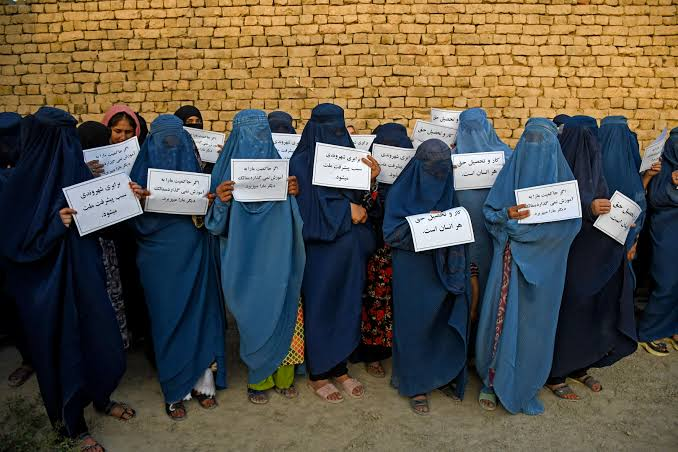
Imagine walking into a hospital to seek medical attention and discovering that the name you have answered to all your life is no longer permitted on your medical records, your prescription carries a different name and even your patient file identifies you by a generic title shared with every other woman receiving treatment at that facility. You have no say in the decision, and the people responsible for recording your medical information have been instructed to comply. This is the situation now being reported in Afghanistan’s northern Balkh Province, where Taliban authorities have ordered healthcare facilities to stop using women’s actual names and replace them with ‘Bibi’. The instruction reportedly extends to hospitals, private medical practices and clinics, including the names written on medical prescriptions.
An investigation published on November 12, 2026, by Afghan women-led media organisation Zan Times, in partnership with The Guardian, brought the instruction to wider attention. The investigation, which primarily documented restrictions preventing male doctors from treating female patients, included testimony about another order issued by the Taliban’s Ministry for the Propagation of Virtue and the Prevention of Vice. According to the report, morality police officials instructed hospitals, private practices and clinics in a city in Balkh Province to write ‘Bibi’ in place of women’s actual names. The instruction was reportedly issued in May, shortly before Eid al-Adha, and officials specifically emphasised that it applied to medical prescriptions as well. The detail appears in the investigation through accounts gathered by Zan Times journalists from healthcare workers and people familiar with the restrictions, it was also reported in more detail by Spanish newspaper EL PAÍS on November 23, which spoke with Afghan women and activists about the directive and its implications. The newspaper reported that the prohibition also concerned women’s names in other official documents, drawing on testimonies from several sources.
The word ‘Bibi’ itself is a traditional word used to address women in Afghanistan and is commonly translated as grandmother or old woman. The concern here is the compulsory replacement of women’s individual names, regardless of their age or preference. A young woman and an elderly patient could both have their names replaced by the same designation simply because they are women.
The reporting by EL PAÍS also contains accounts of women being addressed through degrading animal related terms, including goat and cow. These accounts were relayed by Afghan activist Lalah Osmany, drawing on testimonies from women, doctors and civil rights activists. The implications of the naming instruction are already apparent in the setting where it is being imposed in, because medical records exist to identify individual patients and maintain accurate information about their treatment. Prescriptions must correspond to the correct patient, and healthcare workers need to know and differentiate one person’s medical history from another’s. Lalah Osmany even raised concerns about the possibility of medical errors if several women’s prescriptions and patient records are filed under the same designation. What makes this especially troubling is the authority behind it. The instruction is attributed to officials of the Taliban’s morality police, a body that has increasingly intervened in women’s access to public spaces, employment, education and healthcare, Its officers have also been implicated in enforcing restrictions on male healthcare professionals treating female patients. The same Zan Times investigation documents women being turned away from clinics and patients having to abandon treatment because of restrictions imposed on doctors. In one account, a woman named Farida had already paid for dental treatment and undergone two procedures before her clinic informed her that a new order prohibited the male dentist from completing her treatment.

The naming instruction therefore arrives within an environment where the authorities have already placed considerable restrictions on women’s ability to access medical care. Since December 2024, Afghan women have also been barred from studying at medical institutes, further limiting the number of women who can qualify as healthcare professionals,all of these restrictions have serious consequences for patients who cannot find female specialists and are prevented from receiving treatment from male doctors.
For a government that already determines whether women may attend school, work in particular professions, travel without a male guardian or appear in public spaces, the reported restriction introduces another level of control over their everyday existence. The ability to have one’s name recorded should never depend on permission from a governing authority, and a woman should not have to surrender her individual identity to receive medical attention or have her details entered into a public record. Afghan women have already spent years demanding the right to have their identities acknowledged in the documents that record their own lives.
The Long History of Erasing Afghan Women’s Identities
Long before the Taliban issued its reported directive in Balkh Province, many Afghan women were already living with a social expectation that their names should not be spoken publicly. A woman was known as someone’s daughter, someone’s wife or someone’s mother,and remembered as someone’s mother after death. while her own name was withheld from ordinary public life. Men have sometimes considered it inappropriate for other people, particularly unrelated men, to know the names of their female relatives.
A 2019 investigation by the Afghanistan Analysts Network (AAN), titled What’s in a Woman’s Name? No Name, No Public Persona, documented how this convention operated across different parts of the country. Researcher Rohullah Sorush, with contributions from Sari Kouvo, Kate Clark and Said Reza Kazemi, gathered accounts showing how women were routinely identified through their relationships with male relatives. The report described a society in which a man’s name could appear in public while the names of the women in his family were deliberately withheld. Even wedding invitations, in many families, the bride’s actual name was left off the invitation, with the wording identifying her as a daughter of her father or using a generic term for a young woman alongside her family name. In some Pashtun communities, the restrictions were even stricter, with neither the bride’s given name nor her family name appearing. The groom, meanwhile, was identified by his own name. The AAN report included the experience of financial manager Shahrbanoo Muradi, whose uncle’s wedding invitation carried the bride’s full name, Razia Sultani. Rather than being treated as an ordinary detail on a wedding card, the decision provoked a family dispute. Muradi recalled that her relatives, particularly her maternal uncle, reacted angrily and called the bride a ‘shameless lady’ for allowing her name to be displayed. The exclusion continues even after marriage. Women are introduced as the wife of a particular man, while their children are identified through their fathers. In some households, even children grow up without knowing their mothers’ full names.Even death does not bring an end to this erasure, the Afghanistan Analysts Network documented how funeral announcements and invitations to “fateha” ceremonies, gatherings where relatives and members of the community offer condolences after a death, often identify deceased women through their male relatives. A funeral announcement might refer to the deceased as someone’s mother, wife or daughter without mentioning her name. The same practice appears on gravestones.The investigation included a photograph of a grave in Kabul’s Kart-e Sakhi cemetery bearing an inscription identifying the deceased only as ‘the late Haji Kazim’s mother’. The woman had lived, had relationships, experiences and a history of her own, but the inscription left no trace of her individual name. Even in death, her identity was recorded through a man.
These practices were not accepted without resistance, Afghan women challenged the humiliation of having their identities concealed, including women who objected to being introduced only through their male relatives. In 2017, the growing opposition to this developed into a public campaign demanding that women be called by their own names. In August 2020, ABC News published a report on Afghan women fighting what it described as a humiliating tradition that robbed them of their identities. The report featured Sonia Ahmadi, who described growing up being introduced simply as someone’s daughter while her brother was introduced by his name. She recalled the question that stayed with her: ‘What is my role in life?’ The exclusion followed women through marriage, motherhood and death.
By the time the Taliban returned to power in August 2021, the exclusion of women’s names from public life was widespread, It was an existing patriarchal practice that Afghan women had spent years challenging. The authorities have since imposed their own restrictions on women’s lives, and the reported instruction in Balkh now threatens to give an official administrative dimension to a form of erasure that women were already fighting within their families and communities. The Taliban’s reported directive arrives against history of resistance and It threatens to take a struggle that Afghan women have been fighting in their homes, communities and public institutions and impose another restriction
#WhereIsMyName: Afghan Women Who Refused to Be Erased
In 2017, Afghan women began challenging the expectation that their names should remain hidden from public life. The campaign, #WhereIsMyName, was launched by Laleh Osmany, an Afghan women’s rights activist from Herat, and grew into a movement demanding that women be recognised by their own names, including in official documents. The campaign was also associated with Dokhtaran-e Rabia, a collective of women activists and writers. Through social media, women called on families and institutions to stop identifying them solely through their fathers, husbands or sons. The demand was , mothers deserved to have their names recorded alongside fathers’ names on their children’s identity documents. What should have been a basic form of recognition became a public battle. In a September 2020 interview with Reuters, Laleh said campaigners had faced insults, humiliation and threats from the beginning of the movement. Their demand challenged a practice defended by people who considered publicly naming a woman shameful. The proposed change also attracted condemnation from conservative religious figures and former Taliban officials.
The campaign eventually secured a significant victory. On September 17, 2020, President Ashraf Ghani signed an amendment allowing mothers’ names to be included on their children’s birth certificates and identity documents. ABC News reported that the change followed three years of campaigning by women’s rights activists. The report also quoted Sonia Ahmadi, who had joined the movement in 2017, describing the achievement as the opening of a door she had long been kept behind.
While unfortunately this victory did not erase the social attitudes the campaign had challenged, nor did it end the struggle for women’s recognition, it established something important, Afghan women had organised, faced intimidation and forced a change in official policy. They had insisted that their names belonged in public records, and they had won that recognition through their own resistance.
The Taliban’s War on Women’s Autonomy: From Public Life to Official Records
Since returning to power in August 2021, the Taliban have pursued a systematic campaign to remove women from public life. Girls have been barred from secondary education since 2021, and in December 2022, women were prohibited from attending universities. Women have also been excluded from most government employment, barred from working for NGOs and, later, the United Nations in Afghanistan. Restrictions on movement require women to travel with a male guardian on longer journeys, while bans on parks, gyms and other public spaces have further narrowed where they can go and what they can do. These restrictions have been reinforced through the Taliban’s institutions. In August 2024, the authorities published the Law on the Promotion of Virtue and Prevention of Vice, giving morality inspectors sweeping powers over public behaviour. The law requires women to conceal their bodies and faces in public and treats their voices as something to be concealed from unrelated men. It also imposes restrictions on transport and women’s movement. UNAMA’s April 2025 report, based on six months of monitoring, documented the establishment of enforcement committees in 28 of Afghanistan’s 34 provinces and the deployment of approximately 3,300 morality inspectors. The law gave an already repressive system a more organised means of policing women’s daily lives.
The enforcement has continued. In its October 2026 statement, UNAMA reported that at least 52 women and one girl had been arrested or detained in Herat and Kabul between July and September. Their offences included not wearing a chador, having visible hair, wearing colourful scarves or makeup, and being in public without a male guardian. verbal abuse, beatings and threats against women, including female shopkeepers have been documented for women who don’t comply. Women are being detained and threatened over their clothing and presence in public, while girls remain shut out of classrooms and women are excluded from workplaces.
The Taliban have already restricted where women can study, work, travel and appear in public, and now the eplacement of their names in official records extends that control into the way women are identified by the institutions governing their lives. Afghan women are being denied the freedom to participate in society, while the authorities are also moving to deny them recognition in the records through which that society identifies its members.
Khadija Amín: When a Woman’s Erasure Follows Her Into the Legal System
When Afghan journalist Khadija Amín travelled to Berlin in 2024 to seek help in seeing her children, she encountered a problem she could not easily overcome, her name was missing from all three of their birth certificates. The documents identified their father but did not record her as their mother. Without documentation establishing the relationship, German police would not accept her complaint. She had fled Afghanistan for Spain in August 2021 after the Taliban returned to power, leaving her three children behind. She later learnt that her former husband and the children were in Germany and travelled there to seek help. Her legal struggle became even more disturbing when she discovered that she had been officially declared dead in Afghanistan. According to the legal clinic at Pompeu Fabra University, which represents her, her former husband had succeeded in having her recorded as deceased, with the complicity of Taliban authorities. EL PAÍS reported in November 2026 that delays in the German proceedings gave her former husband time to take the children back to Afghanistan. Khadija’s experience shows how the omission of a woman’s name from official records can follow her into the legal system, making it harder for her to make her own relationships and seek justice. Her identity should never have depended on being named as someone’s wife or recognised through her children’s documents. She is their mother who is alive, and she has a name. She should not have had to fight to have any of that recognised.
The Right to Exist in One’s Own Name
In 2017, when Laleh Osmany started the #WhereIsMyName campaign, Afghan women were asking for something that should never have required a campaign in the first place: to have their names included on their children’s birth certificates. They wanted to be identified as mothers in their own right, rather than disappear from documents that recorded their children’s identities. The campaign faced hostility and threats, but it continued until September 2020, when the Afghan government approved an amendment allowing mothers’ names to be added to birth certificates and identity documents voluntarily. Even though the victory was very short lived and limited, it mattered. Women had challenged a tradition that treated the public recognition of their names as something shameful. The directive in Balkh now threatens to take that recognition further backwards. Women and activists have confirmed the order to EL PAÍS, but there is no confirmation that it applies across Afghanistan. Zubaida Akbar, director of Femena’s Afghanistan programme, has expressed concern that a restriction introduced in one province could eventually become a nationwide order, pointing to the Taliban’s history of extending restrictions on women. Her concern deserves attention, especially given how quickly women’s rights have been dismantled since 2021. The consequences are very horrifying,Khadija Amín’s struggle to prove that she is the mother of her own children shows what happens when a woman’s identity is missing from the records institutions rely on. And when women’s names are removed from medical records and prescriptions, their ability to be properly identified in the course of receiving care is also put at risk. A name is part of how a person is recognised, documented and remembered. Removing it from public records does not make the person disappear, but it can make it much harder for her to claim what is rightfully hers.
Afghan women have spent years insisting that their names be spoken, written and recorded. They should not have to begin that fight all over again, this time against an authority using its power to enforce their erasure. A woman is not an extension of her father, a possession of her husband or an identity that exists only through her children. She has a name of her own. That name belongs on her documents, in her medical records, in the history of her family and in the public record of her country. She is entitled to be recognised as herself, and no government has the right to take that away.