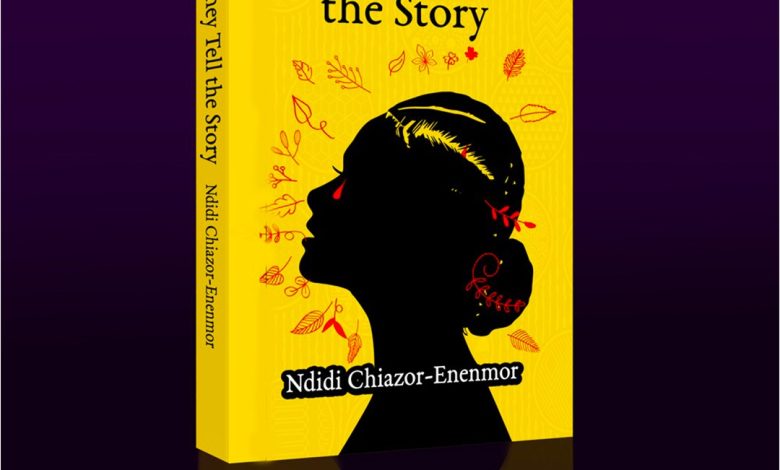
Deconstructing The Mantra of “She Stoop To Conquer” In Chiazor-Enenmor They Tell the Story
|
Getting your Trinity Audio player ready...
|
Summary: If They Tell the Story follows the life of Azuka who unashamedly tells her story in the third person narrative. She fights for her identity and soul in a society that tied her worth to marriage and motherhood.
One of the core advocacy of feminism is that women need to tell their stories honestly and unashamedly. Perhaps, that’s why Ndidi Chiazor-Enenmor’s novel: “If They Tell the Story” felt very femininist–like. The title itself challenges passive voice patriarchal society conferred on women and girls. In the novel, Ndidi tells the story of men who brutalise their wives for their failures, especially for their inability to have male children which crime they commit on their hapless wives.
If They Tell the Story follows the life of Azuka who unashamedly tells her story in the third person narrative. She fights for her identity and soul in a society that tied her worth to marriage and motherhood. As an author, Ndidi uses the life of Azuka to critique the invisible but heavy shackles of the “she stoops to conquer” traditional mantra. This refers to the societal advice given to women to endure suffering, infidelity, or abuse in a marriage with the hope that their patience will eventually win over their husband. The novel focuses on how this patriarchal cultural norm specifically targets and isolates women. This is vividly demonstrated in Azuka’s marriage to Nduka. While she is repeatedly told by elders and family to be patient, her headstrong husband becomes more abusive, shifting the burden of fixing the marriage on her ability to silently endure. The story also highlights how women in Azuka’s life, including her mother and the women in the village of Igunze perpetuate the same harmful advice they were given, creating a cycle where each generation of women is taught to stoop just as the women before them did.
The novel also explores how a woman’s value in her community is often reduced to her ability to produce children, specifically male children. Nduka’s abusive behaviour stemmed from his inability to have a male child, constantly blaming his wives who are victims of his abuse. The author used this theme to expose how women’s bodies are treated as tools for male legacy rather than as human beings with agency. Despite his education, Nduka exhibits the same traits of abusive men; aggressive and controlling, ultimately highlighting how even modern men can have strong structures for domestic violence and patriarchy.


The novel explores the feminist theme of reclaiming one’s voice against a culture that equates female silence with virtue. The title itself, “If They Tell the Story” carries the weight of consequence and fear. It suggests that the women need to speak their truth to be heard because pain is easier to manage if it is voiced out. Azuka’s refusal to remain a stoop liberates and unshackles herself, creating a safe haven to reclaim her agency.
Complicity is a key theme Ndidi uses to challenge women like Azuka’s mother and other female elders who act as enforcers of the patriarchy. These kinds of women are everywhere, they are the ones who whisper the stoop to conquer mantra into Azuka’s ear, proving that the patriarchy often survives because women are socialized to police one another’s suffering in the name of tradition and honor.
In conclusion, Ndidi Chiazor-Enenmor’s If They Tell the Story is a powerful book that critiques the culture of silence that polices women’s lives. Azuka’s journey is a necessary exploration of how patriarchal expectations, from the burden of birthing male children to endurance of abuse can systematically dismantle a woman’s sense of self. The novel’s true feminist triumph lies in its ending: Azuka does not find salvation through a new man or a restored marriage, but through the reclamation of her own voice. Ultimately, the book argues that a woman’s story is her most potent weapon. To tell it is to unshackle herself from generations of inherited trauma and to assert that a woman’s soul is far more valuable than any social status granted by a wedding ring or a son’s birth. It is a vital advocacy that tells women to stop stooping and start surviving for themselves.