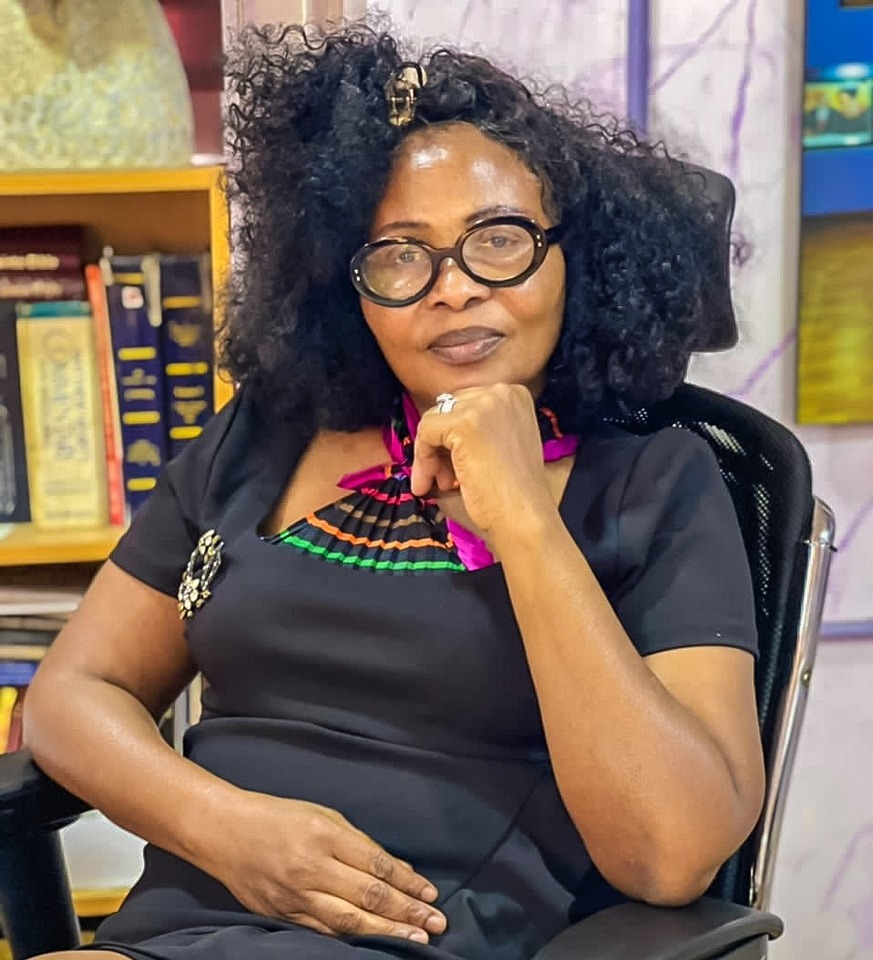
A Senior Advocate of Nigeria and founder of Women Empowerment and Legal Aid, Ms Funmi Falana, has blamed Nigeria’s long-standing leadership and security problems on male-dominated governance. She called for greater inclusion of women in public office as a way to move the country forward.
She made the remarks on December 28, 2025, in Ekiti State, during her annual Christmas visit to the Erelu Angela Adebayo Children’s Home in Iyin Ekiti. She described the marginalisation of women in governance as a major factor behind what she termed Nigeria’s “shameful and embarrassing state.”
“Nigeria has continued to have male presidents, and they have continued to fail Nigerians,” she said. “I am saying women can do better because women have the heart of compassion and will be more honest with government resources.”
The human rights lawyer also spoke about the rising insecurity in the country, saying women and children are the most affected. She blamed political leaders for the crisis and urged them to act to protect lives and property.


She used the occasion to highlight the plight of vulnerable children, explaining that her yearly Christmas outreach was a personal commitment to giving back to society and encouraging others to do the same.
“I have come to celebrate Christmas with the children of Erelu Adebayo Children’s Home, and this is what I do every year,” she said. “It is a time to give back to society and to let the children here know that they are as important as their contemporaries elsewhere.”
Addressing the broader crisis facing children in Nigeria, the WELA founder cited statistics showing that about N18.5 million Nigerian children are currently out of school, with more than 60 per cent, or over 10 million, being girls. She noted that Nigeria has the second-highest number of out-of-school children globally, according to UNESCO.
She added that the situation has been worsened by the failure of many state governments to pay counterpart funds required to access the Universal Basic Education Commission’s matching grant of about N135 billion.
She further recalled that while political leaders marked Children’s Day on May 27, 2025, celebrations must go beyond symbolism, stressing the need for urgent government action.
“Nigeria has the second-highest number of stunted children in the world, with 37 per cent of children under five suffering from chronic malnutrition,” she added.