|
Getting your Trinity Audio player ready...
|
The next Nigerian general elections will take place in 2027, where citizens will vote for their preferred candidates. During the elections, Nigerians will choose the President, members of the National Assembly, governors, and state legislators. The general election is held every four years, giving citizens the opportunity to decide who leads them. This process allows people to exercise their democratic right to vote as an important part of Nigeria’s democracy.
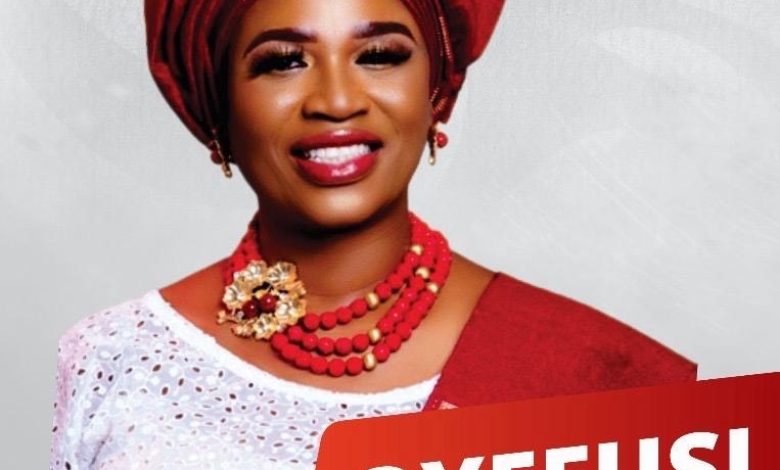
In an interview with Naija Feminists Media, Princess Abiodun Oyefusi, a prominent politician and humanitarian, shared insights on the Nigerian political landscape, the role of women in it, and her vision for Africa’s megacity, Lagos.
Princess Abiodun has contested key political positions in Lagos State. She was the Labour Party’s deputy governorship candidate in 2019 and the PDP Lagos East senatorial candidate. She currently chairs the SoulLifters Foundation, an international NGO that runs community-based initiatives across all 20 LGAs in Lagos State, including monthly medical, eye care, and mental health outreaches, as well as food bank programmes supporting the homeless, elderly, single parents, orphans, and other vulnerable groups.
Insights from Princess Abiodun Oyefusi on Elections, Gender Equality, and Lagos Development
- You are a long-standing resident of Lagos state, being an indigene of the Ikorodu Kingdom. What is your current assessment of Lagos? What areas of improvement do you believe are paramount?
Lagos remains Nigeria’s economic powerhouse and most dynamic state, but it continues to face complex governance challenges. At the local level, there has been notable progress in gender inclusion, with the 2025 local elections recording historic female participation rates, as women made up over a third of the candidates.

Despite ambitious transport and urban development plans, persistent pressure on infrastructure and public services remains evident, particularly in areas such as electricity, housing, drainage, and flood control, all of which directly affect residents’ quality of life.
Rising safety and gender-based violence concerns in Lagos highlight the need for stronger protection systems, improved public services, and more inclusive governance that expands opportunities for women and young people.
- You have always been an advocate of 38% female representation in Nigeria’s political system. However, Lagos State has been run by male governors. How can Lagos improve implementation?
The United Nations’ 35 per cent women’s participation target at all decision-making levels offers a clear global benchmark, and for Lagos to effectively adopt or exceed this goal, deliberate and enforceable steps are required. To meet the target, Lagos must domesticate the policy into state law and enforce gender quotas within political parties to ensure women are adequately represented in elections and leadership positions.
Lagos can further advance this goal through local legislative action by enacting state laws or party guidelines that mandate equitable representation in public appointments, including boards, agencies, and commissions. Incentives for compliance would also strengthen implementation, with access to state-supported resources such as training hubs or candidate forums tied to parties’ performance on gender representation.
- You campaigned as deputy governor in the 2023 general election. From your experience, what challenges do you think are unique to women in politics?
Women in Nigerian politics face multiple intersecting barriers beyond those most male politicians encounter. Deep-rooted cultural and patriarchal norms often assign women to domestic roles and discourage their participation in what are perceived as “male” spheres such as politics.
In addition, elections in Nigeria are frequently accompanied by violence and harassment, with women disproportionately affected by intimidation, threats, and physical insecurity, all of which deter many from contesting for office. Political parties also tend to prioritise male candidates for winnable seats, while many women are excluded from party leadership structures, decision-making processes, and the allocation of strategic positions, weakening their pathways to nomination and election.
Beyond male resistance, some women also face discouragement from within their own communities or networks, further eroding the collective support structures that are essential for political participation.
- What do you believe the Independent National Electoral Commission must do to ensure that women who intend to campaign in the 2027 election are given a fair chance?
For a fair and inclusive electoral environment in 2027, the Independent National Electoral Commission (INEC) should adopt proactive measures that go beyond merely administering elections. INEC can work closely with political parties to enforce gender-sensitive candidate support policies, including the implementation of internal quotas and equal access to nomination forms, training opportunities, and campaign guidelines, similar to initiatives that have previously waived fees for women in local elections.
INEC should also provide large-scale capacity-building and pre-election training programmes tailored specifically for women, focusing on areas such as campaign strategy, fundraising, and public engagement, in order to help close existing competitive gaps.
In addition, INEC should promote transparency and accountability by publishing sex-disaggregated data on candidates and election outcomes, while publicly monitoring political parties’ compliance with gender equity commitments.
- What plans do you believe the next phase of government in Lagos should prioritise in 2027?
As Lagos enters a new government term, the focus is expected to be on measurable short-term outcomes anchored in stronger civic engagement, participatory governance, and improved transparency and service delivery through better government–citizen communication. Rebuilding state institutions and reforming the public service will be central to ensuring effective, professional, and accountable governance that functions beyond political cycles and personalities.
The next phase of governance is likely to emphasise integrated transportation systems and data-driven local governance to improve mobility, efficiency, and accountability across all LGAs and LCDAs.
Economic growth with social impact, alongside sustainability and resilience initiatives, is expected to drive support for SMEs, youth entrepreneurship, climate adaptation, flood control, and public health, particularly in underserved communities.