|
Getting your Trinity Audio player ready...
|
Abimbola Badejo, Communications Lead at the Hotsteppers project, has challenged journalists to recognise heat as an overlooked public health emergency rather than simply another consequence of climate change.
She said this during a three-day media training organised by Africa-led health initiative, UrbanBetter, under its Hotsteppers project, held from July 15 to 17, 2026, at Sapphire Hall, The Zone, Gbagada, Lagos.
The Hotsteppers project is a three-year initiative funded by the Wellcome Trust to address the health risks associated with extreme heat, poor air quality, and rapid urbanisation in Lagos.
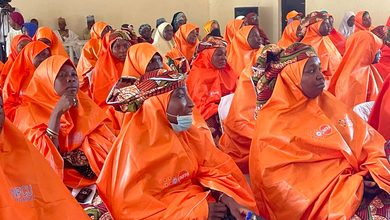
Participants in the project.


The project is implemented in partnership with the Centre for Housing and Sustainable Development at the University of Lagos (UNILAG), the Lagos Metropolitan Area Transport Authority (LAMATA), and the University of Cambridge.
According to Badejo, while floods and air pollution often dominate environmental reporting, extreme heat silently contributes to cardiovascular diseases, dehydration, reduced physical activity, declining productivity, and mental health challenges, particularly among commuters, transport workers, traders, and other outdoor workers.
“Heat is one of the invisible crises we must begin to report because its impacts on health are real and increasing. Heat is a public health risk, and understanding that is one of the objectives of this training,” she said.
Beyond understanding this health crisis, Badejo encouraged journalists to embrace Solutions Journalism in reporting heat-related issues. She explained that the approach requires journalists not only to expose problems but also to examine how governments, communities, researchers, and institutions are responding, while critically assessing what works, what fails, and why.
“Solutions Journalism goes beyond identifying the problem. It analyses the responses, the evidence supporting them, and their limitations. Accountability is built when journalists continue following a story, revisit interventions, identify new gaps, and assess whether promised actions are producing results. This is not about praising the government or presenting policies as quick fixes. It is about reporting successes and limitations with equal rigour,” she explained.
Caption: Participants at the media training
Badejo also drew attention to the intersection of extreme heat with poor housing conditions, inadequate ventilation, and air pollution, noting that these factors significantly worsen health outcomes, especially in densely populated urban communities.
Offering a global public health perspective, Associate Research Professor Barbara Rubiell of the University of Cambridge described extreme heat and air pollution as interconnected environmental threats whose combined effects are becoming increasingly dangerous.
“When extreme heat co-exists with heavy air pollution, the health risks multiply exponentially. Approximately 13 million deaths worldwide each year are tied to preventable environmental factors, making climate change a massive threat multiplier,” Rubiell said.
Caption: Professor Barbara Rubiell
She explained that poor urban planning and socioeconomic inequalities leave many residents with little protection against rising temperatures. In many informal settlements, she noted, poorly ventilated homes covered with zinc roofs trap heat, exposing families to dangerously high indoor temperatures during the hottest periods of the day.
The facilitators further urged the journalists to centre their reporting on those who bear the greatest burden of heat, including pregnant women, people living with disabilities, informal workers, and residents of low-income communities whose experiences often remain invisible in mainstream media coverage.
This workshop comes months after Nigeria experienced one of its most intense heatwaves between February and March 2026, with temperatures reaching up to 38°C. Prolonged heat increased the risk of dehydration, heat stress, cardiovascular disease, meningitis, and other heat-related illnesses.
According to the June 2026 report by the Health and Environment Resilience Alliance (HERA), women are disproportionately affected because many of them work in the informal economy as street vendors, market traders, and agricultural workers, exposing them to prolonged periods of intense heat with little protection. The report also notes that biological, social, and economic factors limit women’s ability to adapt to extreme temperatures, worsening existing gender inequalities. It estimates that 20% of female deaths are linked to extreme temperatures and that women working in the informal economy lose approximately $57 billion in earnings every year because of extreme heat, representing between four and 11%of their annual wages.
“Heat is one of the invisible crises we must begin to report because its impacts on health are real and increasing. Heat is a public health risk, and understanding that is one of the objectives of this training,” she stated.
Another key focus of the workshop is the adoption of Solutions Journalism to measure successes, limitations, challenges, and accountability.
According to Abimbola, Solutions Journalism goes beyond identifying the problem; it analyses the responses to the problem, evidence, support, and the limitations. Accountability is built when journalists continue following a story, revisit interventions, identify new gaps, and assess whether promised actions are producing results. This is not about praising the government or presenting policies as quick fixes. It is about reporting successes and limitations with equal rigour.”
She also emphasises that urban heat-health crises are exacerbated by air pollution, poorly ventilated spaces, and poor housing.
Both facilitators, Abimbola and Barbara, encouraged participants to centre stories on communities facing the greatest risks, including pregnant women, informal workers, people living with disabilities and residents of low-income settlements.