|
Getting your Trinity Audio player ready...
|
Summary: On February 18, 2026, Nigerian singer Simi publicly condemned sexual assault on X. In response, a group of men launched a coordinated campaign using forged tweets against her, fabricating tweets, Instagram stories, and legal documents to damage her reputation.
When Simi told Victor Ogbaegbe to shut up on X for derailing a conversation about Mirabel’s rape case, she did not know that by speaking up for women, Nigerian male Twitter users would doctor tweets and forge documents to fuel a hate campaign against her.
A group of Male Twitter Users on X launched a coordinated smear campaign, weaponising forged divorce documents and doctoring tweets against Afrobeats singer and songwriter Simi. She had publicly condemned rape in response to the Mirabel rape case on February 18, 2026. The campaign, which spanned from February 19 to March 3, 2026, accumulated over 8 million views across multiple posts and involved fabricated tweets, forged Instagram stories, and a falsified court divorce document.
The campaign began in response to Simi’s condemnation of the rape of a TikToker identified as Mirabel, who had shared videos on February 15 stating that a man raped her in her home after she refused to give him her phone number.


In response to Mirabel’s case going viral, Simi posted on X on February 18, “I’m sick of this. Stop raping women. They need to castrate rapists and burn them,” she stated. Then, an X user named Victor Ogbaegbe, in a deleted tweet, raised the issue of false accusations. Simi told him to shut up, writing, “Stfu”
Subsequently, Victor foreshadowed Simi being cyberattacked, writing: “I hope you can withstand the backlash about to be melted on you. If you hadn’t even replied, it would have been better than this.
As Victor foreshadowed, what followed was a section of men on X, who began searching her past posts for content to use against the songwriter. When they found nothing incriminating, they began fabricating and forging divorce documents.
On February 19, X user @justranky posted a forged Simi Instagram post that read:
“This will be the last time I speak up for women. I apologise for everything, please forgive me.” The post garnered 571,000 views and over 8,000 likes.
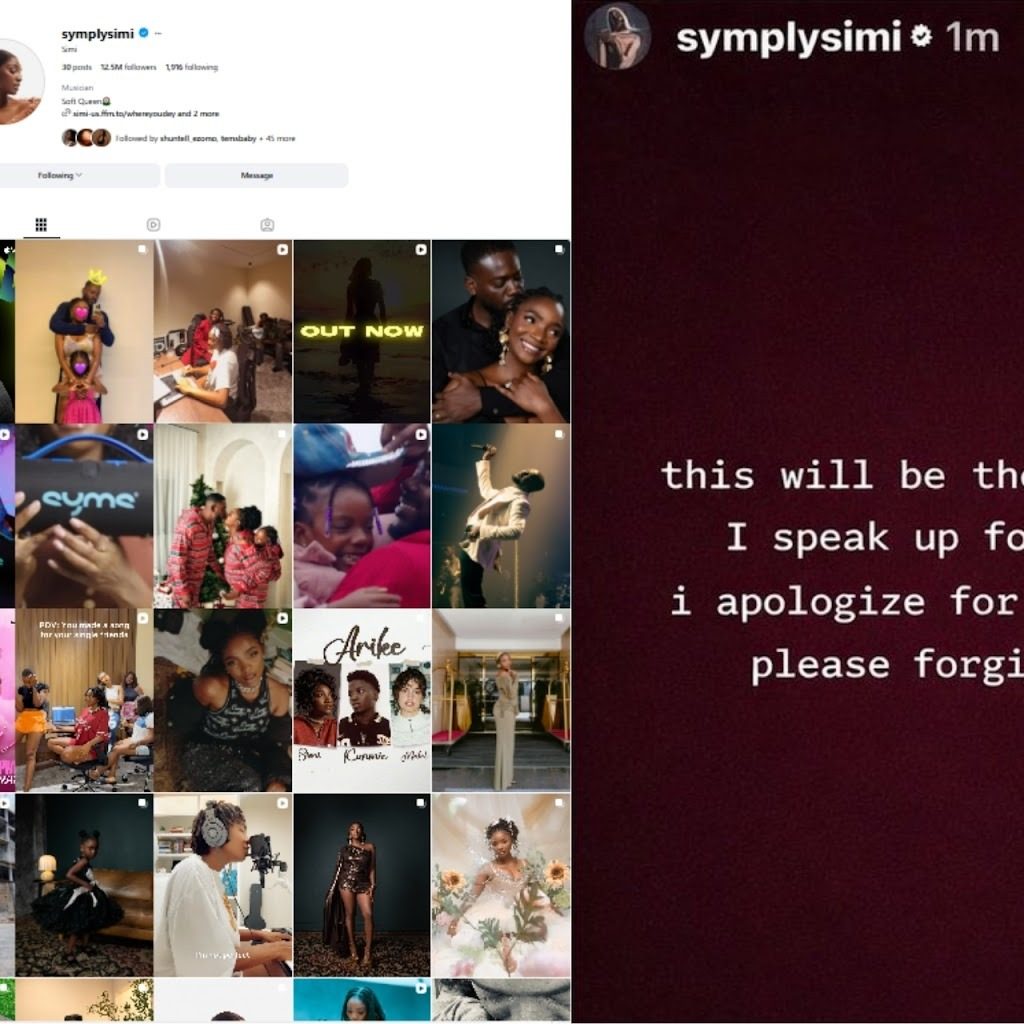
Naija Feminists Media (NFM) visited Simi’s verified Instagram account @symplysimi, which has 12.5 million followers, and found no such story on her page, confirming the post was fabricated.
On February 23, X user @Sizi_phiwe, whose real name is Siziphiwe Maluleka, posted a fabricated tweet purportedly from Simi’s account dated June 8, 2014, reading:
“I didn’t know a 16-year-old boy could be this good. I can’t feel my legs!!!” and called Simi a paedophile. The post accumulated 6.2 million views and 46,000 likes. The doctored tweet post triggered a wave of hatred against Simi in the comments. “That’s actually disgusting, arrest her,” @Aimedmy stated on February 24. “She should be behind bars for sleeping with kids,” @BongiWaAtchar also tweeted in response
A community note on the post confirmed the tweet was forged, stating that the image did not appear on Simi’s account and could not be genuine, as it contained an emoji introduced in 2018.
On March 3, X user @gustavojames99 posted a fabricated divorce document filed by Adekunle Gold against Simi at the High Court of Lagos State, alongside a forged Simi Instagram story. NFM visited Simi’s verified Instagram account @symplysimi, which has 12.5 million followers, and found no such story on her page. The forged story, which reads “This will be the last time I speak up for women, I apologise for everything, please forgive me,” does not exist on her account
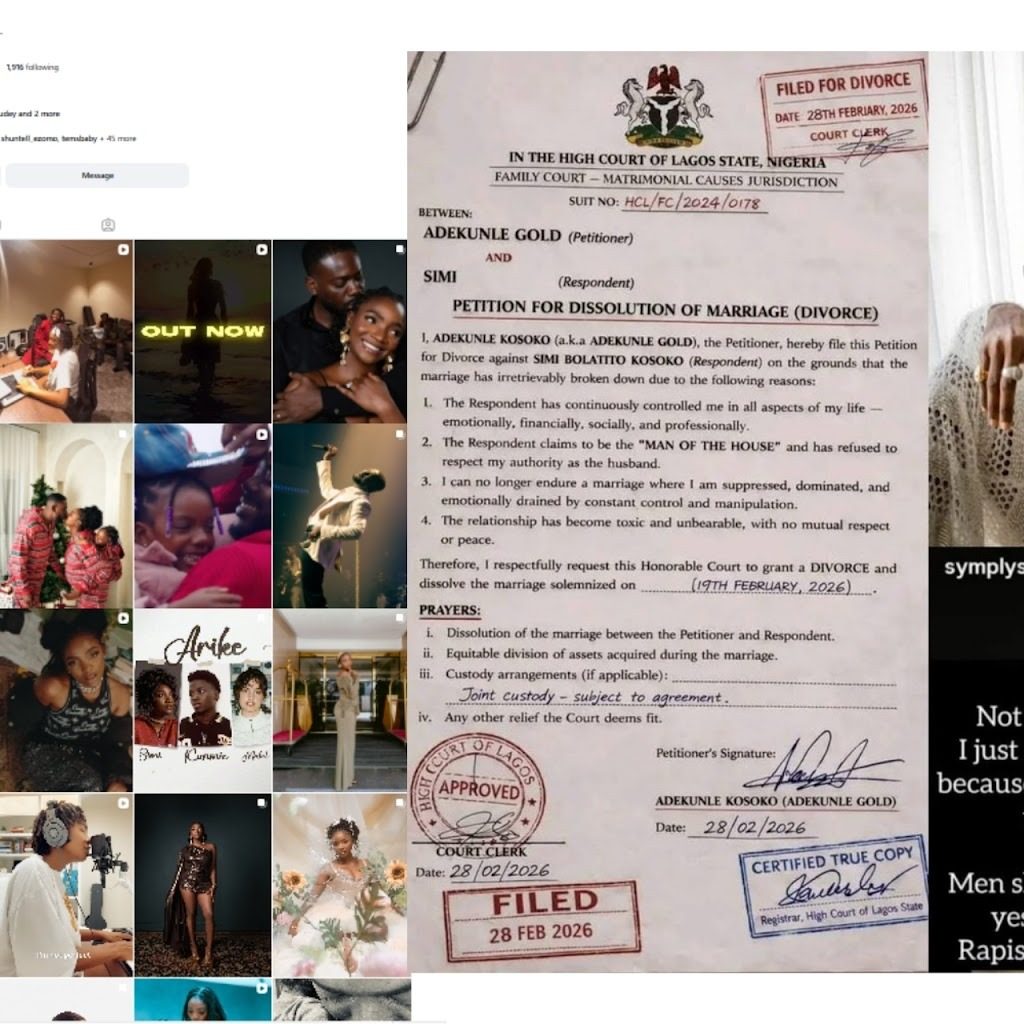
As of the time of writing, none of the men who posted the fabricated content has retracted their posts or issued apologies. The campaign against Simi is not an isolated incident. It is part of a documented pattern of Nigerian men using coordinated online attacks to silence women who speak on sexual violence.
Online gender-based violence is becoming more prevalent in Nigeria, with online harassment and sexual stigmatisation representing the most common forms, yet redress remains inadequate. Technology-facilitated gender-based violence is rising and spreading through social media, silencing women and threatening their livelihoods. As NFM has reported, Nigerian women who speak up about sexual violence already face lawsuits, doxxing, and arrests. Coordinated forgery campaigns are the newest weapon to silence and control women.
Nigeria’s National Assembly must amend the Violence Against Persons Prohibition (VAPP) Act to explicitly cover coordinated digital smear campaigns, and the Nigerian Communications Commission (NCC) must develop binding guidelines requiring platforms like X to respond faster to organised forgery targeting women. Until platforms and lawmakers treat this as the violence it is, Nigerian women will continue to pay the price for speaking.