|
Getting your Trinity Audio player ready...
|
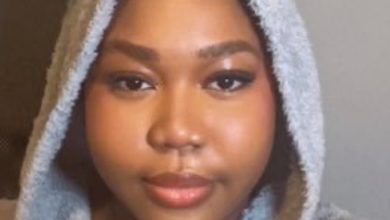
What does it mean to be a dominatrix? What misconceptions have trailed conventional understanding, and what does it tell us about the social power dynamics assigned to men and women? In this interview, Naija Feminists Media chatted with creative entrepreneur Domina Havi.
Domina is a Nigerian author, filmmaker, digital artist and an internationally experienced dominatrix. She has built a professional life around consensual power exchange, challenging conventional assumptions around sexuality, authority and relationships. She also revealed realities around the profession, unveiling insights rarely highlighted in the media.
Domina Havi on Female Domination and Psychology of Power
- Please tell us a bit about Domina Havi. How was growing up in Nigeria, and what experiences, interests or ambitions influenced your journey into creative entrepreneurship?
I am Nigerian, and much of who I am was shaped by growing up in a society where women are often expected to be strong, but in ways that remain socially comfortable. From an early age, I was drawn to creativity, communication, identity and the ability to build something from an idea. That eventually led me into creative entrepreneurship, where I learned that a personal identity can also become intellectual property, a business and a platform. Domina Havi developed from that understanding. It became a way for me to explore female authority, psychology, power and the many assumptions society makes about women.

I always loved to be dominant. Both in my relationship and in many aspects of my life. I like to take charge and make the decisions. It is how I grew up, and it excites me a lot.
- The word “dominatrix” is not familiar to some readers and often carries assumptions. How do you define the practice, what does it entail, and where does your work sit in relation to the sex trade industry?
A dominatrix is a woman who takes a dominant role within a consensual power-exchange dynamic. People often reduce the word to physical punishment or sexual stereotypes, but the reality can be much broader. Authority, structure, communication, boundaries, psychology and trust are central to the practice.
The relationship to the sex trade industry depends on the individual practitioner and the nature of the work. Some dominatrices operate professionally and incorporate sexual services; others focus primarily on power exchange and domination without conventional sexual activity.
I define my own work through consent, authority, boundaries and negotiated power exchange. I, for instance, am a Femdom dominatrix. There are those who focus and specialise purely on providing BDSM services. I don’t do that. Femdom and BDSM are not the same.
In Femdom, the female is the sole authority. It is a Female Led Relationship (FLR). BDSM play can be an activity or kink play under Femdom, but BDSM does not define Femdom. Femdom is short for FEMale DOMinant. BDSM links directly to the sexual and pornographic side of kink play, but Femdom can occur in a dynamic without being overly sexual.
- You’ve explained what the practice means to you. What was the journey from recognising that side of yourself to realising it was something you could actually build a career around?
My journey was not a single dramatic decision. It developed through curiosity, self-discovery, and recognising that there was something distinctive about how I understood authority and female power.
As I explored the international dominatrix space, I saw that this was not simply a fantasy people talked about online. There was an established professional culture, an international audience and a real demand for women who understood the psychology and responsibility of holding authority. I eventually realised that I could build something intentional rather than simply participate in a niche. I invested in my identity, presentation, education, international exposure and entrepreneurial skills.
I started around 2023. I realised that there are men, especially men of authority in business, politics and lifestyle, who hold authority and are willing to let it go in a consensual power exchange. That exchange can be called a femdom-domination.
These men want to be controlled and dominated and, most times, humiliated by a woman they find extremely dominant. These exchanges are not cheap for them, which they understand, because not every woman understands the dynamic, and true dominatrices are scarce. Thus, according to the law of economics, when value is scarce, price tends to increase. And so, I took advantage of my desire to dominate men and make them pay for it, and built a career and a life around it.
- What’s your view on sexuality and power in heterosexual relationships? How does Femdom disrupt or complement the dominacy in these dynamics?
I think sexuality and power in heterosexual relationships are more complex than the social roles society assigns to men and women. We traditionally associate masculinity with control, provision and leadership, while femininity is often associated with accommodation and softness. Dominatrix challenges that script by placing female authority at the centre. But I don’t see it simply as reversing the roles. It exposes the fact that relationships can contain many forms of power, and that people may desire forms of intimacy that do not follow conventional gender expectations.
One would be surprised at the depth of compromise couples in long-lasting marriages make to preserve their homes. When a lady basks in her femininity, she enjoys the goodness that comes with it. For instance, I don’t have to do much to be spoiled. These men, as a form of power exchange, literally beg me to take their money; they beg me to accept their gifts. It is what they seek, what they desire. Most think being a dominatrix means you have to be a “tough guy”. No. You can be a soft dominatrix, and these men would crave your presence, your voice, your commendations.
Over time in heterosexual relationships, couples tend to realise they have developed certain kinks and fetishes that fit into the Femdom class. The men desire to submit to their wives more frequently. Most female-led relationships last the longest.
- Consent is central to what you do. For someone paying to enter a subordinate position, how does that consent and agency work within a professional power exchange?
Consent is fundamental. Without it, it is not power exchange; it is abuse. The “submissive person” within this profession is not powerless. He chooses the experience, establishes boundaries, and communicates what is and is not acceptable. Paying for a professional service does not remove consent or agency. In fact, I would argue that power exchange becomes more interesting because both people are consciously participating in it.
The visible authority may belong to the woman, while the consent that makes the entire dynamic possible remains with both people. As a dominatrix, before my sessions, a form is filled out and signed by the submissive, clearly consenting to the power exchange with the use of a safe word. Within that consent is the absolute authority of a professional dominatrix in a BDSM session. And there are those who are in a Lifestyle 24/7 Femdom dynamic. This is between the “Femdom Mistress” and her “slave.” Consent on the part of the “slave” has been given only in the early stages of that relationship, as the “slave” has willingly and fully accepted not just a temporary roleplay, but his new identity as a “slave” to his “Mistress.”
A 24/7 Femdom dynamic is very different from a professional session because it is not limited to a scheduled encounter. It is a lifestyle relationship in which the woman is the dominant partner, and that structure can extend into the couple’s everyday life.
The roles are not something they put on for a few hours and then leave behind. The couple may agree on how decisions are made, what responsibilities each person has, how the submissive partner serves the relationship, and what forms of discipline or accountability are appropriate to them. The details differ for every couple because there is no single formula for a Female-Led Relationship. The biggest difference is continuity. With a professional power exchange, there is a defined beginning and end. A submissive comes to see a professional dominatrix; the boundaries and expectations are agreed beforehand, and the session eventually ends. In a lifestyle Femdom relationship, the power dynamic becomes part of the relationship itself.
Sometime in 2023, I visited a friend who got married to her submissive partner. While I was her guest in the living room, her husband, her 24/7 Femdom slave, was the butler per se. He served me what to drink and eat while putting on an apron and a maid dress. At the time, it was strange to me to see that something like this existed in Lagos. But the husband was full of joy even as he served his wife and me. I asked him then, and he said he was exactly where he was supposed to be. After serving, he went on his knees just beside her, awaiting a spanking as reward.
This is a marriage of over five years. So you can see that this dynamic extends beyond professional services into an absolute Female-Led Relationship. And you would be surprised by the number of couples, not just in Nigeria but across Africa, who actually practise it.
- Based on your experience, what benefits and challenges come with building a career in the dominatrix industry, particularly for women? And you’ve mentioned your international work and a “global language” of dominance and submission — what has that experience taught you about the way people understand and respond to power?
One benefit is autonomy. A woman can build a profession around her presence, intelligence, boundaries and understanding of people. It can also create financial opportunities and international networks that are unusual in conventional careers. Working internationally made me realise that people may have completely different languages, religions, social backgrounds and ideas about relationships, yet still recognise certain forms of power exchange. The vocabulary changes. The human response to authority, surrender, ritual and attention can be surprisingly familiar.
But there are serious challenges: stigma, privacy, safety, misunderstanding and the difficulty of separating the real person from the public image. For women especially, there is also the double standard. A man who exercises authority may be considered powerful. A woman doing the same thing can be labelled extreme, intimidating or morally questionable.
- Nigeria is a conservative society. How do you navigate being a dominatrix in the country and what misconceptions about your work would you most like to address?
I navigate Nigeria by being intentional about privacy, boundaries and what I choose to make public. I understand the cultural environment, and I do not expect everyone to understand my work. What I would challenge is the assumption that every dominatrix is sexual with her submissives. My work is structured, professional and built around consent and negotiated boundaries.
I also think Nigerian society sometimes has a habit of discussing unconventional women without actually listening to them. You do not have to agree with what I do to understand why the existence of women like me raises important questions about gender, power, masculinity and the freedom to choose an unconventional life.
For instance, I do not engage in sexual intimacy with the “submissives” and “slaves.” As a matter of fact, you won’t find nudity of me anywhere, yet these men flock to me to be dominated. You don’t have to display nudity to express dominance. Your dominance as a woman is your presence and attributes, your aura, your standards and the ability to express and give discipline to a man who is already overwhelmed with authority and social status.
Some women don’t understand the power they hold in such a conservative society, and now that the world is evolving more and more, ladies come to me asking me how they can take charge more in their relationships.
In a Femdom relationship, for instance, knowing your dominant partner is in charge would prevent the submissive man from cheating, knowing fully well the level of discipline, correction and punishment in love he might receive. Many couples in Lagos practise Femdom in their relationships; I can give examples because I am in the industry, but stigma is still a major problem.