|
Getting your Trinity Audio player ready...
|
Naija Feminists Media (NFM) held its inaugural Editorial Fellowship training on October 21, 2025, bringing together 16 media professionals from Nigeria, Canada, Sierra Leone, and South Africa. The programme, held as part of the 2025 #16DaysOfActivism campaign against gender-based violence, aims to promote feminist journalism and strengthen gender-inclusive reporting across Africa.
Opening the fellowship, NFM’s Community Engagement Officer, Funmbi Ogunsola, explained the history and global significance of the 16 Days of Activism campaign. She noted that it began as a small movement by a group of women and has since grown into a worldwide call for gender equality.
“You can’t remove feminism from the campaign,” she said, emphasising that women’s rights are human rights.
Funmbi walked participants through the 2025 campaign theme, Ending Digital Violence Against Women and Girls, emphasising the urgent need for stronger laws and greater accountability. She taught them how technology, including the misuse of AI tools like Grok AI, is being weaponised against women under patriarchal systems of control.

She discussed weak law enforcement around issues affecting women, citing female genital mutilation (FGM) as an example. Although FGM was criminalised during the Goodluck Jonathan administration, many girls continue to suffer the practice.
She urged journalists to report with depth, empathy, and accuracy, focusing on perpetrators rather than victimising survivors.
“The fight against violence isn’t a campaign, it’s a duty,” she said.
In the second session, Ololade Ajayi, CEO of DOHS Cares Foundation, educated the fellows on femicide, related legislation, and the importance of data-tracking tools for justice and prevention.
She defined femicide as the intentional killing of women by intimate partners, citing the case of 13-year-old Ochanya Ogbanje, who was raped by her uncle and his son in 2018, yet justice has still not been served.
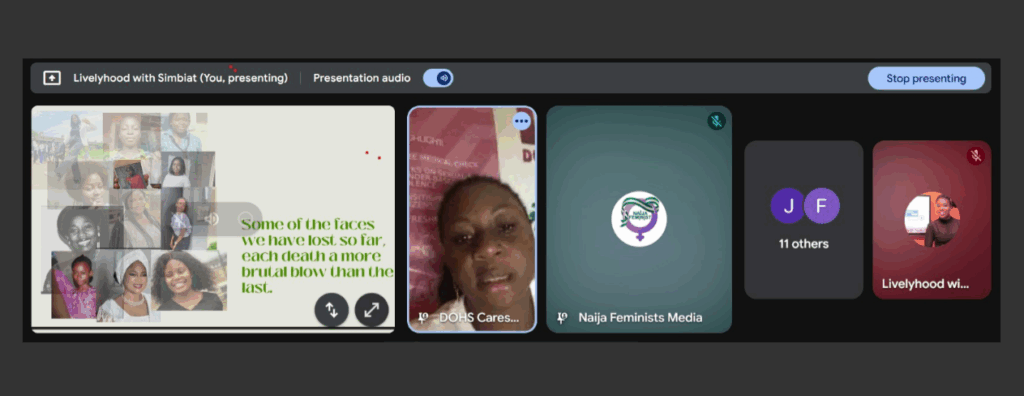
Ololade discussed the rise of incel communities and misogynistic pop culture influences that normalise violence against women. She also noted systemic failures such as poor data collection, lack of femicide-specific laws, weak law enforcement, and underreporting of deaths in hospitals.
She called for the creation of a National Femicide Observatory, engagement of men and boys as allies, and greater investment in survivor shelters.
“We must politicise femicide,” she said, encouraging the fellows to humanise survivors, give background or explain context when reporting, and hold institutions accountable.
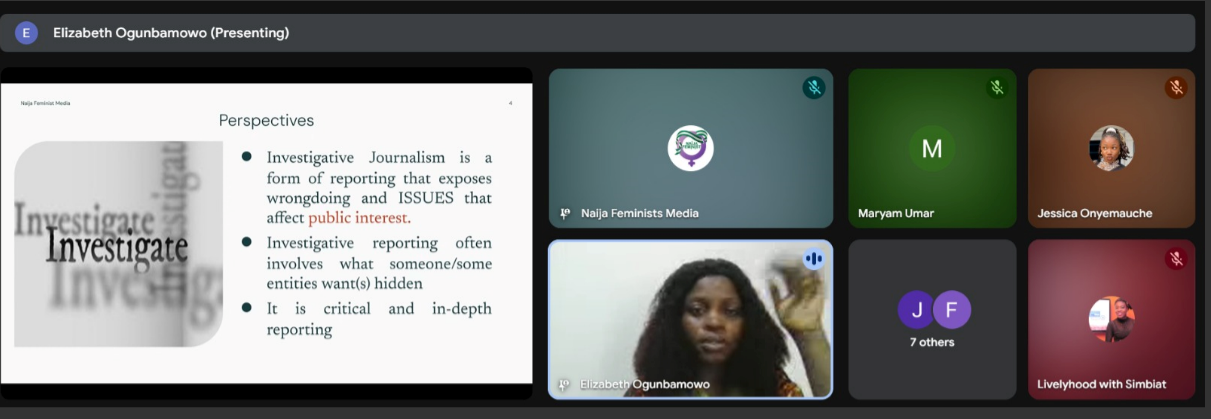
The final session, led by Elizabeth Ogunbamowo, focused on how investigative journalism can strengthen feminist reporting. She explained that investigative journalism involves uncovering hidden truths that those in power seek to suppress.
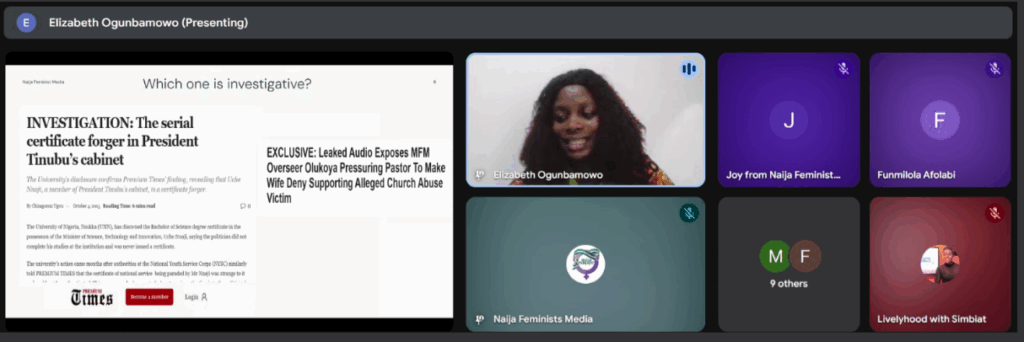
“It goes beyond reporting—it’s about exposing what someone doesn’t want the public to know,” she said.
She traced the history of investigative journalism and taught the fellows the essential skills such as research, data analysis, interviewing, storytelling, legal literacy, and emotional intelligence.
“An investigative journalist must be factual and accurate,” she emphasised.
Participants reflected on how investigative journalism can centre public interest and amplify women’s voices in the media.
Simbiat Bakare, Founding Director of Naija Feminists Media, thanked all the fellows and trainers for their participation. She encouraged the fellows to use the training to become better journalists who accurately and sensitively centre women in their reporting.
Participants at the fellowship shared personal reflections on feminism. One fellow, Maryam Umar Ayomide, noted that “more awareness and campaigns can help curb violence against women,” while another, Jessica Onyemauche, said she discovered feminism through the dictionary and found its values aligned with her beliefs.
The NFM Editorial Fellowship will run from October 27 to December 12, 2025. Each fellow will produce an investigative story highlighting the realities, root causes, and potential solutions to femicide, to be published daily during the 16 Days of Activism campaign.