|
Getting your Trinity Audio player ready...
|
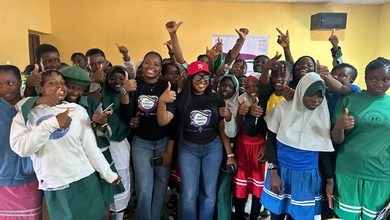
October 11, the world marked the International Day of the Girl Child, a day established by the United Nations in 2011 to recognise girls’ rights, amplify their voices, and confront the barriers that still deny them education, safety, health, and agency. The 2026 global theme centres on ending child marriage and investing in girls’ rights. In Nigeria, where child marriage rates remain high in parts of the North and gender-based violence continues to claim lives, this day demands more than symbolic posts. It demands that we celebrate the girls and women who are thriving despite the system, while refusing to look away from those the system failed.
Nigerian girls and young women are rewriting possibilities across beauty, media, fashion, technology, science and sport. Their excellence is not rare. It is consistent, yet too often treated as surprising or secondary.
Ngozi Esther Edeme, known as Painted by Esther, has made a name for herself in the international beauty industry with her colourful makeup techniques that celebrate darker skin tones. She has worked with global stars, including Naomi Campbell and Beyoncé, bringing greater visibility to Black beauty. In fashion, 22-year-old Lagos creative Rachel Ojuromi, known as “giverachelashot”, moved from creating street-style content in Lagos to walking the Chanel Spring/Summer 2027 show in Paris.
Her journey shows how local creativity can open doors to international opportunities. Technology has also provided a platform for Nigerian women to tell their own stories. Shalom Rayhamen, the developer behind the viral Lagos Life simulation game, drew widespread attention by creating a digital world inspired by everyday Nigerian experiences. Meanwhile, media entrepreneur Mo Abudu continues to take African stories to international audiences through EbonyLife Media. In science, Mary-Brenda Akoda has also gained recognition for her GenScan AI technology; athletes such as Tobi Amusan; musicians including Tems, Arya Star; and countless young innovators whose names rarely receive the sustained attention given to their male counterparts. These are not stories of success despite being Nigerian girls. They are stories of success because they are Nigerian girls — resourceful, bold and unapologetic.


Yet mainstream media, both Nigerian and international, still struggles to centre these achievements on their own terms. Coverage frequently frames women’s success as surprising, attributes it to male mentors or reduces complex careers to “first woman to” headlines. Women appear more often in lifestyle or social categories than in politics, economics or hard news. The result is a double erasure: everyday excellence is under-documented, while structural violence is often reduced to sensational reports that fade without sustained accountability.
Celebration remains incomplete without naming the girls who will never grow into women because the justice system failed them. Ochanya Elizabeth Ogbanje was only 13 when she died in October 2018 after years of alleged sexual abuse by relatives, Andrew Ogbuja and his son Victor, in Benue State. A five-year-old pupil of Noble Kids Academy in Kano who was kidnapped in December 2021 by the school proprietor, Abdulmalik Tanko. He demanded a ransom, then poisoned her with rat poison and buried her body on the school premises.
In 2020, Vera Uwaila Omozuwa, a 22-year-old university student, was raped and bludgeoned with a fire extinguisher inside a church in Benin City, where she had gone to study in May 2020. She died from her injuries days later. November 2025, Ugochi Success Anosike, a young orphan living in Oyigbo, Port Harcourt, was raped and strangled in her room by a neighbour, with alleged involvement of another resident. Iniobong Umoren, a 26-year-old Philosophy graduate of the University of Uyo who was lured with the promise of a job interview in April 2021,
She was raped, murdered, and buried in a shallow grave. Barakat Bello was an 18-year-old student of the Federal College of Animal Health and Production Technology in Ibadan. In June 2020, she was raped and stabbed to death at her family home in the Akinyele area of Ibadan, Oyo State. A 22-year-old fashion designer who boarded a Lagos BRT bus in February 2022 and never arrived home. She was raped and murdered by the driver, Andrew Ominikoron.
These names join a long and painful list of girls and young women whose cases stall, whose perpetrators remain at large, or whose families eventually exhaust themselves against a system that moves too slowly, demands too much evidence it failed to collect, and too often prioritises technicalities over truth. Trackers such as the DOHS Cares Foundation document hundreds of femicides and gender-related killings of women and girls every year. In 2025 alone, 182 cases were recorded; only a tiny fraction reached formal court charges.
On this International Day of the Girl Child, Nigerian girls already lead in beauty, media, fashion, technology, science, and sport. The task is to remove the barriers of child marriage, sexual violence, educational exclusion and justice system failure so that far more of them survive, thrive and shape the future on their own terms. Investment in girls means enforcing and strengthening laws against child marriage and sexual violence, properly resourcing forensic and specialised gender-based violence courts, centring Nigerian women’s stories in media without the surprise framing, funding girl-led organisations and safe spaces, and demanding accountability for every Ochanya, every Vera, every Ugochi and every unnamed girl so that the next generation does not have to trend their names in grief.
Nigerian girls are not waiting for permission. They are already excelling. The system must stop trying to stop them.