|
Getting your Trinity Audio player ready...
|
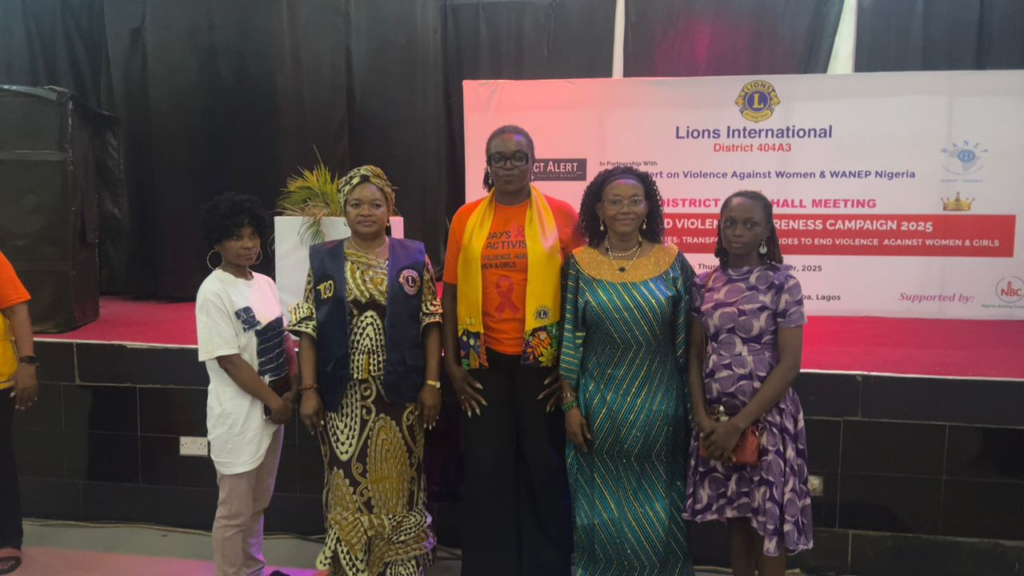
In continued commemoration of the 16 Days of Activism Against Gender-Based Violence (GBV), the Lions Club International, in partnership with Project Alert on Violence Against Women and the West Africa Network for Peacebuilding (WANEP), convened the first of its kind town hall meeting on gender based violence. Theme: “Shaping Safer Communities: Transforming Attitudes to End Violence Against Women & Girls” to mobilise community action, amplify survivor voices, and reaffirm commitment to ending gender-based violence (GBV) across communities.
The event, which took place on December 4, 2025, at the SNUG Banquet Hall in Lagos, opened with the national anthem, followed by a goodwill message from Lion Sylvia Effah, MJF, District Chairperson for the Elimination of Gender-Based Violence (GBV) for the Lions Club. She reaffirmed the Club’s dedication to eliminating GBV, noting that the growing partnership among Project Alert, WANEP and the Lions Club demonstrates that progress is possible when institutions align around a shared mission for social change.
Special remarks were made by key dignitaries and partner organisations working at the intersections of gender justice, peacebuilding, and survivor protection. They called for collective action, survivor support, and systemic change.
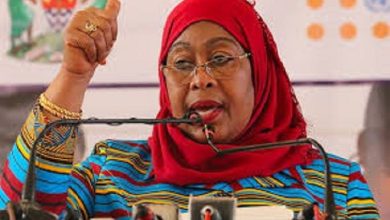
Lion Mary Onu PMLF, NLCF, District 404A3 Governor of the Lions Club, expressed honour that the Club is standing with survivors at a crucial time. She encouraged community members to speak up, especially on behalf of victims who might be unable to speak for themselves. She extended gratitude to Project Alert and WANEP for sustaining the fight against GBV.
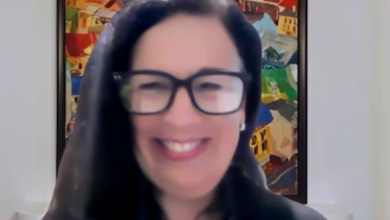
Representing ICCEF and Project Alert, Dr Josephine Effah-Chukwuma urged participants to uphold the principles “See something, say something, and do something.” She reminded attendees that the day was dedicated to celebrating survivors who continue to resist and reclaim their lives. “Today, we join our voices with theirs to say: enough,” she declared.
Lion (CHIEF) Dr Bridget Osakwe, MJ, National Network Coordinator of WANEP, emphasised the collective responsibility to end GBV. She urged participants not only to raise awareness but also to take concrete action, such as community volunteering, providing support to survivors, and advocating for stronger policies and accountability systems.
“Today we raise our voices and commit to a safer world that respects the dignity and equality of all.”
Representing the Executive Director of the Lagos State Domestic and Sexual Violence Agency (DSVA), Oluwakemi Bello, Head of Field Operations, reaffirmed the state’s stance: “SGBV not in my Lagos, SGBV not under my watch, SGBV concerns us all.”
She encouraged partners to intensify collaboration to ensure that Lagos continues to lead in SGBV response and prosecution.
Ibe Jennifer, speaking on behalf of the CEWHIN Executive Director, Atinuke Odukoya, emphasised that addressing gender-based violence is a shared responsibility for everyone; therefore, collective effort is needed to eradicate GBV.
Additional goodwill messages came from Adebayo Folake, Centre Manager of the Assurance Centre at FMC Ebute Metta and Alhaji Lateef Akinborde, Founder of the Community Women’s Rights Foundation.
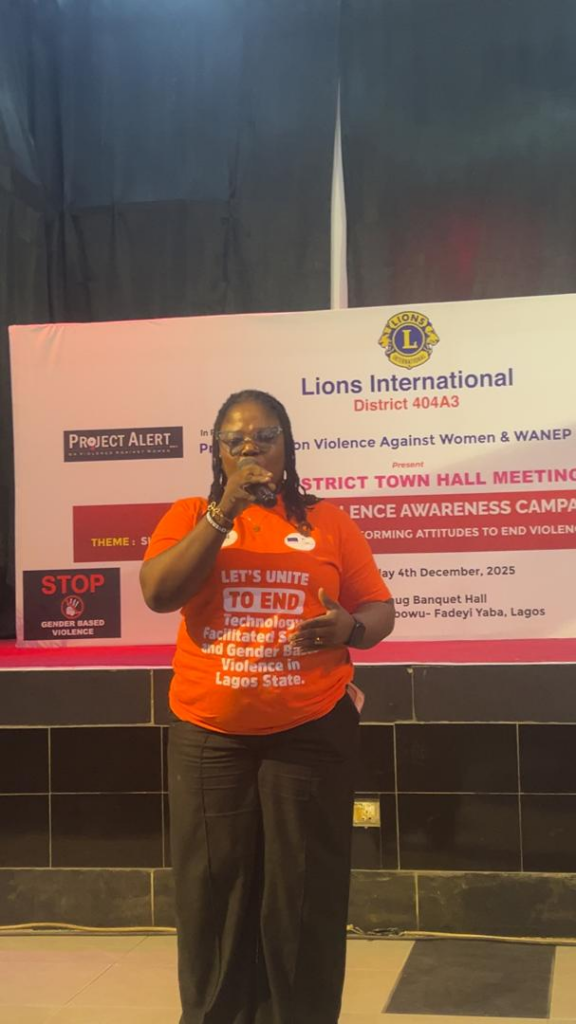
Delivering the first session, titled Responding to SGBV and Changing the Narrative in Lagos, Mrs Oluwakemi Bello, Lagos State Domestic and Sexual Violence Agency (DSVA), highlighted that GBV is fundamentally rooted in patriarchy and unequal power structures. She stressed that survivors seek assurance, safety and institutional support and failure to provide these can deepen trauma.
She discussed recurring challenges in case management. These include denial of wrongdoing by perpetrators, inadequate psychological support, and gaps in community-level intervention. She commended Project Alert for its strong follow-up protocol and post-case empowerment mode. She noted that this approach shortens case timelines and strengthens survivor recovery.
Bello stated that many victims and survivors remain in abusive relationships due to financial dependence on the perpetrator. To curb this, the Lagos State Domestic and Sexual Violence Agency (DSVA) also offers survivors support services not just during the case but after the case has ended to help survivors heal and get back on their feet. She mentioned survivors’ support services, including 6-month shelter accommodation for survivors and their children, skill acquisition and empowerment programs, schooling support for survivors’ children, counselling, and health support, among others.
To end her session, she reminded participants that everyone in the community is a mandated reporter. She urged them not to leave the work to just activists, community surveillance teams, or community leaders. Emphasising that the government and leaders can’t be everywhere, everyone must play a role by reporting to the appropriate authorities. She reassured reporters that their identity will be protected as the DSVA prioritises personal safety across all reporting channels. She urged participants to memorise the DSA Toll-free helpline: 0800 033 3333 to enable them to “See something, say something, do something”
Project Alert’s Community Surveillance Teams (CSTs) shared insights from their work across Lagos. With 12 CSTs across 15 LGAs, these community-based responders often serve as the first line of defence for survivors.
Their stories ranged from confrontations with resistant groups, such as local unions and community actors, to cases involving severe domestic sexual violence. One case involved a Mushin-based perpetrator who assaulted his wife. Still, through the intervention of the CST and Project Alert, the case was escalated to Lagos DSVA, whose swift intervention helped the survivor.
The Project Alert Community Surveillance Team also emphasised the importance of confidentiality and its role in helping survivors heal, while striking a balance between healing and trauma response.
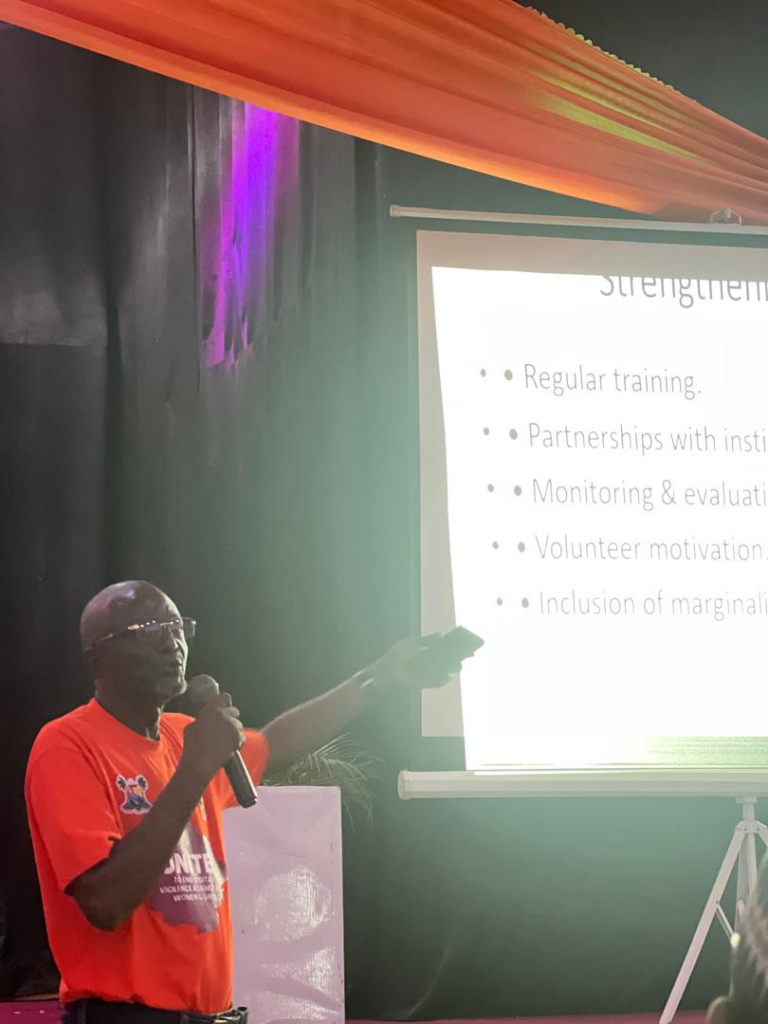
The second session on “Safer Communities, peaceful communities: the Project Alert Community Surveillance Team” anchored the role of CSTs and shared responsibility of community members. Speaking as a community organiser and CST representative from Ikorodu, Alhaji Lateef Akinborde, founder of the Community Women’s Rights Foundation. Started by reminding everyone that gender includes both males and females, “gender is universal, not attributed to women alone, but women are more vulnerable to GBV.”
Therefore, we need to change our mindset that GBV is only a woman’s problem, as it affects the entire community. He praised Project Alert for prioritising prevention and community education rather than waiting to react after violence occurs.
Alhaji Akinborde emphasised that change starts when communities have zero tolerance for violence. This involves creating strong support systems for survivors and ending harmful traditional practices such as FGM and tribal marking, creating community response teams like the Project Alert Community Surveillance Team and redefining gender roles to enable everyone to thrive equally. He urged continuous awareness led by traditional rulers, community elders, and youth organisers. He concluded, “If your community is not safe, you too are not safe.” Ending GBV is everyone’s job.
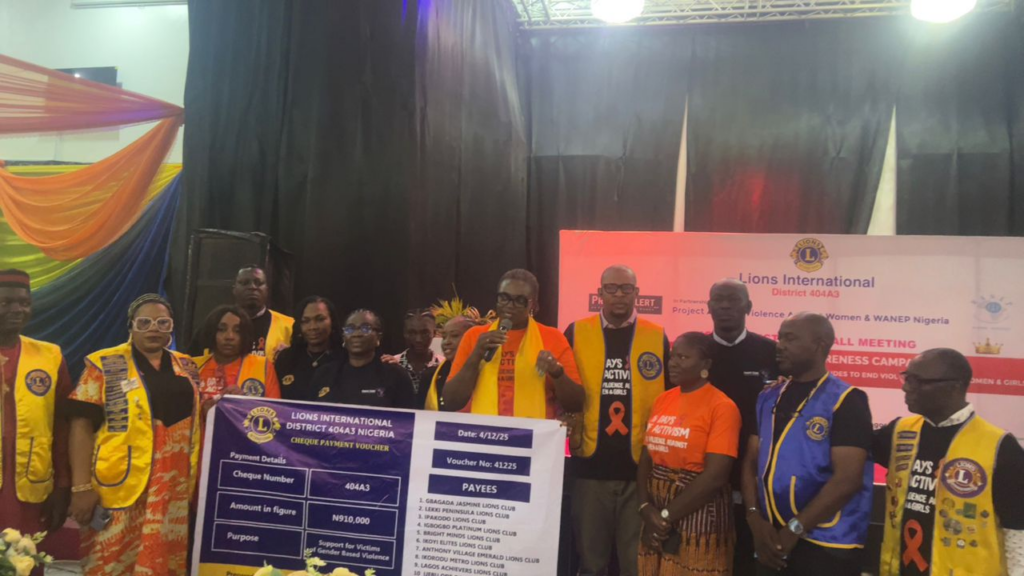
A major highlight was the presentation of ₦910,000 from Lions Club District 404A3 Governor Lion Mary Onu PMLF, NLCF. She noted that the GBV survivors fund is the first of its kind by the club, raised by members across 11 districts in Lagos state. The fund will support GBV case responses across all 15 LGAs where Project Alert operates.
Project Alert expressed gratitude, saying the organisation exists to serve humanity and dreams of a world without GBV. Project Alert founder, Dr Josephine Effah-Chukwuma, pledged that they will continue to support survivors and contribute to redefining what it means to be a survivor. She encouraged survivors to share their stories from a position of strength, not shame, because all the shame belongs to the perpetrators.
Legal practitioners, community advocates, and participants discussed persistent legal and law enforcement lapses that delay case resolution and discourage survivors. They commended Lagos State for establishing a Special Offences and Family Court and called on other states to replicate the model. Dr Josephine Effah-Chukwuma also led Q&A discussions on issues raised by participants on marital rape and its prosecutable status, the new child support system for deadbeat parents in Lagos, the urgency of training boys as intentionally as girls, and the dangers of self-help, self-harm, and retaliatory violence among victims who feel unprotected.
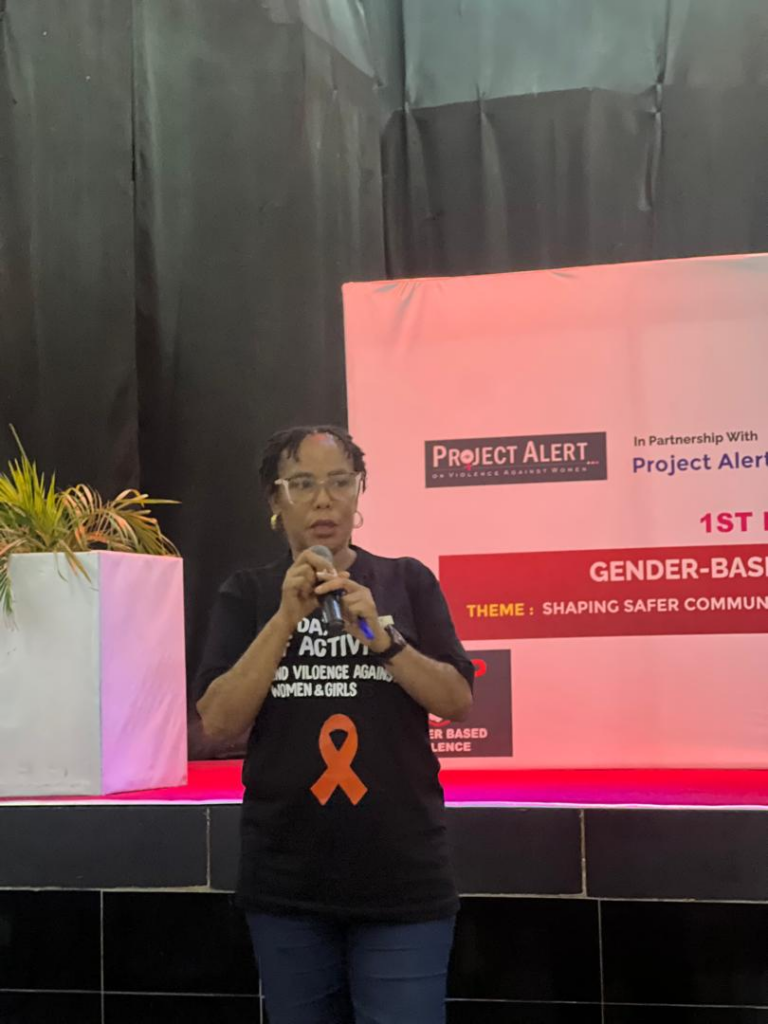
Closing reflections reinforced a powerful call to action. Participants were charged with being vigilant community watchdogs, reporting warning signs, challenging harmful norms, and actively protecting vulnerable groups. Everyone was reminded that real change starts with immediate, visible effort from each person present.
Nsini Udonta, programme officer at Project Alert, captured the spirit of the day with her closing remarks,
“The change begins with us; we must be proactive and not look away. If we see something, we must say something and do something.”
The town hall ended with participants reflecting and sharing ideas on how to build a world where dignity is protected actively, survivors are supported, and gender-based violence is completely eradicated. All participants were called upon to continue the work beyond the hall, taking transformative action in their daily lives.