Taliban Bans Afghan Women from Education Permanently
|
Getting your Trinity Audio player ready...
|
Summary: A viral video has confirmed a permanent ban on women’s education in Afghanistan. The announcement has renewed global outrage as Taliban restrictions continue to strip women and girls of schooling and basic freedoms.
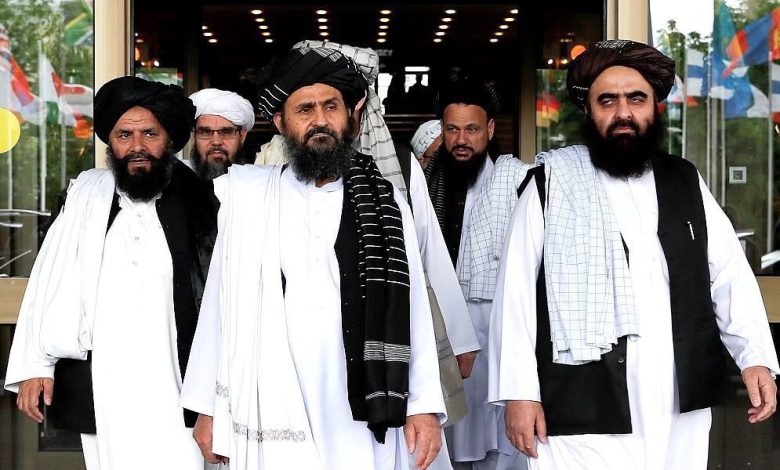
A video clip that has gone viral on social media shows Afghanistan’s Education Minister announcing what is a permanent ban on women’s schooling in the country. The footage, widely shared across platforms, has renewed scrutiny of the Taliban’s ongoing restrictions on women’s access to education as Afghanistan enters 2026.
In the footage, the education minister states that women and girls in Afghanistan will no longer be allowed to access formal schooling. Girls above sixth grade remain banned from school, and women continue to be excluded from higher education.
The news has sparked widespread reactions online, with users condemning the Taliban’s treatment of Afghan women.


On X, user @estherzelda0514 described Afghanistan as a deeply exploitative system, stating that it sees all women as property and bans them from public life.
“In many industries, over 50% of the workers are children enslaved by the debt of their parents. Sex trafficking and child soldiers or brides are common.”
Another user, @ReineJJKusni, stated,
“No one born from a woman has the right to degrade women or strip them of their humanity. Oppressors always forget one thing: oppression creates its own consequences.”
According to UNICEF, 2.2 million girls are currently deprived of their right to secondary education, with hundreds of thousands added since 2024. UNESCO has repeatedly warned that Afghanistan is the only country in the world where girls are systematically denied both secondary and higher education, a policy now entering its fifth year.
The education ban is part of a wider erosion of women’s freedoms since the Taliban returned to power in August 2021. Beyond schools and universities, midwifery programs have been shut down, and laws have increasingly restricted women’s movement and presence in public life.
In September 2025, the Taliban imposed an internet ban across several northern provinces, cutting off access to online education, healthcare training and digital livelihoods. Many women who ran online schools or businesses were directly affected.
Since then, books written by women have been banned from Afghan universities, women’s access to online learning has been blocked, and a decree has prohibited the broadcasting of women’s voices on the radio and in news reports. Afghanistan’s only women-led radio station was shut down, and women were barred from industries including carpet weaving.