|
Getting your Trinity Audio player ready...
|
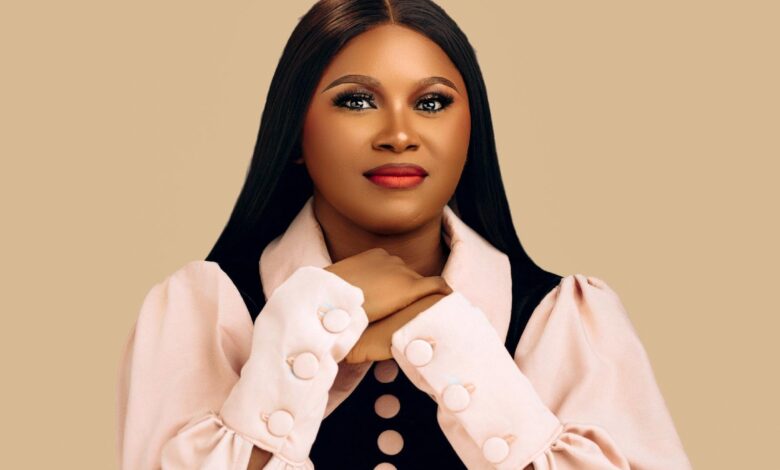
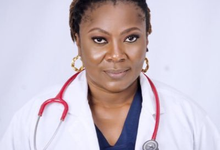
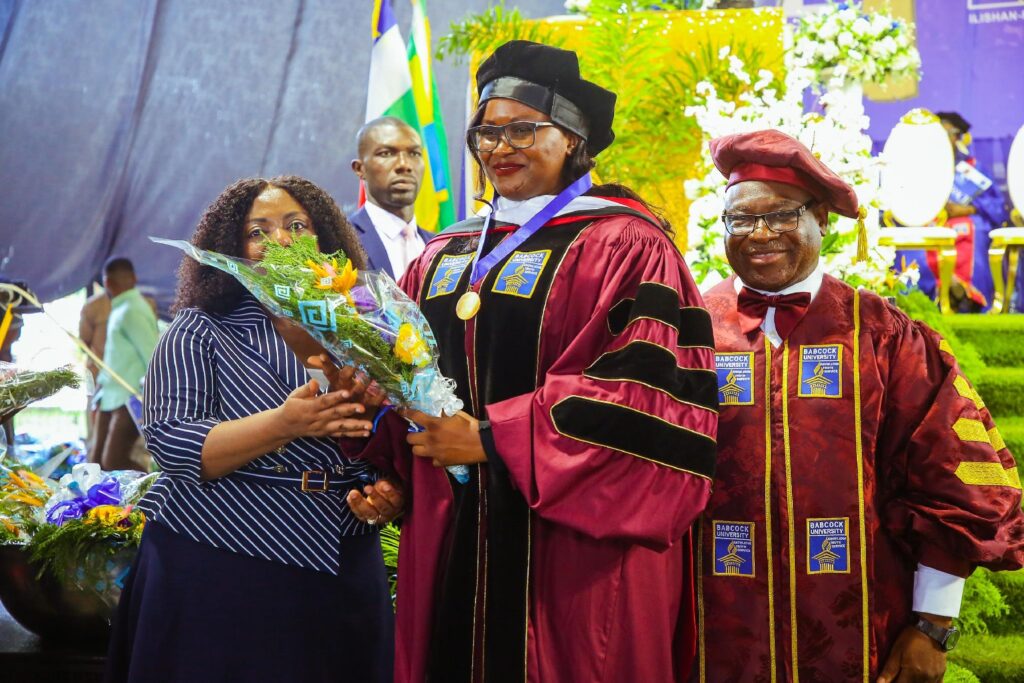
Dr Chisom Paula Ogamba is a linguist, lecturer and researcher whose work explores language, gender and culture. Recently recognised as the best graduating PhD student in her department at Babcock University, she has spent years thinking and writing about the ways language shapes how we understand ourselves and the world around us.
In this conversation with Naija Feminists Media, she reflects on growing up with a love for books, finding her way into academia, how feminism reshaped the way she reads the world, and why language is never as innocent as it seems.
Conversation with Dr Chisom Paula Ogamba
- For readers who may be meeting you for the first time, could you tell us a bit about yourself and the journey that led you into linguistics, teaching and research?
When I posted about my PhD graduation, one of my childhood friends said to me, “I can’t believe Chisom is in academia today. Honestly, I couldn’t either because, as a child, academia wasn’t something I imagined for myself. What I did know, even as a young girl, was that I was always aware of the things women experienced. I asked a lot of questions.
“Why is it this way? Why are things done like this?” Those questions stayed with me long before I had the language to make sense of them. When I wrote JAMB, everyone expected me to study Law because my dad is a lawyer. The truth is, I wanted nothing more than to stay home and read novels. But I was admitted to study English at the University of Lagos, and somewhere along the way, I fell in love with it. Not English as a language, but English as a course.
I still remember studying practical criticism, psychoanalytic criticism, feminist theory and Marxism. We were analysing texts, deconstructing ideas and learning to understand how the world worked through what people wrote. That experience opened my mind. It taught me that you could be vocal about what you care about through words, writing, and analysis, and I realised that I genuinely love analysis.
- Your work today spans teaching, research and feminist scholarship. Looking back, did this path unfold the way you imagined, or were there experiences that gradually shaped the direction your work has taken?
After my first degree, I wanted to teach. I actually thought I would become a primary or secondary school teacher because teaching always felt like my calling. My mum encouraged me to do a master’s degree instead and teach at university. I took her advice and applied to Babcock University.
I still remember that the day I went for my oral interview was the same day one of my aunts was being buried. She died from complications of preeclampsia after continuing a pregnancy she had been advised against because of the risks involved. She already had a daughter, but she thought the fetus was going to be male, so she kept it. Losing her affected me deeply. It made many of the questions I already had about women’s lives feel much more personal, and I still find myself thinking about how different things might have been if she’d been able to make that decision without those pressures.
When I started my master’s, I chose linguistics because I realised I wasn’t really a literature person. What I loved was analysing things, and linguistics gave me the freedom to do that. Instead of being limited to literary texts, I could analyse newspaper reports, conversations and public discourse. Language in action fascinated me. I went to do my master’s because I wanted to teach, but I discovered something else along the way: research. I loved asking why things are the way they are, breaking down norms, policies and traditions, especially those that shape women’s lives. That curiosity eventually led me to research on rape discourse and the ways language influences how we understand women’s experiences. Looking back now, I can see that teaching, research and feminism all grew out of the same instinct I’d had since I was a little girl: to keep asking questions.
- In your works, you’ve examined the stories people tell and the language they use. Has there been anything you’ve come across that changed the way you think about society or the experiences of women and girls?
I think one of the things my research has really made me understand is that words are not just words. Words carry violence, words can cause violence, and they carry norms and culture. You say something, and it’s coming from somewhere; it’s not in isolation, because at the end of the day, you’re a product of society.
When I started my research, I was looking at the way Nigerian newspapers report rape, and my initial hypothesis was that the way they report rape creates a hierarchy of victimhood. Victimhood is constructed through linguistic units: who we consider a victim and how we say the person deserves whatever happened to them. It’s constructed through their choice of language and the culture that language is rooted in, which is rape culture.
In my research, I found out that, yes, my hypothesis was right. There is a hierarchy of victimhood. There is the perfect victim, the one presented as blameless. They use a lot of good adjectives to qualify that person. A perfect victim is, first of all, a victim who has died, and the victim is presented through the eyes of the reporters: the victim was a chorister, a young girl who goes to church, a student. These linguistic attributes give credibility to the victim.
A student means the person is a good girl who goes to school; a chorister means the person goes to church. These are institutional frames that give credibility to victims, like this person was a good contribution to society and doesn’t deserve to be raped. And then you see victims who are women, no longer young girls, in their twenties or thirties, who are raped by their boss, and the way it’s presented will be different.
The news report will start saying the victim “always wears this to work,” or if the victim is alive and telling their story by themselves, there is room for people to negotiate their credibility. So you see that with words, we are reinforcing who you should consider a good or perfect victim and a bad or imperfect victim; a victim to whom you should grant total credibility and a victim whose credibility you should negotiate. They construct a hierarchy of victimhood, where we have the perfect victim at the apex, with total credibility and total sympathy, with no negotiation of victimhood.
- Some people dismiss words as “just jokes” or “just expressions.” From your perspective, where do language and culture intersect, and what happens when harmful ideas are repeatedly normalised through everyday speech?
Language is culture and culture is language. They don’t exist in isolation. The language you speak is dependent on and influenced by your culture. Everything you know about the world is communicated to you through language, and the way it is communicated depends on your culture and your understanding of the world. I was on a radio show with another guest who was talking about rape culture and said we needed to teach people “good values.” I asked, “What are good values?” because what a society considers good or bad is subjective. There was a time when being a good slave and respecting colonial masters was considered a good value. So when we talk about values, we also have to ask who defines them and whose interests they serve.
In language studies, we say that language is arbitrary. There is no one-to-one correspondence between a word and what it stands for; it is conventional. The same applies to how we understand the world. There are so many things that happen when we speak that go beyond what we think we are saying.
J. L. Austin said, “Whenever we speak, we act.” I once did a video about how we tend to think of violence as something physical, like stabbing someone. But words are violent. Words carry violence, and words can cause violence. Words are not just words, whether written or spoken. They carry norms and culture. When you repeatedly use language about how a woman is supposed to behave, or language that places women in a position of subjugation, you are reinforcing years of misogynistic, sexist and patriarchal ideas. You say something, and it is coming from somewhere; it is not in isolation. At the end of the day, you are a product of society. So when those words are repeated, they reinforce the norms of oppression and subjugation of a particular group of people.
- You’ve worked as both a researcher and an educator. How have those experiences shaped one another, and what have your students taught you over the years?
I think being an educator and a researcher has shaped me into who I am today. I cannot just be an aloof teacher. I always talk with my students and try to bridge the gap between mentorship and teaching, and their humanity, their childlikeness, their eagerness to understand the world and their confusion. As an educator, I always tell my students that words are not just words; they should try to be critical thinkers. Every positive and negative attitude you have towards things today is engendered in the way those things have been communicated to you. So it is left for you to deconstruct, analyse and explore.
If they tell you a woman doesn’t have rights, ask yourself why. If they tell you women are emotional in nature, ask yourself, how? Are men not emotional too? Always ask how and why. I see young girls who are still trapped in the circle of “what a girl should be” according to Nigerian society, and I see young girls who are being sexually abused and harassed by teachers and lecturers. It pushes me to keep being vocal about women’s rights and how it should be.
You don’t really understand humanity and how the world affects people until you’re in the mix with young people who have a way of thinking, who have thought processes, and who are trying to understand the world. Being an educator and a researcher has made me who I am today. That’s what keeps me interested in whatever I’m doing.
- Looking at the conversations happening in Nigeria today, what concerns you most about the way women and girls are spoken about, whether in everyday conversations, the media or public life?
The way Nigeria is concerns me. Every single aspect. We’ve been trying to upend patriarchy and misogyny, but the system pushes back. I’ve seen misogyny in such intensity that I’ve not seen before, and sometimes I’m just thinking, has it always been like this? My biggest problem is the way girls are talked about. Words are not just words; they reinforce norms, rules and cultures, and those cultures can be toxic to women. Just how you say it: “as a woman, you should not…” words, proverbs— it’s still language. With just words, you’re reinforcing years of institutional violence against women. And I worry about the younger girls coming up. I always tell my students, if you want to understand what it means to be a woman and how the world wants women to be, look at Afghanistan. You may think the men in your life will fight for you, but we’re not talking about men as individuals; we’re talking about men as an institution. Women have been excluded from that institution and made its pawns.
Even men who claim to be liberal and progressive are still privileged. When push comes to shove, nothing will happen to them, so they can afford to relax about women’s rights. But as women, we cannot afford to relax about it. Rights are things you fight for. And because men are the institution and the leaders or carriers of the institution, women have to wrestle for our rights from these people. So you cannot afford to play about it.
- From your research and everything you’ve observed, what is one thing you wish more people understood about the way women’s experiences are talked about?
From my thesis, the stratification or hierarchy of victimhood is what I really want people to understand. The way we speak about victims, the way we write about victims, the way we present victims, all of these things have implications. There is a hierarchy of victimhood where we have the perfect victim at the apex, with total credibility and total sympathy, and then you have victims whose credibility is negotiated. And that has consequences because if you are a victim and you see that the way you’re going to be spoken about is going to be questioned, you might not even speak up. So, even though we’re looking at something like a newspaper report and it seems like just words, those words have implications. They determine who we believe, who we sympathise with and who we question. And that is why language matters.