|
Getting your Trinity Audio player ready...
|
In Sierra Leone, gender-based violence (GBV) remains a pervasive issue, with domestic abuse, female genital mutilation (FGM), and systemic discrimination continuing to threaten the lives and rights of women and girls. In 2019, the Sierra Leonean government declared a national emergency over sexual and gender-based violence following a surge in recorded cases of rape and assault, a legacy of the country’s brutal civil war.
Feminists are stepping into the spotlight, challenging entrenched norms and advocating for laws that protect women’s bodily autonomy. But the question remains: can feminism truly dismantle the deep-rooted culture of gendered violence in the country?
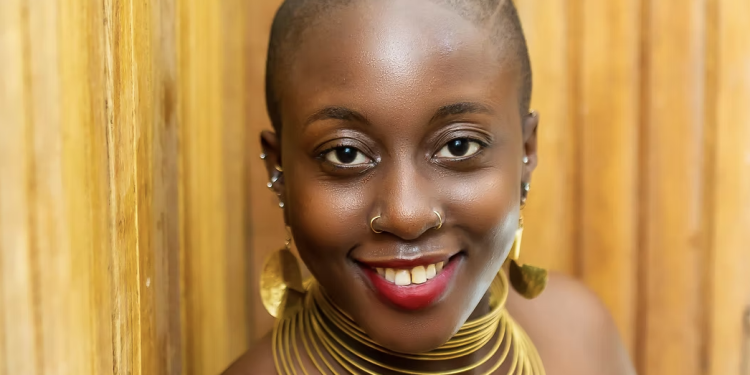
Social Voices sat down with Mina Bilkis, one of Sierra Leone’s most reputable feminists, to find answers. She is the Founder and Director of an adolescent safe space for girls called Girl Up Vine Club Sierra Leone, and she is one of the key advocates for the total ban of FGM and pushing for women’s rights bills to be passed in the country’s parliament.
Q: How did you start your journey in the activism space?

When Ebola happened in 2014, over 14,000 girls became pregnant during that period in Sierra Leone. Schools were closed for nine months, and when they reopened in April 2015, the government implemented a very draconian law which stated that pregnant girls should not attend school.
That deeply disturbed me. I grew up as a third-culture kid, born in the United States to a Sierra Leonean–Nigerian parent, and I lived most of my life on the continent. I was raised in South Africa and later moved to Sierra Leone after the war.
During my time studying in the US when I was in high school, it was not necessarily normal, but it was accepted that adolescent girls who became pregnant could have their children, drop them off at daycare, and continue their education. So, I found it very strange and discriminatory that this law was implemented in my home country, where these girls did not have the same access and privileges as my counterparts had in the US.
They were weaponising girls’ sexuality against them, but what about the boys who impregnated them? And more importantly, what about the men? In most cases, it was men who were having sexual relations with these girls, and in some cases, raping them. These girls then became pregnant and were left without financial or emotional support for themselves or their children.
With all this in mind, I started a safe space for adolescent girls called Girl Up Vine Club Sierra Leone. The programme was implemented at a government-assisted school called Vine Memorial Secondary School for Girls, at the junior secondary school level.
I ran the programme from January 2016 until June 2022. The club was founded to promote education, health, safety, and leadership among adolescent girls aged 11 to 17.
During that period, we trained about 200 girls through our annual cohorts and reached over 1,000 young people, both boys and girls, because we believe in allyship as a necessary tool to dismantle harmful systems.
Our core programming focused on sexual and reproductive health rights, particularly menstrual hygiene management, as period poverty is a major issue in Sierra Leone, as it is in Nigeria, alongside digital rights and sexual and gender-based violence. Once we reached our impact goals, I decided to close the programme because I believe an ideology does not need to be institutionalised. It is a movement, and a movement can exist without an institution.
The idea was for these girls, who had now grown into young women, to pass the baton within their communities to teach others what they had learned and continue the work.
I would say my frontline activism ended there. However, as a writer, I continue to work and write in the areas of global health, technology, and gender issues.
Q: If you were to describe feminism, how would you do so?
Feminism, to me, means that women and men are able to access services, rights, and privileges in an equitable manner.
Gender-based violence (GBV) is a major issue in Sierra Leone, and it manifests in different forms. The most prevalent include domestic violence, female genital mutilation, and financial violence. There are also economic and social barriers, such as unequal access to education and the prioritisation of boys’ education over girls’.
On FGM specifically, there were some legal developments this year. One of them was the Child Rights Act of 2025, which was passed into law in July. Feminist lawmakers and activists worked tirelessly to ensure that Parliament included a clause abolishing FGM. Unfortunately, that clause was removed before the bill was tabled, and when the Act was passed, it did not include the abolition provision. That was a major loss for us.
So, this year has not brought many legislative wins for the activism space, but that does not mean the work stops. Feminism advances this struggle largely through sensitisation. People need to be aware of their rights.
FGM remains widespread, and about eight in ten girls are still subjected to the practice. However, there has been progress. Ten to fifteen years ago, the prevalence rate was closer to 90 per cent. While the numbers are still alarmingly high, the gradual reduction we are seeing is largely due to feminist advocacy and sustained activism.
Because of feminist networks creating platforms for dialogue, alternative practices are beginning to emerge. In Sierra Leone, girls and women are often initiated into what is known as the Bondo society, a female secret society traditionally associated with cutting. Today, due to increased awareness, an alternative known as “yellow Bondo” is emerging.
Although not yet widespread, yellow Bondo allows girls and women to go through the rites of passage associated with the society without the cutting. This is a significant win.
Q: How did you come to embrace feminism personally?
Growing up, I came from a relatively privileged background. Both my parents are academics, and my mother is a feminist activist and scholar, which significantly shaped how I see the world. I have always had a strong sense of self and social justice.
One defining moment for me happened when I was in high school. We had just learned about the anatomy of women and men, including the menstrual cycle. Even today, menstruation is heavily stigmatised, but you can imagine how much worse it was nearly two decades ago. After learning about the menstrual cycle, I became more confident talking about my period.
One day, a male friend asked why I was unusually quiet, and I bluntly replied that my uterus was erupting. He was embarrassed, but that moment marked a turning point for me.
Since then, I have been open about menstruation. I no longer hide sanitary pads or feel shame around something that is completely natural and experienced by most women and girls monthly. That small act was an important step in dismantling internalised misogyny around reproductive health, and it marked the beginning of my journey into reproductive justice.
From my late teens, I have worked with several feminist organisations. Before university, I joined the 50/50 Group, where I was introduced to feminist advocacy and women’s political participation.
I was also involved with and was a co-founding member of the People’s Alliance for People’s Health and Advocacy (PARHA), contributing to advocacy on reproductive health rights and efforts that helped advance comprehensive sexuality education in Sierra Leone.
Q: How do cultural traditions and societal norms reinforce patriarchy in Sierra Leone, and how can they be challenged without alienating communities?
Domestic violence is not only common; it has been normalised because of how society views women as property and as second-class citizens. Many people are accustomed to seeing men physically abuse women and do not intervene because they dismiss it as a family matter. But it is not. It is a human rights violation.
There is a saying among some Temne communities (one of Sierra Leone’s main ethnic groups) that if a man does not beat his partner, it means he does not love her. “If my man doesn’t beat me, he doesn’t like me.”
So, if it’s also ingrained at the ethnic level, how do we dismantle this? That is a bigger question. It is not just about raising awareness; it is also about showing them that love exists without being beaten or threatened. No, love is not evil, love is not abusive, and love is not unkind.
It is about showing examples, but many people in these family units do not have good examples of what love is. In most cases, when a man is beating a woman, the children internalise that behaviour. Most likely, the boy, if he does not unlearn this, will grow up to be a man who beats women, and the girl, as well, will only internalise love if she is beaten by her male partner.
Q: Which laws or policies should be prioritised to better protect and empower women in Sierra Leone?
First and foremost, the Safe Motherhood Bill, which has been tabled for three years. This delay has cost many women and girls their lives. The bill is crucial because bodily autonomy is one of the biggest issues—it’s central to preventing sexual violations and protecting women’s health.
The Domestic Violence Act of 2007 also needs more visibility. Not enough people know it exists, yet it’s a vital tool for protecting women from abuse.
I would also commend some positive laws already in place. The Customary Land Rights Act of 2022 guarantees women’s rights to access and inherit land, especially in rural areas, where patriarchal norms have long excluded them. Access to land allows women to earn income and gain independence.
Similarly, the Devolution of Estates Act of 2007 ensures that children, whether born within or outside marriage, can inherit property. Wives, widows, or partners who can prove their relationship with the deceased are also entitled to inherit property.
Another important law is the amendment to the Sexual Offences Act of 2020, which sets minimum sentencing for sexual violations of minors at 15 years, up to life. Implementation of this law is critical.
Looking ahead, I would like to see two major priorities: Passing the Safe Motherhood Bill and enacting a law that explicitly outlaws FGM.
Q: I’m Curious. Why hasn’t the Safe Motherhood Bill been passed yet?
There are multiple factors. Globally, there’s been a wave of regression against gender-progressive laws, and Sierra Leone is not immune. Local stakeholders also play a role in delaying progress, including women who perform FGM in the Bondo society, the inter-religious council, and broader national interests.
Personally, after the first abortion bill failed, I stepped back from frontline activism and wasn’t involved in drafting this bill. From my perspective as an observer, the delay reflects a combination of global anti-rights trends and local resistance, rather than just government inaction.
Q: What role should men play in advancing feminism in Sierra Leone?
Men can be allies. But it cannot be a performative allyship. Real allyship happens in private spaces in male-only rooms, institutions, and power structures that women cannot access. It is about accountability. Calling out sexist behaviour. Challenging harmful jokes. Holding peers responsible.
Q: What are the biggest challenges facing feminists today, and what gives you hope for the future?
One of the biggest challenges is the rise of anti-rights movements, especially online. Colleagues have been doxxed, jailed, and silenced. Even digital spaces are shrinking.
Still, I believe that as long as there is hope, there is light. Solidarity and collective action are the only ways forward. The work must continue and be handed over to the next generation.
Editor’s Note: This article was first published on Social Voices.