An Invisible Disability: How Medical Neglect of Endometriosis Leaves Women in Despair
|
Getting your Trinity Audio player ready...
|
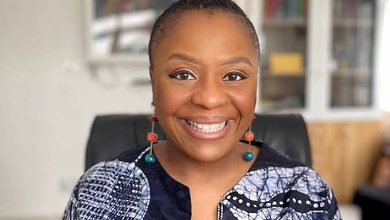
When 31-year-old Tinuade Mary was diagnosed with endometriosis, she had a mental breakdown so severe that she became depressed and had to be admitted to the hospital for therapy. The thought of living with the ailment for the rest of her life left her in uncontrollable tears, till she could only see a bleak future. Endometriosis is a chronic disease in which tissue similar to the inner lining of the uterus grows outside the uterus, and there is currently no cure for it.
Tinuade spoke to Naija Feminists Media (NFM) during a webinar and subsequently in a private WhatsApp chat about what it is like to live with the condition that has so heavily weighed on her.
“You are in constant pain,” Tinuade said, repeating ‘pain’ in every second of her description, as if to replicate her experience in words. She shared that one of such pains nestles in her leg, radiating to her hips and resting on her back. When any trigger occurs, the pain intensifies.
But leg pain is not the extent of the hurt. The condition has also left her unable to feel her toes for a week; she has experienced hair loss, making her cut off her beloved dreads due to bald patches, and her body is frequently drenched in fatigue, leaving medication as her only solace.
“You are popping pills due to the pain, but it could also leave you with other health conditions, such as liver failure, that could lead to your death,” Tinuade, who is also the CEO of Women Too Africa, said as she expressed fear for her life. “I have heard people who have died due to ailments linked to endometrosis.”
One in ten women lives with endometriosis, and while the symptoms differ from one survivor to another, many of them share pains that have affected their quality of life in unimaginable ways.
Relating to Tinuade’s experience, Nigerian TikToker Ajibola Bambgose told NFM that she has remained unemployed due to the constant pain she endures from endometriosis.
“I don’t have a job because I can’t concentrate,” Ajibola said. “I am constantly in pain. In a month, I am okay for just like five days. And in those five days, I have to do everything as soon as possible, leading to chronic fatigue.”
The rocky path to diagnosis
While both women experience chronic pain due to their condition, their path to ailment was neither urgent nor straightforward. For Tinuade, she has been struggling health-wise since she was 18, but it was not until she began taking three to four sachets of paracetamol in a week to dull constant pain that she was confident she was dealing with a chronic illness.
Yet she had to strongly advocate for her health before medical practitioners would take her seriously. At first, she was assured that she was fine, and then, when she kept complaining, they later discovered she had six large fibroids. After more complaints and intense sickness, she was diagnosed with endometriosis at age 30.
For Ajibola, she had to present “a book filled with symptoms” before she was finally diagnosed with the ailment.
“We live in a society where women’s pain is normalised,” Ajibola said, believing that is why the early recognition and treatment of endometrosis is a tall dream.
However, medical practitioner Dr Irene Udebuana shared that the issues are much more complex and could be linked to several factors, including poor medical training.
“When it comes to menstruation or endometrosis, it was more of a one-off topic we medical students get to experience. There was a class on it, but there were no clinical scenarios for us to experience. There was also not much emphasis on it,” the medical practitioner told NFM.
Dr Irene also notes that the lack of in-depth training leads to several misdiagnoses, such as women being told they have a “pelvic inflammatory pain or a period gone bad.”
She added that victims also don’t often share their experiences, resulting in little medical research and the lack of knowledge of the economic cost of such chronic diseases.
“What we don’t measure, we don’t prioritise,” Dr Irene said, unravelling the systemic issues affecting adequate healthcare of the disease affecting 190 million women worldwide.
Misinformation and stigma trails Endo warriors
While women with endometriosis, sometimes called endo warriors, suffer from the trauma of a lack of cure for their illnesses, they also have to battle misinformation, stigma, and a silent culture.
“When people hear endometriosis, they think of it as a bad period and infertility issues. So even when you go to hospitals, you are being diagnosed from the point of view of how you can be made fertile,” Tinuade told NFM.
Tinuade and Ajibola expressed that they are often unconcerned about their fertility status, as being healthy is typically their primary need. Meanwhile, while medical practitioners associate endometrosis with reproductive issues, they affirm that it is a “full-body health disease” because pain comes in different parts of their body and at different times of their lives, whether they are on their menstrual cycle or not.
Misconception about endometriosis, however, surpasses those of medical practitioners to the public, with some believing women with endometriosis cannot have children. Tinuade shares some of the issues with NFM.
“People don’t want you to talk about it or have a solution outside the one that they have created for you, and I believe it is linked to our societal and religious beliefs,” she said. “They make it seem like it is a spiritual issue, which speaks to the way some testimonials are made in churches regarding it.”
Tinuade recounted that some family members also believe women with endometriosis complaining of constant pain are seeking attention, hence they are being told they “have a main character syndrome.”
There have also been tweets promoting stigma relating to the disease, encouraging men not to marry women with chronic medical conditions. An X user (formerly Twitter), Ola (@xdealsgadgets), says men who marry women with endometriosis exhibit the “biggest sign of self-hate.”
Dr Irene clarified that while endometriosis comes with conditions that could affect fertility, such as painful sex and pain that complicates pregnancy but women with endometriosis can still give birth.
A toxic cycle of pain relief
With pain becoming too familiar a hurt and stigma a growing agony, Tinuade has been trying to get her laparoscopic surgery, a minimally invasive procedure used to diagnose and treat endometriosis, since October 2024, but it hasn’t been successful due to doctors being on strike at the time.
“They said my case is not an emergency since I can still see and walk,” Tinuade said, her voice clouded in sarcasm wrapped in her Nigerian accent, as if to point out the many ways medical practitioners deprioritise their hurt. “But if it were to be an emergency, they would have done the surgery even though they were on strike.”
Ajibola also noted that the treatments for endometriosis are often expensive, costing between ₦400,000 to over ₦3,000,000, and leading to survivors not wanting to financially burden their families. However, the worst thing is that “it never gets better, one’s health keeps degenerating,” Ajibola said, highlighting that even money is not enough to alleviate the suffering that comes with the condition.
A South African woman who wants to be kept anonymous could relate to Ajibola’s frustration. She told NFM she inherited endometriosis from her mom. Having witnessed her mom’s constant pain as a child, she was determined to seek redress when she was diagnosed with the same illness.
Now 30-year-old, she has had 12 surgeries, including a bowel removal, but she doesn’t get better. She now needs a pain relief surgery, but medical practitioners would not carry it out because she has had too many surgeries already.
“I don’t understand why women are going through so much, and we are not seen. I don’t know what we need to do. There is a lady I know who died due to endometriosis because her lungs collapsed,” she said, suggesting maybe feminists would have to become politicians before a cure would be found for the disease.
‘It starts with learning the condition’
Fungai Mutimodyo, a women’s reproductive health advocate from Zibambwe, told NFM that to address the complexities of endometriosis-related issues, there would need to be significant awareness across all parts of society.
“Let us engage policy makers in our communities on the issues, so that when discussions of the national budget are being discussed, that issue will be represented as well. When we are talking about building schools or hospitals, the conversation on endometrosis will be included there.”
She shared that when people learn about the condition, they will take the search for a cure seriously. She encouraged survivors to speak up about their experiences to help break the stigma.
“Fear and shame are common, but your pain is real, and you deserve attention. You can start quietly by telling one trusted person. It’s a simple step,” Fungai said. “Learn about your symptoms, it gives you the confidence to talk about your symptoms, and find allies, it makes you stronger.”
Dr Irene, who is also a medical robotics professional, recommended that medical researchers could utilise technological apps to collect symptoms from women with endometriosis worldwide, with the data aggregated and analysed to find a cure.
For Endo warriors like Tinuade and Ajibola, legislative action is paramount, and solutions to endometriosis are to be prioritised as cancer is, and as malaria once was.
“Policies should be put in place to create spaces that ensure that women with endometriosis receive adequate health care,” Tinuade said, while Ajibola added. “The government also needs to pump money into the health sector.”
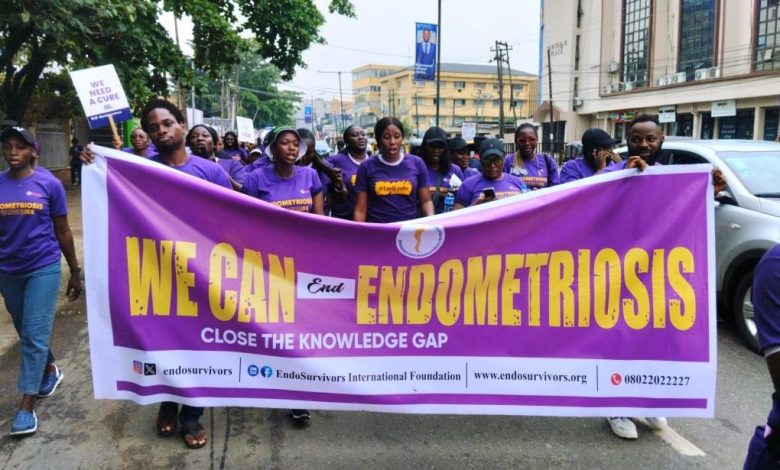
Olivia Nwankudu, the Executive Director of EndoSurvivors International Foundation, recommended that people can take advantage of Endometriosis Awareness Month, celebrated globally in March, by offering pratical support. She shared that employers of labourers can provide workspaces that empower survivors’ voices; people can adopt a patient by taking care of a patient’s medical bills in part or in full; and medical professionals can advance research into aetiology and pathogenesis.
“I believe herbal medicine holds promise in treating endometriosis; that pathway should be encouraged as well,” Olivia added.
Similarly, Olabimpe Fapohunda, the founder of the non-governmental organisation Endometriosis and Adenomyosis Foundation, told NFM that people can show solidarity by joining a walk. She recommended that allies collaborate with NGOs to facilitate the implementation of policies that mandate comprehensive coverage for endometriosis-related healthcare.
“Private and government institutions may consider funding laparoscopic surgery for individuals presenting with severe symptoms of endometrosis,” Olabimpe added. “This financial support can significantly alleviate the burden of diagnosis and treatment.”
Meanwhile, women like Tinuade have already begun taking steps to improve their lives despite the incurable condition. Early in January 2026, Tinuade launched Her Healing Space NG, a safe space for women with similar struggles to connect, share their experiences, and find relief. Tinuade wants to make sure no woman with endometriosis becomes so overwhelmed that they ends up having a mental breakdown, like she once did.