Ageing as a Woman should not be a Crime
|
Getting your Trinity Audio player ready...
|
Summary: Ageing as a woman should never lead to fear, blame, or exclusion, yet in many communities older women are unjustly labelled and mistreated due to deeply rooted patriarchal beliefs that devalue them once they are no longer seen as “useful.”
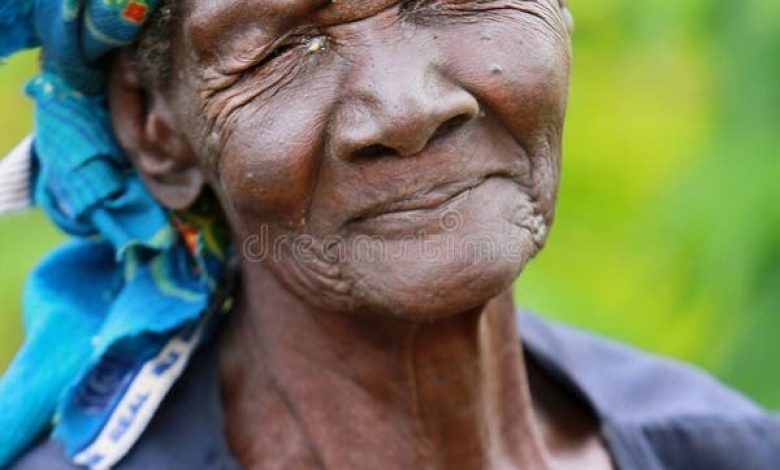
There is something deeply unsettling about how a woman can spend her entire life being needed and still be treated like a threat the moment she is no longer easy to use for the patriarchy. Not loud, not dramatic, just a slow shift in how people look at her, speak to her, speak about her. And one day, without announcement, she is no longer an elder; she is a problem waiting for a name.
In many African communities, that name is “witch,” and it does not fall from the sky; it is placed there deliberately. Older women are blamed for deaths they did not cause, illnesses they did not create, misfortunes that existed long before them. And once that label sticks, it justifies everything that follows, the isolation, the beatings, the exile, the quiet agreement that she no longer belongs.
Somehow, this cruelty is selective. Men grow old in the same spaces, their bodies slowing down, their relevance shifting, yet they are rarely turned into explanations for tragedy. They become elders, advisers, men whose age is treated like authority, while women of the same age are treated like evidence of something gone wrong.


That difference is not culture in the harmless way people like to describe it; it is patriarchy doing exactly what it has always done. It decides that a woman’s value is tied to what she can give, her labour, her body, her ability to serve, and when that is perceived to fade, it does not just let her be; it turns her into something to fear. Because a woman who cannot be used must be controlled in another way.
And fear is a powerful tool, especially in communities already dealing with loss and uncertainty. It is easier to point to one woman and say “this is why things are bad” than to confront broken systems, poverty, or the randomness of suffering. So she carries what was never hers to carry, not because it is true, but because it is convenient.
There is a cruelty in this that goes beyond exile, and it is how these women continue to experience violence even after they have been pushed to the margins. Older women are raped, abused, and violated, yet their pain is often dismissed because society has convinced itself that they are beyond desire and therefore beyond harm. That lie does not protect them; it protects the perpetrators who hurt them.
So when we talk about this, we cannot soften it into something abstract or distant. These are women who raised children, held families together, survived things many of us cannot imagine, only to be discarded when they no longer fit into a narrow idea of usefulness. And if we are honest, the line between being valued and being blamed is thinner than we like to admit.
What does it mean that a woman can give so much to a community and still be pushed out of it when she becomes inconvenient? And if ageing in a man is something to respect, why does ageing in a woman become something to fear?
If this pattern was created, then it can be undone, but that requires more than sympathy that fades after a conversation. It means refusing to repeat stories that frame older women as threats, even when they come wrapped in tradition or religion. It means insisting on accountability, from families, from community leaders, from institutions that would rather look away than intervene.
It also means choosing to see older women differently, not as people whose time has passed, but as people whose lives still carry weight. When their voices are included in decisions, when their knowledge is taken seriously, when protection is not conditional on how useful they are, something begins to shift. And slowly, the idea that a woman’s life loses value with age starts to break.
Because at the centre of all this is a truth that is uncomfortable but necessary. A society that teaches itself to fear older women is not just failing them; it is preparing to fail every woman who dares to grow old in it. And that is not a distant problem; it is a future that is already being written unless we decide, deliberately, to change it.