Femicide: Police Arrest Elijah Emmanuel, Tony Ogenata for Serial Killing of Women
|
Getting your Trinity Audio player ready...
|
Summary: On November 30, 2025, Elijah Emmanuel and Tony Ekwen Ogenata kidnapped one of their girlfriends, demanded ransom from her family, collected ₦300,000, and then murdered her and dumped her body. The crime went unsolved for months until the same two men were arrested in April 2026 for murdering 17-year-old Thompson Adams Omokafe.
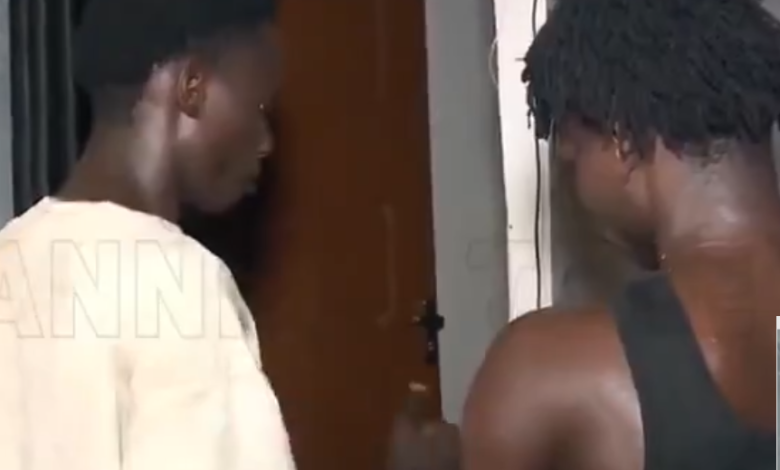
On May 6, 2026, the Nigeria Police Force disclosed that Elijah Emmanuel, 23, and Tony Ekwen Ogenata, 21, confessed to kidnapping and killing a woman identified as a girlfriend of one of them, months after the incident occurred. The disclosure followed their arrest in April 2026 for the killing of 17-year-old Thompson Adams Omokafe.
According to police findings, the two men kidnapped Omokafe on April 22, 2026, after he returned from his Unified Tertiary Matriculation Examination (UTME). They reportedly lured him to their apartment, demanded a ransom of ₦150 million from his family, collected approximately ₦200,000, and then strangled him. His body was placed in a bag and dumped in a canal in Awoyaya, Ibeju-Lekki.
During interrogation, the suspects confessed to an earlier crime involving a woman who was a girlfriend of one of them. Police said the incident occurred on November 30, 2025. The suspects kidnapped the woman, demanded ransom from her family, collected ₦300,000, and subsequently killed her.


Commissioner of Police Fatai Tijani said,
“Investigation revealed that they had earlier kidnapped and murdered a female victim on November 30, 2025. The victim was a girlfriend of one of them. They contacted her parents and demanded a ransom. After collecting the ₦300,000, they still went ahead and murdered the lady.”
This case reflects a broader pattern of femicide in Nigeria, where women and girls are killed, often by people known to them. Data from the Nigeria Police Force shows that intimate partners are responsible for a significant proportion of these killings, accounting for 47% of recorded femicide cases in Lagos over a five-year period.
Naija Feminists Media have documented this pattern, highlighting the systemic nature of gender-based killings and the gaps in accountability and prevention. More details on femicide trends and documented cases can be found in NFM reports here and here.