|
Getting your Trinity Audio player ready...
|
Summary: Contrary to the highly perceived male dominance of African literature, Naija Feminists Media Unveils the faces of African women who are global award-winning authors and booksellers
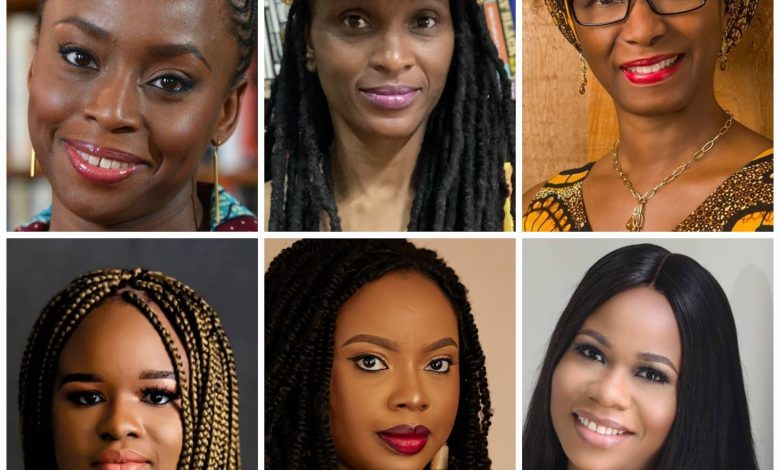
In today’s world, African literature has shifted away from the heavily dominated male icons like Chinua Achebe and Wole Soyinka to a profound literary narrative of female authors who defined contemporary literature globally. These women have won the world’s most prestigious literary awards and have successfully transformed African storytelling from institutional politics to lived realities of gender, migration, history, and identity.
Below are the award-winning authors and best book sellers
- Chimamanda Ngozi Adichie
Chimamanda Ngozi Adichie is a renowned Nigerian author, essayist, and global feminist icon. As an author, she significantly transformed contemporary African literature and reshaped how African women are portrayed on the global stage. Her works reject the trope of the African woman as a silent, long-suffering victim, and replace it with complex, flawed, and autonomous individuals. Her fiction and essays provide a blueprint for intersectional African feminism.
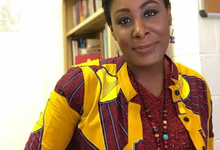

As an internationally acclaimed author, Chimamanda has won prestigious literary accolades, celebrating her as one of the world’s major literary icons. Her debut novel, Purple Hibiscus (2003), dismantled domestic and religious patriarchy. It earned her the Hurston/Wright Legacy Award (2004) and the Commonwealth Writers’ Prize for Best First Book (2005). Her monumental historical epic, Half of a Yellow Sun (2006), won both the Anisfield-Wolf Book Award and the Women’s Prize for Fiction (then the Orange Broadband Prize) in 2007, and was later uniquely honoured as the Women’s Prize “Winner of Winners” in 2020 for the best novel in the award’s 25-year history. Celebrated for its critique of race and immigration, Americanah (2013) captured the National Book Critics Circle Award for Fiction and the Chicago Tribune Heartland Prize for Fiction in 2013.
2. Chika Unigwe
Chika Unigwe is a literary prodigy whose writing career has permanently transformed contemporary African storytelling. Writing both in English and Dutch, Chika retold narratives about marginalised African women, particularly those of prostitutes and undocumented migrants. Rather than present their stories through lenses of pity and moral condemnation, she gives these women deep psychological agency, treating their bodies, desires, and choices with immense dignity. Her female protagonists are not helpless victims; they are complex, flawed, and highly resilient individuals who navigate hostile global patriarchal structures on their own terms.
Her masterpiece, On Black Sisters’ Street (2009), tells the haunting, intimate stories of African women working in the sex trade in Brussels. The novel achieved monumental validation by winning The Nigeria Prize for Literature (2012), the continent’s richest and most competitive literary accolade. It was also longlisted for the prestigious International IMPAC Dublin Literary Award (2011). Chika’s awards cemented her status as a critical voice for marginalised women whose migration stories are often ignored or erased. Her early career was similarly distinguished by winning the BBC Short Story Competition (2003) and a nomination for the historic Caine Prize for African Writing (2004). Through her sharp prose, she shifted global perceptions of the African diaspora, gender relations, and female autonomy.
3. Seffi Ata
Profiled as a prolific vanguard of modern African feminism and a foundational figure in contemporary Nigerian literature, Sefi Atta is widely celebrated for her incisive, witty, and unapologetic portrayals of middle-class Nigerian women fighting for autonomy amid deeply entrenched patriarchal norms. Through her work, Sefi transformed how African women’s stories are consumed as deeply reflected in her female protagonists, Enitan in Everything Good Will Come and Deola in Bittersweet. Both female protagonists are highly opinionated, flawed, and actively rebellious. They rejected the traditional expectation of women’s unconditional long-suffering endurance. These characters portrayed African women openly debating politics, navigating their sexuality, criticising religious hypocrisy, and prioritising their own careers over marriage. In a new audacious way, the literary prodigy forces the global literary market to accept African women as autonomous intellectual beings.
Her unforgettable debut novel, Everything Good Will Come (2005), serves as a brilliant blueprint for contemporary African urban feminism. It tracks a young girl’s coming-of-age in Lagos against a turbulent backdrop of military dictatorship and social expectation. The book won the inaugural Wole Soyinka Prize for Literature in Africa (2006) and the prestigious PEN International/David T. Wong Prize for Fiction. Her collection of short stories, News from Home (2010), won the prestigious Noma Award for Publishing in Africa (2009).
4. Ayọ̀bámi Adébáyọ̀
Ayọ̀bámi Adébáyọ̀ is a recognised millennial African author. Her writing is celebrated for its rich, lyrical prose, profound emotional depth, and unflinching examination of contemporary Nigerian society. Through her work interrogates the crushing weight of cultural expectations and class divisions within modern Nigerian society.
Ayọ̀bámi’s sensational debut novel, Stay With Me (2017), deeply explored fertility trauma, sickle cell disease, and marital fracture. The book achieved massive international success, winning both the 9mobile Prize for Literature and the prestigious French literary prize, Prix Les Afriques. It was also shortlisted for the Baileys Women’s Prize for Fiction. Her second novel, A Spell of Good Things (2023), a fierce exploration of political corruption and wealth disparity that earned a spot on the Booker Prize Longlist. Additionally, she has served as a judge for the 2024 Women’s Prize for Fiction and is a jury member for the prestigious 2025 Booker Prize.
5. Oyinkan Braithwaite
Oyinkan Braithwaite is a radical contemporary feminist author whose stories dismantle the suffocating, traditional expectations of female morality and domesticity that have historically constrained African women in literature. She portrays her protagonists as independent characters directly opposing the flat, long-suffering victims of patriarchal trauma. Through the lens of dark comedy and thriller dynamics, Oyinkan highlights female solidarity as a co-dependent sisterly bond that can override the authority of the patriarchal systems surrounding them.
Her sensationally dark debut, My Sister, the Serial Killer (2018), clichéd the Los Angeles Times Book Prize for Best Crime Thriller/Mystery, the Anthony Award for Best First Mystery Novel, and the British Book Award for Crime & Thriller Book of the Year, alongside coveted nominations for both the Booker Prize and the Women’s Prize for Fiction. Her triumphant momentum continued with her second full-length novel, Cursed Daughters (2025), which was shortlisted for the prestigious Nero Book Awards and named one of the ultimate Amazon Editors’ Best Books of 2025, proving that her unique, punchy literary voice possesses lasting, cross-continental critical appeal.
6. Oyin Olugbile
Oyin Olugbile is a rising literary icon and cultural storyteller whose work bridges the ancient past with modern African feminist thought. Her stunning, lyrical debut, Sànyá, upends the traditional patriarchal structures of classical folklore. The novel boldly reimagines the legacy of the legendary Yoruba male deity Ṣàngó through the eyes of a fierce, imperfect female protagonist, bridging ancient spiritual traditions with modern emotional weight. Oyin’s subversive storytelling captured the highest literary honour in the nation, winning The Nigeria Prize for Literature (2025). Prior to this major triumph, her work also gained key recognition on the CANEX Prize longlist (2024). Oyin’s historic win signals a thrilling new direction for African literature, proving that women writers can boldly claim and reshape ancient mythology to serve feminist narratives