|
Getting your Trinity Audio player ready...
|
Summary: Precious Obiabunmo, a digital marketing and communications specialist and founder of Reclaimed Bible Women, speaks on patriarchal biblical interpretation, intimate partner violence, theology as a feminist issue, and the slow but essential work of changing narratives in homes, religious spaces, and online spaces.
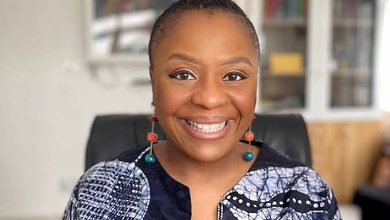
Precious Obiabunmo is a digital marketing and communications specialist and the founder of Reclaimed Bible Women, a platform dedicated to helping African Christian women dismantle patriarchal interpretations of the Bible and cultivate a faith that centres their dignity, equality, and agency.
In this conversation with Naija Feminists Media, she traces a feminist journey shaped by her mother’s pain and the books that gave her language for it.
Insights from Precious on Patriarchy, Faith and Policy Gaps,
When and how did you personally come to feminism? Was there a moment, experience, or process that shaped your feminist consciousness?


Growing up, I did not have the language to describe what my mother experienced in her marriage. I only knew that it was painful to watch her remain in a situation that made her battered and unhappy while family members and church leaders encouraged her to stay for the sake of the children.
It wasn’t until I read Purple Hibiscus by Chimamanda Ngozi Adichie in my final year of secondary school that I began to understand what I had witnessed. My mother’s experience also led me to question some of the teachings I had grown up with.
Despite being deeply involved in church, I noticed a disconnect between the promise of certain teachings, particularly around headship and submission in marriage and the realities they often produced in women’s lives.
Later, when I gained university admission, I read The Joys of Motherhood by Buchi Emecheta. That book profoundly shaped my understanding of the expectations placed on women, and it was one of the experiences that led me to embrace the label of feminist.
Over time, reading, conversations with other women, and engaging deeply with scripture through a critical lens helped me name patterns I had previously accepted without question. Feminism became a framework for understanding and articulating justice, equality, and dignity, both within faith communities and in society more broadly.
- What issues affecting women and girls are you most focused on right now, and why do you believe these issues require urgent attention?
I am particularly interested in how interpretations of scripture can either reinforce gender inequality or challenge it. In Nigeria, many Christian women remain in abusive marriages because they have been taught that endurance, silence, and submission are markers of godliness.
These teachings can make it difficult for women to recognise abuse, seek help, or leave unsafe situations. In some cases, the consequences are tragic, contributing to the growing prevalence of intimate partner violence and femicide.
I have seen firsthand how deeply biblical interpretation shapes how women understand their worth, their voice, and their rights. When scripture is taught in ways that prioritise control over dignity, young girls can internalise limitation as holiness.
When women are taught that silence is virtuous, it becomes harder for them to access support, advocate for themselves, or imagine alternatives to harmful circumstances.
This is why I believe conversations about women’s rights must also include conversations about theology. The stories we tell about God, gender, and power have real consequences for how women live their lives.
- From your perspective, which law, policy, or systemic change should be prioritised to improve the lives of women and girls, particularly in Nigeria or your community of work?
A key priority is strengthening and enforcing policies that protect women and girls from gender-based violence while also expanding access to justice in ways that are accessible, survivor-centred, and not slowed down by religious/cultural stigma or institutional barriers.
Beyond legal reform, I also believe there is a need for systemic change in education and religious spaces. This includes integrating gender equity education into school curricula and encouraging more accountable, context-aware interpretations of religious texts in public and private discourse.
In Nigeria specifically, policy implementation is often the gap, so strengthening accountability mechanisms is just as important as passing new laws.
I am also interested in seeing more women in positions of political and legislative power. There is a limit to what advocacy alone can achieve if women are not adequately represented in the spaces where decisions are made and laws are shaped. Greater representation is essential for both creating and sustaining meaningful change.
- What does feminist solidarity and collective action look like to you, and what message would you like to share with younger or emerging feminists?
Feminist solidarity, to me, is rooted in listening, accountability, and shared responsibility. It means creating spaces where women can hold different beliefs, backgrounds, and experiences while still working toward justice and dignity for all.
Collective action is not always loud or visible; sometimes it looks like education, storytelling, community-building, and the slow work of changing narratives in homes, churches, schools, and online spaces.
To younger or emerging feminists, I would say: protect your ability to think critically. Some systems rely on women never asking questions. Be curious. Keep asking questions.