Favour Epiphany Bessan “Favy” Makes History as Nigeria’s First MasterChef Champion
|
Getting your Trinity Audio player ready...
|
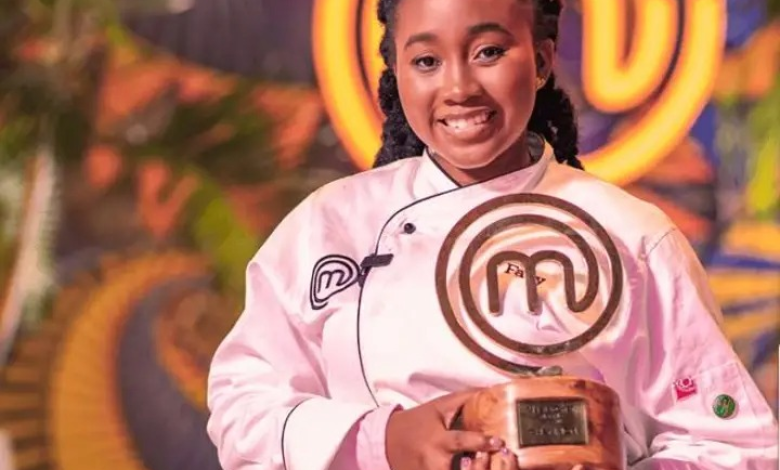
Favour Epiphany Bessan, popularly known as Favy, has emerged as the winner of the edition of MasterChef Nigeria, becoming the first person to win the country’s adaptation of the globally acclaimed cooking competition after thirteen weeks of culinary challenges that tested skill, creativity and resilience. She secured the historic title after defeating fellow finalist Fads Segun in the competition’s grand finale, which aired on 19 July. Her victory earned her the MasterChef Nigeria trophy alongside a grand prize valued at ₦73 million, making her the programme’s winner.
MasterChef Nigeria, produced by Primedia Africa under the internationally recognised MasterChef franchise, premiered on 26 April and featured ten home cooks from different professional backgrounds competing through mystery box challenges, pressure tests, team competitions and elimination rounds. Across thirteen weeks, contestants were required to demonstrate technical ability, adaptability, creativity and composure while preparing a wide range of dishes inspired by both Nigerian and international cuisines.
Before entering the competition, Bessan was already familiar with competitive cooking, having previously appeared on Delicious or Disaster, a culinary programme created by Diary of a Kitchen Lover. Throughout MasterChef Nigeria, however, she established herself as one of the season’s strongest contestants, consistently impressing the judges with imaginative cooking, careful presentation and an ability to recreate familiar comfort foods through a contemporary culinary lens.
One of the defining moments of her journey came when she became the first contestant in the competition to win the MasterChef Nigeria Immunity Pin after producing the “Dish of the Day”, an achievement that protected her from elimination and further strengthened her position as one of the competition’s front runners. As the weeks progressed, she continued to advance through increasingly demanding challenges, building a reputation for consistency under pressure.


In the grand finale, Favy and fellow finalist Fads were tasked with preparing a three-course menu that reflected their culinary identity and personal story. Before the final cook began, the judges encouraged both contestants to “put themselves on the plate” by creating dishes that represented who they are as chefs.
Favy responded with a menu that blended familiar Nigerian flavours with contemporary culinary techniques. Her starter featured plantain naan with moin moin purée, topped with quail eggs and bacon beurre blanc. For the main course, she presented a reconstructed pepper soup served with sweet potato purée and salmon escovitch. She completed the meal with a dessert of coconut tapioca topped with fresh fruits, coconut sugar and coconut flakes. According to MasterChef Nigeria, the winning menu celebrated bold Nigerian flavours while presenting them in a modern way. Throughout the finale, the judges commended the dishes for their creativity, technical execution and presentation.
Moments after she was announced as the winner, an emotional Favy described the achievement as “a dream come true.”She dedicated the victory to aspiring culinary creators, encouraging people with a passion for food to continue believing in their ideas and abilities. The competition awarded Favy a prize package worth ₦73 million.
The season of MasterChef Nigeria introduced audiences to contestants from different backgrounds, each bringing regional flavours, personal experiences and family traditions into the kitchen. Over the course of the competition, viewers watched contestants recreate Nigerian cuisine through both traditional and contemporary approaches, reflecting the country’s rich and diverse food culture.
Favy’s victory adds to the growing number of Nigerian women gaining recognition in professional culinary spaces. Although women have long shaped Nigerian food culture within homes, markets and local businesses, opportunities for national recognition in high-profile culinary competitions have been far less common.