|
Getting your Trinity Audio player ready...
|
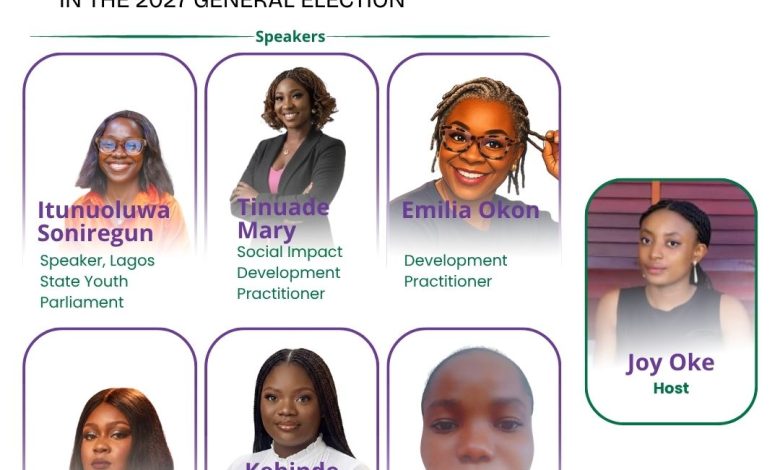
On Tuesday, June 16, 2026, Naija Feminists Media (NFM) hosted an X Space discussion titled “Beyond Running: Increasing Women’s Political Representation in the 2027 General Election.” The webinar, attended by over 200 participants, brought together advocates and youth leaders to examine the barriers limiting women’s meaningful participation in Nigerian politics.
The conversation was held in commemoration of Democracy Day and explored how political inclusion for women extends beyond contesting elections to addressing structural exclusion within party systems and decision-making spaces.
NFM Executive Assistant Joy Oke opened the discussion, noting that while women are often encouraged to run for office, deeper systemic issues within political institutions continue to limit their ability to compete fairly and win.
Tinuade Mary, the Executive Director of the Women Too Africa Foundation, emphasised that the starting point for increasing women’s political representation is greater participation in politics at the party level. She noted that while women are present in politics, many who aspire to leadership positions must take deliberate steps to join political parties and engage actively in their structures.


Emilia Okon, an international development and gender mainstreaming specialist, described Nigeria’s political landscape as still significantly behind in terms of women’s representation and participation in decision-making roles.
She explained that women often enter political parties but are frequently relegated to peripheral roles, with limited access to key decision-making processes. According to her, party meetings are often scheduled at times that exclude women, while traditional gender roles also confine women to welfare-related responsibilities rather than leadership positions.
Itunuoluwa Maria Soniregun, a youth leader and policy advocate, reflected on her experience in leadership, noting that representation goes beyond visibility and is instead measured by impact.
She explained that through her experience as a speaker in youth leadership spaces, she has come to understand leadership as service and responsibility, not just presence. According to her, true representation is defined by how leadership improves the lives of others and inspires more young women to take up leadership roles.
In closing, the speakers collectively called for stronger structural reforms within political parties, increased investment in young women’s political development, and policy-driven mechanisms such as reserved seats and gender quotas to improve representation ahead of the 2027 general elections.
They also stressed that achieving gender equity in politics requires both systemic change and consistent participation from women at all levels of political engagement.