|
Getting your Trinity Audio player ready...
|
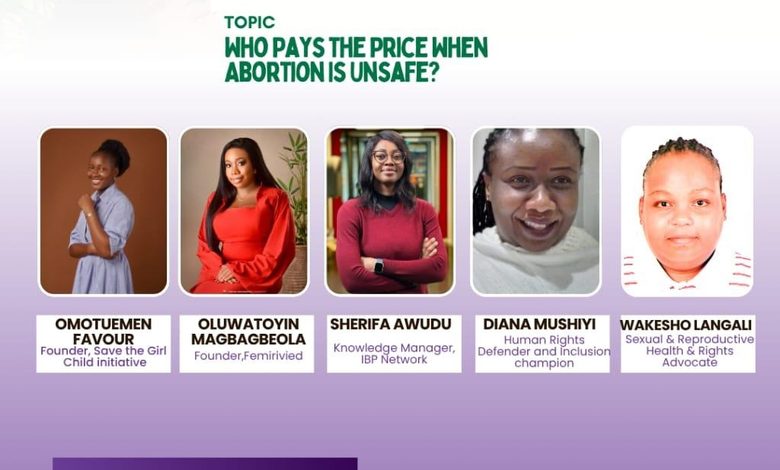
On September 28, 2026, Naija Feminists Media (NFM) marked International Safe Abortion Day with an X Space titled “Who Pays the Price When Abortion Is Unsafe?” bringing together speakers from Nigeria, Ghana and Kenya to examine the realities of abortion access, the consequences of unsafe abortion and the wider impact of reproductive healthcare restrictions on women and girls.
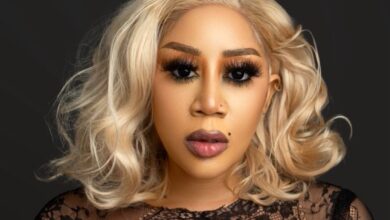
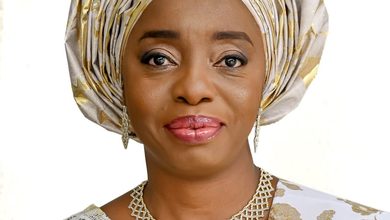
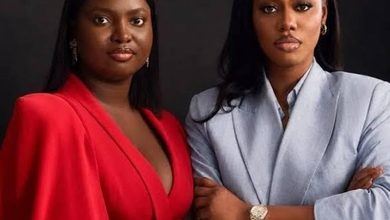
The one-hour conversation brought together over 30 listeners, and the conversation featured Oluwatoyin Magbagbeola, founder and CEO of Femrivied; Sherifa Awudu, a sexual and reproductive health and rights expert and researcher; Wakesho Langali, a Kenyan SRHR advocate, feminist activist and communications practitioner with Positive Young Women Voices; and Diana Mushiyi, a Kenyan human rights advocate, activist and emerging researcher. Omotuemen Favour, founder of the Save the Girl Child Initiative, was also invited but could not join the conversation.
The discussion began with the question of what reproductive justice actually requires beyond the existence of legal rights. Sherifa Awudu explained that reproductive justice provides a broader framework for understanding abortion than simply asking whether abortion is legally permitted. Drawing from the work of reproductive justice movements, she described it as encompassing the right to bodily autonomy, the ability to decide whether and when to have children, whether to parent, and the conditions necessary to do so safely and sustainably.
She added that the legal permission alone does not guarantee meaningful access. An abortion may be legally available while remaining inaccessible because of cost, distance, stigma, lack of trained providers, misinformation or other barriers within the healthcare system. She also drew attention to the colonial histories behind many abortion restrictions across Africa, a subject Naija Feminists Media examined in its report published on International Safe Abortion Day, “The Colonial Laws Behind Africa’s Abortion Restrictions.” The report traces several abortion laws on the continent to legal systems introduced during colonial rule and examines how many of those provisions survived independence.


The conversation moved beyond the idea that abortion restrictions simply determine whether an abortion happens; instead, the speakers examined how restrictions can determine the conditions under which women and girls seek care.
The second speaker, Diana Mushiyi, brought a research and human rights perspective to the discussion, highlighting the scale of the gaps in post abortion care in Kenya.
According to a 2023 study conducted by the African Population and Health Research Centre, Kenya’s Ministry of Health, and the Guttmacher Institute, an estimated 792,694 induced abortions occurred in Kenya in 2023. Among women who received post-abortion care, 16.4% experienced potentially life-threatening complications and another 1.4% experienced severe maternal outcomes. The study also found that only 18% of primary-level health facilities and 24% of referral-level facilities met the relevant standards for providing comprehensive post-abortion care. Diana used these realities to emphasise that access cannot be reduced to whether a service exists; women need healthcare that is accessible, affordable, available and of an acceptable quality.
She pointed to the additional barriers faced by women and girls who are already marginalised, including people with disabilities, survivors of sexual violence, adolescents and those living far from healthcare facilities. Transport costs, the price of medication and follow-up care, lack of confidentiality and stigma can all make it harder for someone to obtain timely care.
Another speaker, Oluwatoyin Magbagbeola connected abortion access to women’s economic lives, drawing on her work with Femrivied, a platform that connects African women to skills and employment opportunities. She discussed how an unintended pregnancy can interrupt a woman’s education, employment and career plans, particularly where she does not have adequate financial or family support. For girls and young women, pregnancy can mean leaving school or putting education on hold. For women already struggling financially, continuing an unwanted pregnancy can also create additional economic pressure.
She also added that women’s economic empowerment cannot be separated from their ability to make decisions about reproduction. A woman cannot fully determine the direction of her education, employment or economic life when decisions about pregnancy are made under conditions of limited reproductive choice.
The speakers repeatedly returned to poverty as a factor that shapes reproductive choices. For women with money, geographical distance or legal restrictions may still be barriers, but financial resources can determine which options are realistically available. Women without those resources may have fewer choices when they need abortion care.
Diana’s discussion of affordability highlighted expenses that can accumulate before, during and after care, including transportation, medication, consultation and follow-up treatment. Poverty can turn an already difficult situation into a medical emergency when care is delayed or inaccessible.
Sherifa also focused on the role of journalists, advocates and organisations in shaping public understanding of abortion. She urged communicators to move away from language that presents abortion primarily as a moral controversy and instead communicate accurately about abortion as a healthcare issue and a reproductive rights issue. She cautioned against sensational or stigmatising descriptions and urged journalists to protect the dignity and privacy of people whose experiences are being reported. That includes being careful with personal stories and images. Women seeking abortion should not be reduced to stereotypes of shame, desperation or tragedy simply because they are seeking a medical service. Responsible communication also means understanding the legal context of the country being reported on, avoiding misinformation and recognising that the people most affected by abortion restrictions are not a single, uniform group.
Oluwatoyin also addressed common misconceptions surrounding abortion, including the belief that abortion inevitably causes infertility. She distinguished between safe abortion care and complications resulting from unsafe abortion, noting that the latter can result in serious health consequences. WHO similarly states that abortion is very safe when carried out using a recommended method appropriate to the pregnancy duration and by a person with the necessary skills. This is very important to note because myths about abortion can themselves become barriers to care. When women and girls cannot access reliable information, they may rely on misinformation from social media, peers or unqualified sources at a time when accurate information can affect their safety.
Diana also pushed the conversation towards what a reproductive healthcare system should look like in practice. The speakers identified four interconnected problems: accessibility, affordability, availability and quality. And within this context, accessibility will mean that women and girls can physically and practically reach services; affordability will mean that the cost of care does not make it inaccessible to people with limited financial resources; availability will require trained healthcare workers, accurate information, essential medicines and functioning referral systems; and quality will mean that care is safe, timely, confidential, respectful and free from discrimination. For women with disabilities, adolescents, survivors of sexual violence and women living in marginalised communities, each of these barriers can even become more pronounced. The Maputo Protocol provides an existing African human rights framework for sexual and reproductive health.
The question running through the Space was ultimately about who bears the consequences when safe abortion care is unavailable. It is women who may be forced to travel long distances for care, girls who may have their education disrupted, women who cannot afford private healthcare, survivors of sexual violence who may face additional stigma while seeking reproductive healthcare, women with disabilities who encounter inaccessible services and women whose lack of access to accurate information leaves them vulnerable to unsafe methods and delayed treatment.
The conversation also showed that decriminalisation alone cannot resolve every barrier; legal reform must be paired with functioning healthcare systems, accurate information, affordability, and services women can actually reach.
Naija Feminists Media will continue documenting the realities faced by women and girls around reproductive health through its 2026 Editorial Fellowship and examining the laws, systems and social conditions that shape their choices.