How Nigerian Women Are Weighing Pad Alternatives Amid Cancer Fears, Rising Costs

|
Getting your Trinity Audio player ready...
|
For Olarinoye Muheezah, her monthly flow usually didn’t come with stress. Except for the cramps that come with her period, she said she usually does things that relieve her stress. One of them was wearing a pad like every other woman.
However, her dilemma started when she saw a conversation online that what she had been taught to be proper menstrual hygiene is dangerous to her health.
“Although I’ve not been a victim, I have heard people talk about how pad usage affected them and how agonising it is for them to keep treating recurring infections after each period,” she said.
Muheezah explained that the two alternative solutions, menstrual cups and tampons, look scary to her, and she can’t imagine inserting them into her private part.


“I think the pad is still the easiest and most comfortable among them for me,” she ended.
Do Pads Cause Cancer?
On September 18, 2026, a TikTok user, Mummy Sunshine, posted a video explaining why young girls should not use pads. The viral video generated over 605,000 likes, 17,800 comments, and 363,700 shares. But medical experts like Dr Summayah Balogun, a Kwara-based doctor, would declare the news false.
“There is no research linking the usage of pads to any form of cancer,” Dr Summayah said in an exclusive interview with this reporter. “Improper use of sanitary pads is unhygienic and greatly discouraged. But the usage is in no way linked to any cancer, not even cervical cancer,” she added.
Similar posts online debunked the viral claim, as seen here.
Meanwhile, a 2025 Thompson Medical study revealed that there’s no scientific evidence linking the proper use of sanitary pads to cervical cancer or any other type of cancer.
According to the study, Cervical cancer develops in the cells of the cervix, the lower part of the uterus connecting to the vagina. It starts with abnormal changes in cervical cells, known as precancerous changes or dysplasia, which can develop into cancerous tumours over time. This type of cancer progresses slowly, providing opportunities for early detection and intervention.
Human papillomavirus (HPV) causes nearly all cervical cancers. Specifically, persistent infection with high-risk HPV types, particularly HPV 16 and 18, is responsible for approximately 70% of cervical cancer cases worldwide. Not everyone with HPV develops cervical cancer. The immune system usually eliminates the virus before it causes serious damage.
Karo Omu, founder of Sanitary Aid Initiative, agrees that no scientific evidence has linked sanitary pads to cancer. She cautioned, however, that it should not end conversations about what pads are made of.
Omu pointed to a 2022 report by Toxics Link, an Indian environmental group, which tested ten Indian brands, four organic and six inorganic. Every pad contained volatile organic compounds (VOCs) and phthalates, including the organic ones.
That, Omu explained, shows the chemicals are present, but it doesn’t show that the body absorbs them at harmful levels.
“Detecting a chemical does not automatically mean it causes harm or cancer,” Omu said.
Can Nigerian Women Afford The Expensive Alternatives?
According to a report by Sana Pads, up to 37 million Nigerian girls and women of menstrual age lack reliable access to affordable sanitary products as of 2026. The report further shows that 1 in 10 African girls miss school during menstruation. The average Nigerian woman spends between ₦18,000 and ₦36,000 annually on disposable sanitary pads, representing 5-10% of minimum wage income.
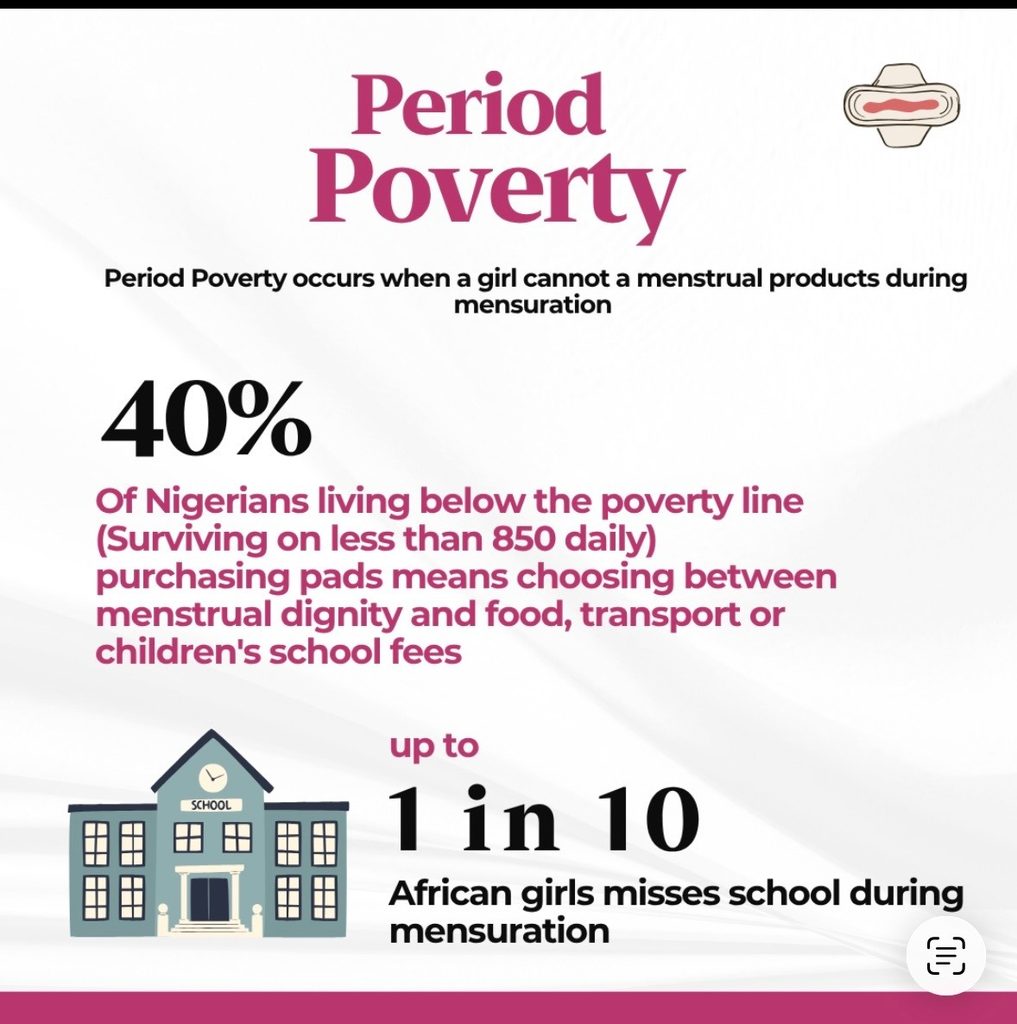
Infographic showing the percentage of Nigerians struggling to afford pads. Credit: Rasheedat Abidiesin.
Only 23% of public primary schools in Nigeria have adequate WASH facilities that support menstrual hygiene management, according to UNICEF data. Period poverty contributes to approximately 20% of girls dropping out of school before completing secondary education in northern Nigeria. Studies indicate that 65% of Nigerian women and girls have used alternatives like newspaper, rags, or leaves due to inability to afford pads.
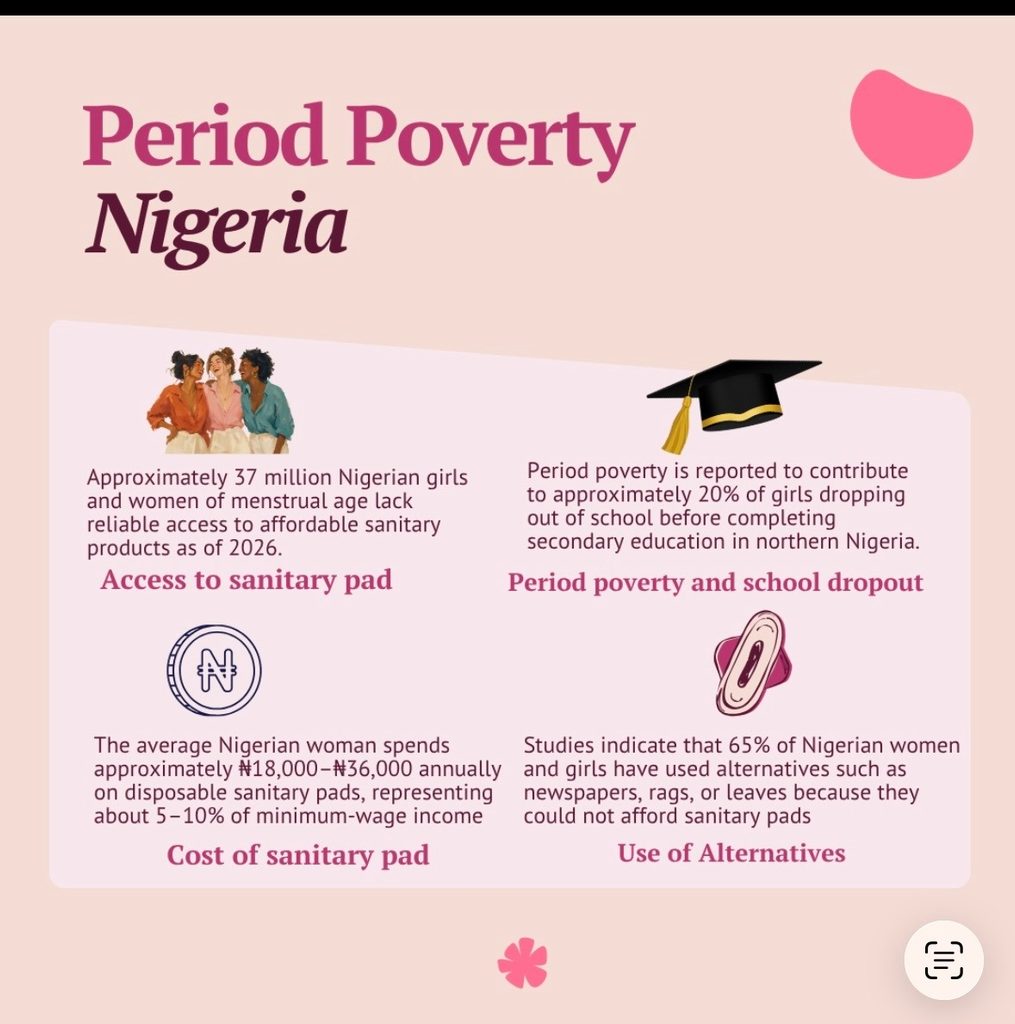
Infographic showing Period Poverty in Nigeria. Credit: Rasheedat Abidiesin.
According to the former Nigerian Minister of Women Affairs, Pauline Tallen, at a press briefing by the Federal Ministry of Women Affairs and the Federal Capital Territory Administration held in Abuja in 2021, more than 37 million girls and women in Nigeria cannot afford menstrual hygiene products.
“That means every month, more than 37 million girls and women are unable to safely manage their periods, limiting their ability to study, work and live their lives. While this is an unfortunate situation that has become normal in Nigeria, it still doesn’t make the situation less alarming,” Pauline said.
The Real Cost of Periods
The mathematics of period poverty is straightforward and devastating. A price assessment by this reporter revealed that a pack of disposable sanitary pads costs between ₦500 and ₦1,200 in most Nigerian markets. Women typically need 3-5 packs per cycle, depending on flow heaviness. That’s ₦1,500 to ₦6,000 monthly, or ₦18,000 to ₦72,000 annually.
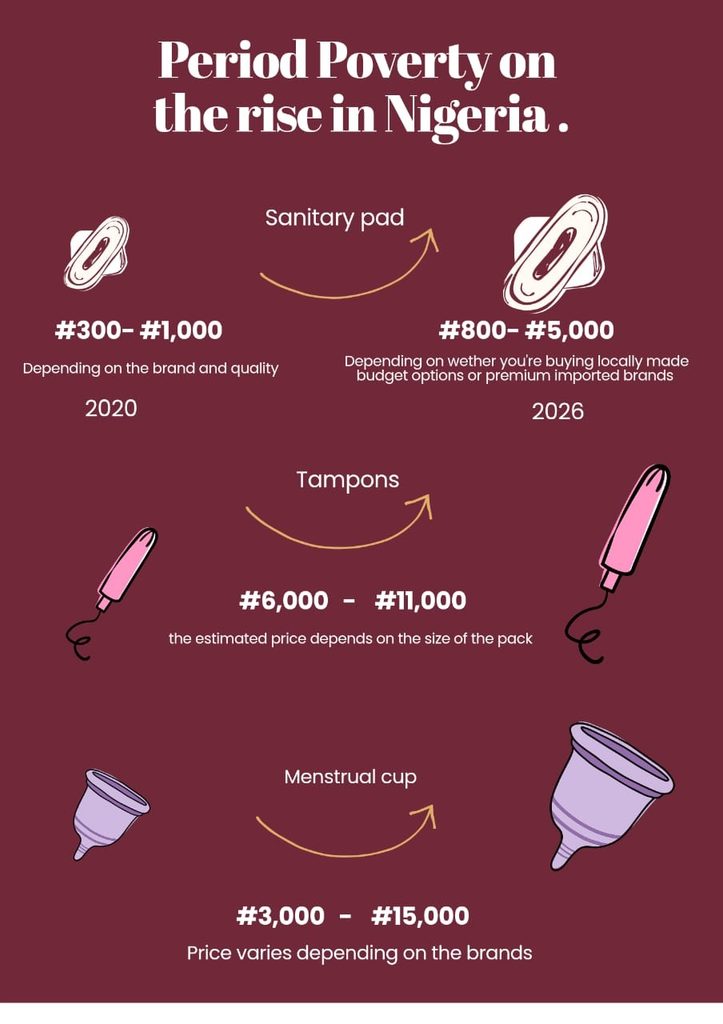
This infographic shows the price of pads, tampons, and menstrual cups. Credit: Rasheedat Abidiesin
The price of pads run between N800 to N5,000 depending on brands and preferences. The price for tampons run between N6000 to N11,000. The menstrual cup varies from N3000 to N15,000.
For context, Nigeria’s minimum wage stands at ₦70,000 monthly as of 2026. A woman earning minimum wage would spend 2-9% of her entire income just on managing her period. For the 40% of Nigerians living below the poverty line (surviving on less than ₦850 daily), purchasing pads means choosing between menstrual dignity and food, transport, or children’s school fees.
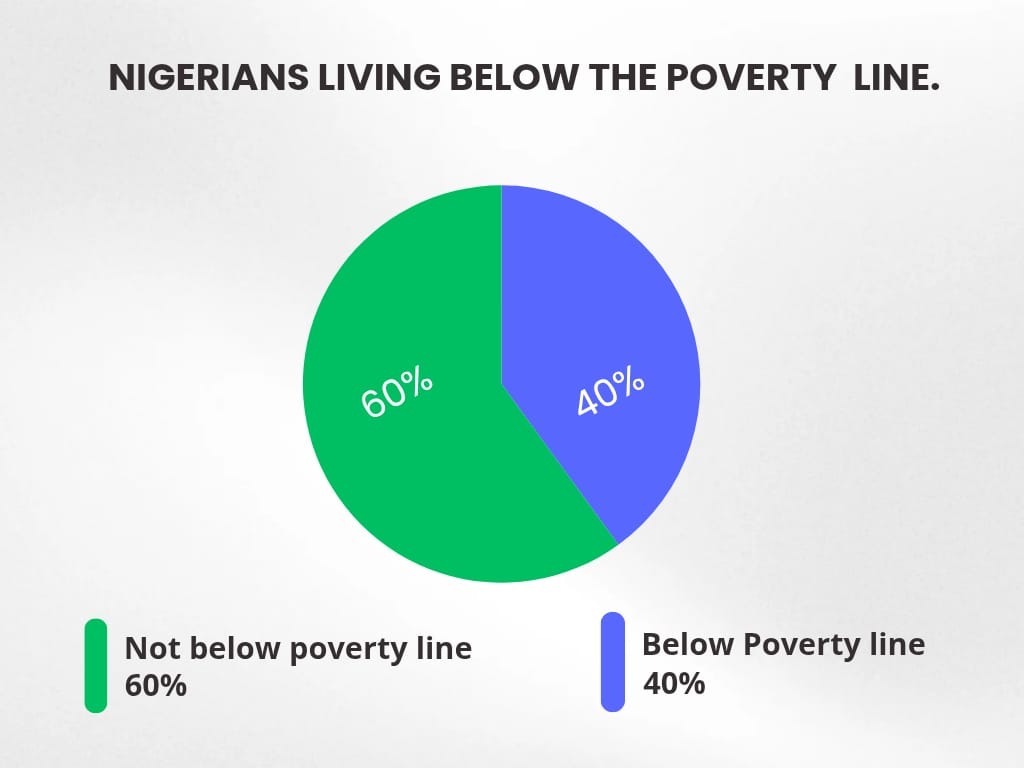
This infographic shows the percentage of Nigerians living below the poverty line and those who are not below the poverty line. Credit: Rasheedat Abidiesin.
Rural Women Pay More
Rural women in Sokoto, Yobe, or Bayelsa states face compounded challenges: lower incomes, fewer product options, and higher prices due to distribution costs. Market women, domestic workers, and subsistence farmers, who make up significant portions of Nigeria’s female workforce, often earn well below minimum wage with no predictable income.
The ripple effects extend beyond individual women. When mothers cannot afford pads, they often prioritise their daughters’ needs over their own, using increasingly unhygienic alternatives. When families must choose, sons’ education expenses frequently take priority over daughters’ menstrual needs, reinforcing gender inequality across generations.
Media personnel and women’s rights advocate Prisca Iwendi noted that, given the harsh reality of severe poverty across the nation, the vast majority of ordinary Nigerian girls will not be able to afford tampons or menstrual cups, making them an unrealistic alternative for mass use.
Tampons are treated as premium, imported luxury items in the local market, and their cost is prohibitively high compared to standard sanitary pads. Furthermore, tampons require consistent access to clean, running water for hand hygiene before insertion, as well as safe, private sanitation facilities, which are sorely lacking in many public schools and rural communities across Nigeria.
“Expecting a girl who is already struggling to find a few hundred Naira for basic pads to afford expensive tampons is an economic mismatch that highlights the urgent need for local production of cheap, safe, and subsidised menstrual products. In fact, we are working on a project currently with the aim of providing an overflow of pads for young girls; when that is finalised, it will be executed to the limelight,” she explained.
Following the viral claim, girls and young women have expressed their concern; while a few find usage familiar, most claim they are not comfortable with using tampons or menstrual cups.
When Rumour Becomes Risk
Misinformation and fear, Omu added, make life harder for girls and women who already struggle to afford period products.
“Rumours that pads cause cancer or infertility breed deep distrust, and even when free pads are donated, many women decline them and turn to rags, torn clothing, toilet paper, newspaper, raw cotton, torn mattress, soil and dried leaves.
“Avoiding unproven dangers leads directly to documented health risks, including infections,” Omu said.
What Expert thinks
Prisca told this reporter women must know the difference between the presence of a chemical and actual, proven clinical harm.
“The trace substances we should be aware of include phthalates used for plastic flexibility, dioxins left behind from chlorine bleaching, and synthetic fragrances, which are far more likely to cause immediate skin irritation or allergic reactions than long-term systemic diseases like cervical or ovarian cancer,” she explained.
Prisca also mentioned that genuine health risks associated with sanitary pads stem primarily from poor menstrual hygiene practices and prolonged use rather than the chemical composition of the pads themselves. Wearing a pad for too long, beyond the recommended four to six hours, creates a trapped environment of heat and moisture that becomes a breeding ground for bacteria and fungi.
She advises that tampons and menstrual cups can be exceptional, highly effective alternatives to sanitary pads, but they should be adopted for convenience, sustainability, and personal comfort rather than out of an unproven fear that pads cause cancer.
“Tampons are also a reliable internal option, though they carry their own strict hygiene protocols. It is vital to remember that switching products will not change your cancer risk, as pads are structurally safe, but it can dramatically improve your daily comfort and quality of life,” she concluded.