I Did Not Survive. I Just Refused To Stop: When a Woman Refuses to Fit the Cage
|
Getting your Trinity Audio player ready...
|
Some books ask to be read quietly.
I Did Not Survive. I Just Refused To Stop. is not one of them.
MissFit Writes’ debut is an intensely personal examination of womanhood, culture, faith, family expectations and the many ways women are taught to make themselves smaller in order to remain acceptable.
Written by a Pakistani writer based in Dubai, the book is not a conventional memoir. It moves between personal narrative, poetry, cultural observation, humour, questions and fragments, deliberately resisting an easy genre classification.

That refusal to fit is central to the book.
At its heart is a question that extends far beyond Pakistan: what happens when a woman refuses to become the person everyone else has decided she should be?
For Nigerian and other African readers, some of the book’s cultural vocabulary will be unfamiliar. Yet many of the questions underneath those experiences are surprisingly familiar.
- Who decides what makes a woman respectable?
- Why is marriage treated as an achievement?
- Why are a woman’s age, appearance, clothing, divorce and reputation so often treated as public property?
- Why are daughters encouraged to become educated and independent until that independence becomes inconvenient?
- And why is obedience so often renamed as goodness?
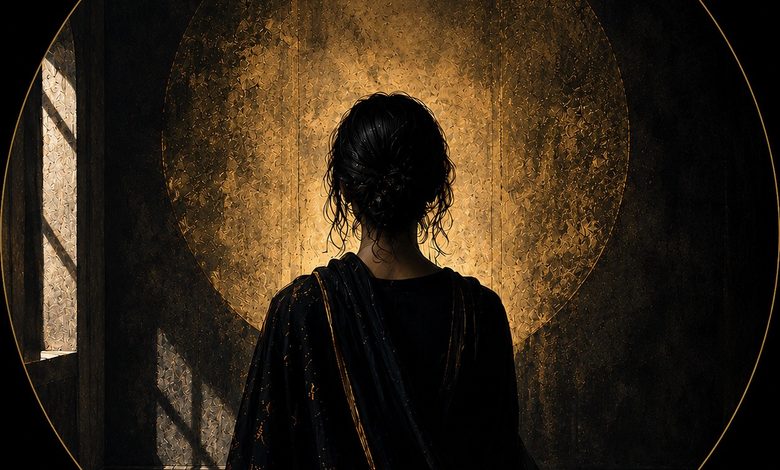
The book begins with “The Cage” — the expectations constructed around a girl from childhood: education, career, marriage, children and the continuation of an established social order.
The details may differ across cultures, but African women will recognise versions of the same checklist: be educated, but not intimidating; build a career, but remember your “real” responsibilities; be attractive; be respectable; marry; have children; keep the marriage together; protect the family name.
And, above all, do not make anyone uncomfortable.
This is where the book becomes particularly interesting as a feminist text.
MissFit Writes does not simply attack men, religion, marriage or tradition. Instead, she examines the contradictions within systems that are often treated as unquestionable. A recurring concern is the way cultural expectations can become indistinguishable from religious teachings, particularly when those expectations are used to regulate women’s choices.
Her discussion of marriage is one example. The book questions why marriage can appear to transform a woman’s identity while leaving a man’s essentially untouched. It also distinguishes between the religious bond and the cultural performance surrounding it:
“The bond was new; she was not.”
That distinction has relevance well beyond South Asia.
The book also examines the economics of being a woman. Beauty becomes a marketplace. Marriage becomes a social investment. Education becomes a status symbol. Careers become family bragging rights. Even hobbies are encouraged to become businesses.
Existence itself can begin to resemble a résumé.
Not Who are you? or What makes you happy?, but What do you do?
Its criticism of beauty culture follows the same line of thought, questioning the endless pressure placed on women to correct, improve, conceal and purchase their way toward acceptability.
Yet the book is not relentlessly heavy.
Humour is one of its most effective tools.
MissFit Writes can move from anger to absurdity within the same discussion, allowing the reader to laugh before realising that the joke has exposed something deeply uncomfortable.
Because women’s experiences are not confined to one emotional register.
Sometimes women cry. Sometimes they rage. Sometimes they pray. Sometimes they joke because the alternative is screaming.
As the book moves through The Cage, The Crack, The Grey, The Fire and finally The Flight, the material becomes darker, confronting abuse, silence, trauma, grief, religious hypocrisy, marital suffering and the consequences of prioritising family reputation over women’s safety.
This is where the feminist argument becomes most urgent:
Silence is not neutral.
Girls learn what they are permitted to say by watching what happens to women who speak.
The book repeatedly returns to the “good girl” who remains quiet; the divorced woman treated as damaged; the woman whose body is scrutinised; the woman whose faith is judged through her clothing; and the woman expected to endure because endurance has been presented as virtue.
These are not exclusively Pakistani concerns. Their forms vary, but similar pressures exist across cultures and communities.
The final movement, The Flight, offers a different possibility.
The woman who has spent years questioning whether something is wrong with her begins to question the structure around her.
Perhaps she was never broken.
Perhaps the cage was.
That shift gives the book its strongest feminist argument. It is less interested in teaching women how to survive oppressive systems than in asking why women were expected to survive them in the first place.
For Nigerian and African readers, the book offers comparison rather than simple identification. The cultures are different. The religious and social contexts are different. But the questions surrounding respectability, marriage, appearance, obedience and female autonomy can travel surprisingly well.
It engages with a much broader question:
What happens when a woman finally stops confusing being acceptable with being alive?
For women who have been called difficult, stubborn, too loud, too ambitious, too emotional, too independent — or simply “different” — there may be uncomfortable recognition here.
Not every story will look familiar.
The question underneath it might.
I Did Not Survive. I Just Refused To Stop. is messy, funny, angry, vulnerable and unapologetic. It does not claim to have all the answers.
Instead, it keeps asking questions.
And for women who have spent their lives being told which questions they are allowed to ask, perhaps that is where freedom begins.
Ten per cent of proceeds from every copy sold also supports education and skills development for underserved communities in Pakistan, extending the book’s emphasis on independence beyond its pages.