|
Getting your Trinity Audio player ready...
|
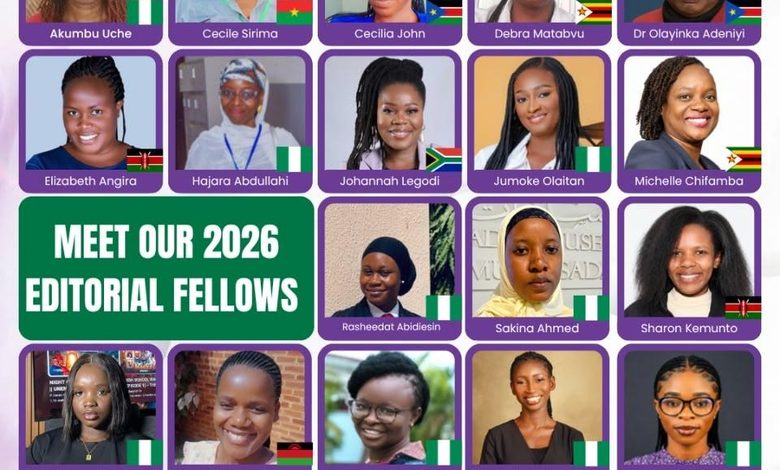
Naija Feminists Media (NFM) held a capacity-building workshop for its 2026 Editorial Fellowship on Reproductive Health on Tuesday, October 27, preparing fellows to report on reproductive health during the 16 Days of Activism Against Gender-Based Violence, observed annually from November 25 to December 10.
The virtual workshop brought together the fellowship’s facilitators and participants for sessions on the history and relevance of the 16 Days of Activism, reproductive rights and access to healthcare, investigative reporting, and the application of feminism to journalism. The training focused on producing stories that centre women’s lived experiences, investigate systemic failures and hold institutions accountable.The fellowship is intended to address gaps in media coverage of women’s experiences, particularly in reproductive health, by equipping journalists to report beyond individual cases and examine the policies, institutions and social conditions shaping women’s lives.
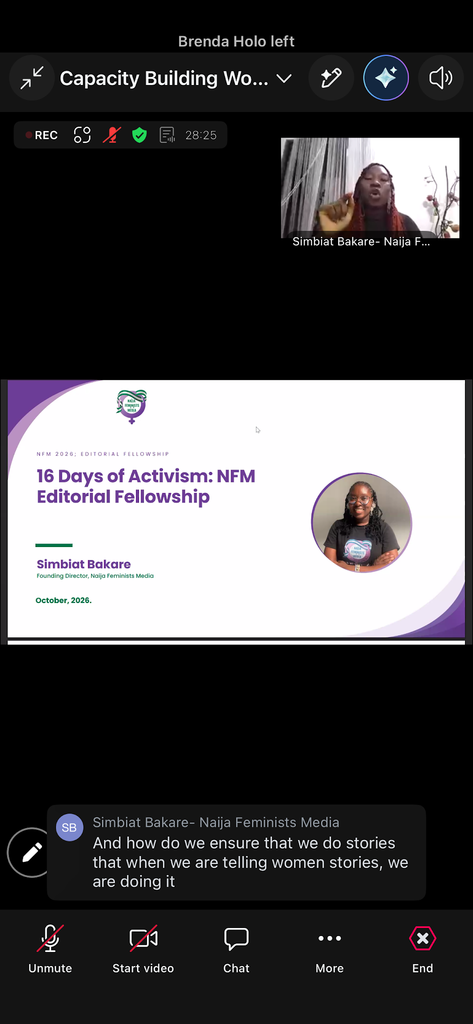
The workshop opened with Cynthia Velle, NFM staff writer and moderator, welcoming participants and introducing the media organisation. The first session, led by NFM founder Simbiat Bakare, examined the history and progress of the 16 Days of Activism, the campaign’s relevance to the fellowship and the role journalists can play in addressing violence against women and girls. The session connected the campaign’s focus on gender-based violence with reproductive health reporting, highlighting the need for stories that go beyond individual experiences to investigate the conditions and institutional failures affecting women’s access to healthcare, information and bodily autonomy.
The fellowship’s focus on reproductive health creates an opportunity to report on issues including maternal health, access to reproductive healthcare and safe abortion, as well as the barriers women encounter when seeking services. These stories can help expose gaps between policies and the realities women experience and draw attention to the institutions responsible for addressing them. The training also emphasised the need for journalists to approach women’s experiences with care and dignity, centre women and girls in their reporting, and make deliberate efforts to include female experts whose professional knowledge can help explain the issues under investigation. Fellows were encouraged to approach their stories as opportunities to produce journalism with a clear public interest purpose. Beyond documenting a problem, a story should help audiences understand how the problem occurs, who is affected, who has the authority to address it and what accountability should look like.

The second session focused on reproductive rights and reproductive health. Osaruonamen Ibizugbe, gender and disability advocate and founder of The Pink Compass Initiative, presented on: Reproductive Health Reporting: Rights, Realities, Access and Stories That Serve the Public.
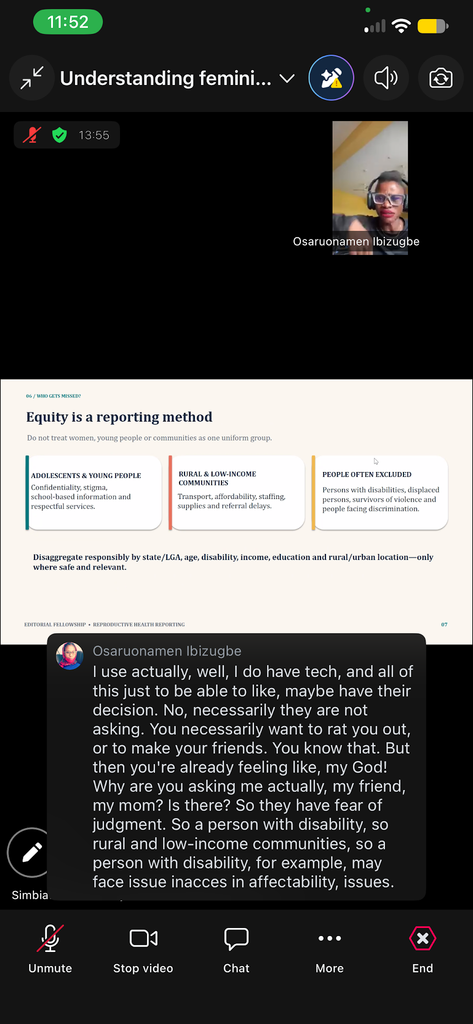
The presentation challenged the narrow treatment of reproductive health as an issue concerned only with pregnancy and childbirth. It defined reproductive health as encompassing physical, mental and social wellbeing in matters relating to the reproductive system. A central question in the sesstwas:
“What prevents people from getting the information, choices and care they need and who can change that?”
The question offers journalists a starting point for examining reproductive health as both a healthcare issue and a matter of rights. Access to services alone does not guarantee that women can use them safely, affordably or with dignity. Laws, public policies, funding decisions and the quality of service delivery all influence whether reproductive rights are realised in practice. The session encouraged fellows to turn these gaps into specific, investigable questions. Instead of reporting broadly on family planning in Nigeria, for example, a journalist could investigate why patients travel long distances for a service despite having a nearby primary healthcare centre. Journalists were encouraged to combine the experiences of people seeking care with relevant records and independent expert insight. Potential sources include patients, caregivers and community advocates; facility records, budgets, procurement documents, NDHS data, health information systems and audit reports; and experts such as clinicians, midwives, public health researchers, health economists and lawyers specialising in rights and Osas also warned fellows against promising anonymity that cannot be guaranteed, and urged reporters to consider whether names, photographs, locations or digital traces could expose a source to harm.
A strong reproductive health story, should move from a human experience to a wider pattern, explain the mechanisms behind the problem, identify who is responsible and provide useful, verified service information where appropriate. The aim is to report with both rigour and humanity without reducing the people involved to case studies.
The second session was facilitated by Elizabeth Ogunbamowo, an award-winning journalist with DUBAWA, and she facilitated a session on investigative reporting, covering its purpose, ethical guidelines, tools and potential impact.
The session introduced investigative journalism as a process of uncovering information that may not be immediately visible and examining issues through research, source development, records and verification. The work requires more than conducting interviews: journalists must identify patterns, test assumptions, analyse available data and seek evidence that supports or challenges the claims being investigated. Skills highlighted in the session included research, interviewing, data analysis, storytelling, clear communication, emotional intelligence and knowledge of legal and ethical responsibilities. The process can involve speaking with affected people, healthcare providers, researchers and other relevant sources, while examining records such as hospital documents and public budgets where access is lawful and appropriate. The discussion also addressed the responsibilities that come with reporting on sensitive subjects. Accuracy, privacy, fairness, informed consent and source protection must remain central, especially when a story involves reproductive health, sexual violence or other experiences that can expose people to stigma or retaliation.
A participant raised challenges encountered while reporting on teenage pregnancy in Lagos, including reluctance among sources to have their names published because of stigma. The discussion highlighted the need to respect a source’s request for anonymity while maintaining the accuracy and fairness of the reporting.
The final session, led by Maryam Umar, journalist at Naija Feminists Media and a 2025 Editorial Fellowship fellow, looked at how feminism can be applied to journalism, including investigative and feature writing centred on women. Her session: Understanding Feminism and Its Application to Journalism, spoke on how feminist reporting strengthens journalism by asking who is affected, whose experiences are missing and who should be held responsible. Drawing on the Feminist Investigative Journalism Handbook and examples of NFM’s reporting, the presentation challenged the idea that a headline or report is automatically fair simply because it appears neutral. Word choices can obscure violence, minimise harm or remove responsibility from the person or institution involved. One example contrasted the description “jealous husband” with the more direct wording, “A man killed his wife (femicide).” The point was that describing a perpetrator through jealousy can frame his actions as an emotional reaction rather than a decision for which he is responsible.
Other examples examined how phrases such as “helping out” can conceal child labour, while “sanitation challenges” can obscure a child welfare problem. In reproductive health reporting, describing a procedure as a “controversial stitch” can leave out the central question of whether cutting was carried out without consent. The session stressed that feminist journalism does not mean substituting opinion for facts, lowering standards of proof or limiting reporting to topics traditionally labelled as women’s issues. Instead, it requires journalists to investigate the facts while paying attention to gender, power, whose voices are heard and how language shapes public understanding.
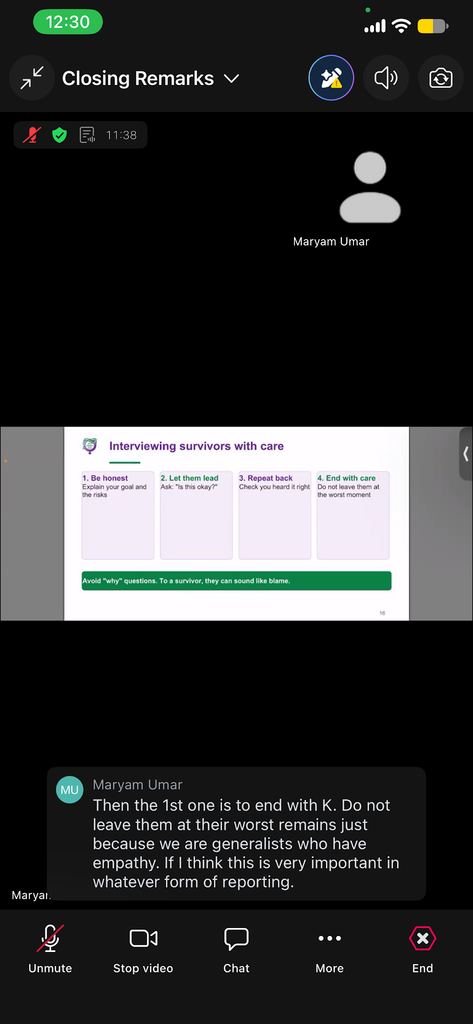
Journalists were warned against questions that could sound accusatory or suggest that a survivor is responsible for the harm experienced. Protecting sources may also involve changing names, blurring children’s faces, obtaining informed consent and deciding on anonymity before recording rather than after a story has been written. The session also encouraged journalists to work with activists and relevant organisations where appropriate, respect the risks they face, and share reporting outcomes with the people and communities involved.
Across the sessions, the workshop linked reproductive health reporting with evidence led investigation, ethical practice and a feminist approach that centres women’s experiences. The training encouraged fellows to identify reportable questions, seek out affected women and girls, consult relevant female experts, examine available data and records, and investigate the decisions and systems shaping access to reproductive healthcare. Participants were also encouraged to seek support from NFM when they needed help identifying or connecting with relevant experts. The fellowship’s collaborative approach is intended to help fellows develop their stories, receive editorial feedback and amplify their reporting through publication.
As the 16 Days of Activism approaches, the fellowship offers a platform for reporting on reproductive health issues that are often reduced to statistics, treated as private matters or left out of wider conversations about violence and inequality. The workshop training also provided a clear responsibility on journalists, which is to report what the evidence establishes, listen to the people most affected, protect their dignity and also ask questions.