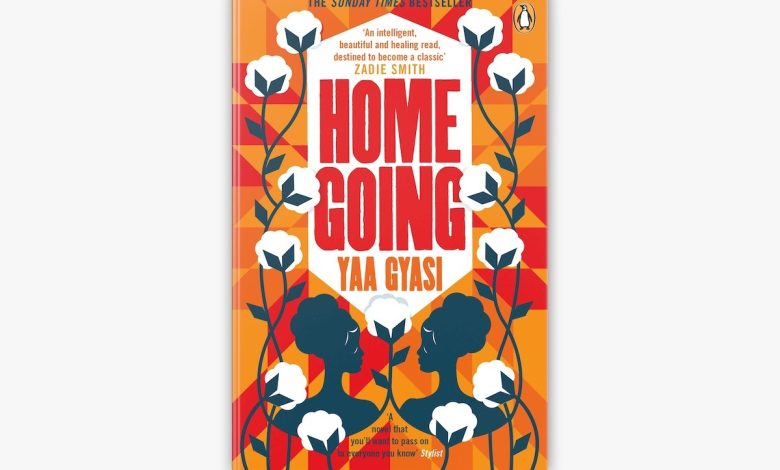
Book Review: Reclaiming Women’s Voices in History in Yaa Gyasi’s Homegoing
|
Getting your Trinity Audio player ready...
|
Summary: Homegoing follows the stories of two half-sisters – Effia and Esi who live in 18th century Ghana and their descendants through time and space. The novel highlights how systems of oppression—colonialism, racism, and patriarchy specifically target and exploit Black women’s bodies, labour, and autonomy, while simultaneously celebrating their resilience and role as keepers of history.
While traditional historical narratives privilege the exploits of men, kings, and colonisers, Yaa Gyasi centres her critically acclaimed debut novel Homegoing on the legacy of slavery, highlighting how systems of oppression—colonialism, racism, and patriarchy specifically target and exploit Black women’s bodies, labour, and autonomy, while simultaneously celebrating their resilience and role as keepers of history.
Homegoing follows the stories of two half–sisters– Effia and Esi who live in 18th-century Ghana and their descendants through time and space. Effia becomes the wench (not wife) of the British governor of Cape Coast Castle and is the matriarch of the Ghanaian line of the family; while Esi is captured in a tribal raid, imprisoned in the horrific dungeons directly beneath Effia’s quarters, and sold into American slavery. She later becomes the matriarch of the American line of the family.
While it is primarily recognised as a historical saga about the legacy of slavery, the author deeply anchors the narrative in black feminist thought and intersectionality. The narrative engine of the novel begins with Maame, an enslaved woman whose forced concubinage to an Asante warrior results in her first daughter, Effia. She escapes her captivity by setting a devastating fire, later bearing a second daughter, Esi, in Fanteland. Maame’s fire symbolises both the trauma of patriarchal captivity and the radical, destructive spark of female self-determination. Because Maame is forced to flee, her daughters are separated, never knowing each other. This original rupture creates two distinct lineages that expose the intersectional horrors of British imperialism in Africa and racial capitalism in America.


A central feminist critique of Homecoming is the way Yaa analyses how women’s bodies are denied autonomy and treated as property. She highlights how European and African patriarchies used women’s bodies as political and economic capital. In the Ghanaian chapters, women are used to cement trade alliances with white colonisers. This is demonstrated in the way Effia’s stepmother bartered her for a bride-price, and her body is used to legitimise a British governor’s presence.
She is stripped of choice, forced into the role of a “castle wench” to secure her family’s safety. In the American chapters, the novel confronts the intersection of capitalism and patriarchy through forced breeding. Ness’s body (Esi’s granddaughter) is valued solely for its capacity to produce future labour. Her sexuality and reproductive organs are completely weaponised against her. These two women’s stories illustrate how slavery stripped Black women of the foundational feminist right: bodily autonomy.
Throughout the book, male privilege often protects men while leaving women vulnerable. Ohene Nyarko uses Abena sexually but refuses to marry her because it doesn’t suit his political/economic status as a cocoa farmer. Robert abandons Willie because his light skin allows him to access white male privilege, leaving her to bear the brunt of racialised poverty alone.
Conventional historical literature is overwhelmingly patriarchal, tracing power, names, and legacies through men while erasing women. Yaa radically subverts this by making a woman, Maame, the root of the entire 300-year family tree. Black The necklace acts as a physical manifestation of a matrilineal line. It bypasses male ownership, moving from Maame to Effia, down through generations of women, until it reaches Marjorie. Even when the American branch loses its name and history due to the slave trade, the bloodline endures because of the physical survival of the mothers (Esi, Ness, Willie). Gyasi argues that history is not just made by treaties signed by men, but preserved in the wombs and memories of women.
Ultimately, Homegoing is a profound act of feminist reclamation. Yaa Gyasi shifts the historical lens away from white, male conquerors. Instead, she centres the generational survival of Black women.