|
Getting your Trinity Audio player ready...
|
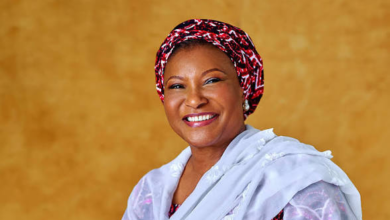
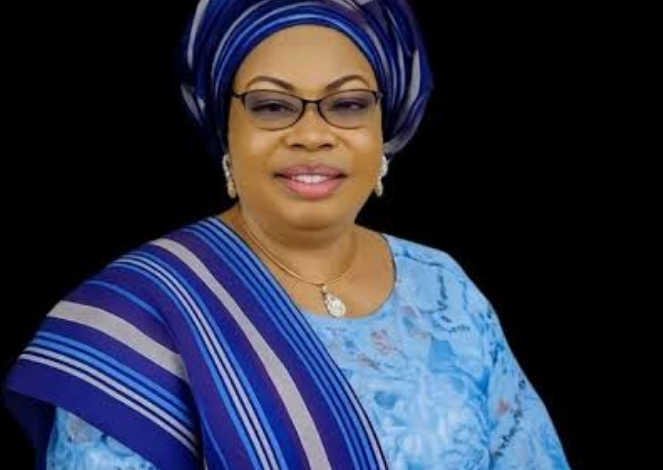
As Osun State goes to the polls for its governorship election today, August 15, Adeagbo Yemisi of the Action Democratic Party (ADP) is the only woman among the candidates seeking to become the state’s next governor.
Yemisi, a retired school principal and educationist, emerged as the ADP’s governorship candidate in December 2025 after winning the party’s primary election. An indigene of Osogbo, she previously worked in education and administration and is a former member of the Nigeria Union of Teachers. Her background in education has shaped much of her campaign.
She has identified education, healthcare, agriculture, and women’s empowerment as areas she would prioritise if elected, drawing on her years of experience in the education sector and public service. In June, she said women’s empowerment would be one of her priorities, alongside healthcare and agriculture. She also argued that her experience outside mainstream party politics gives her a different perspective on the issues facing the state’s residents.
Yemisi has also spoken about the position of women in Osun politics, particularly the absence of women in the state House of Assembly. Her campaign for the governorship therefore comes at a time when women’s presence in the state’s elected political leadership remains limited. This August 15 election will feature 14 gubernatorial candidates, but only one is a woman. Yemisi is also the only female governorship candidate on the final list released for the election. Across the governorship and deputy governorship tickets, only two women are contesting, according to recent reports on the final candidate list.

Her candidacy comes against a larger national scale in which women continue to occupy a small share of elected political positions. The problem is particularly visible at the point where political parties decide who gets to contest. Women seeking elective office continue to encounter barriers including the high cost of campaigns, unequal access to party structures and political networks, sexual and physical harassment, political violence and expectations that can discourage women from entering politics. The result is a political setting where women may make up a substantial part of the electorate but remain a small minority among those seeking political power.
In the 2023 elections, only 1,046 of the 10,225 aspirants recorded across elective positions were women, representing about 10.2 per cent. Of the 416 governorship candidates across the 28 states holding elections that year, only 24 were women, roughly six per cent. The results were even less encouraging. The 10th National Assembly ended up with only three women among 109 senators and 17 among 360 members of the House of Representatives. At the state level, only 48 women won seats in the 2023 state assembly elections out of 988 available seats. Yet, there have been women willing to try.
In 2015, Professor Remi Sonaiya became the only woman among 14 presidential candidates. In 2023, Chichi Ojei became the only woman on the presidential ballot among 18 candidates after the withdrawal of another candidate. She was only the third woman in Nigeria’s history to contest the presidency.
The governorship race has produced more female candidates, but rarely enough to be recognised. In 2023, 24 women contested governorship elections across 28 states, including Aisha Dahiru Binani in Adamawa, who came closer than any Nigerian woman had previously come to winning a governorship election. Her apparent victory at the state collation centre was overturned by the electoral process, and Ahmadu Fintiri was eventually declared the winner.
The women who make it into political office also have to contend with a political culture that can be particularly hostile to them. Senator Natasha Akpoti-Uduaghan’s experience remains one of the clearest recent examples. In 2025, Senator Natasha accused Senate President Godswill Akpabio of sexual harassment. Akpabio denied the allegation. The Senate’s ethics committee rejected her petition on procedural grounds, and she was subsequently suspended for six months over alleged breaches of Senate rules, including refusing to sit in her assigned seat and speaking without recognition. That experience raises an uncomfortable question about what Nigerian politics demands of women who want to participate in it.
A woman has to decide to enter a political system in which she may have less access to money, party structures and established political networks. She has to secure a nomination, survive a campaign, and then convince voters to choose her, while still navigating additional scrutiny that extends beyond her policies and political record, with her appearance, relationships, age, personality, and private life frequently becoming part of public debate. This also does not end with getting women onto the ballot. The lack of women’s participation in politics cannot be explained entirely by the obstacles women face within political parties.
There is also the electorate. Women make a large share of Nigeria’s voting population, but there is no automatic political alliance between female voters and female candidates. Women vote across different parties, ethnic, religious, regional and ideological lines. A woman on the ballot does not necessarily mean women will vote for her. But that reality also creates another conversation worth having: what voters are actually being offered. A woman’s presence in political office does not automatically guarantee that she will prioritise issues affecting women.
Female politicians can hold positions across the political spaces, including positions that do little to challenge the policies or social structures that disadvantage women. There is a difference between having more women in political office and having women in political office who are willing to use that position to address issues that affect women and girls, from gender equality, maternal healthcare and menstrual health to gender based violence and Femicide, unpaid care work, economic exclusion, education and women’s access to land, credit and political power. These distinctions matter because women in politics are not automatically feminists. A woman can enter politics and reproduce the same structures that have kept other women out. She can also use political power to challenge them. Representation matters, but so does what elected representatives do with the power that comes with it. Women want their interests reflected in government and that matters.
As Nigeria moves towards the 2027 general elections, women are once again entering the contest at different levels. By May 2026, four women had emerged as presidential candidates among the parties that had completed their processes, although reporting on the field has varied as party primaries and candidacies continue to change. Esther Nkem Okereke of the National Rescue Movement, Anita Zugwai-Chukwu of the Young Progressives Party and Ada Fredrick of the National Democratic Party were among the women reported to have emerged as presidential candidates by June, while other women were contesting or seeking nominations for legislative and other offices.
INEC has a gender policy aimed at promoting women’s participation in elections and advancing a more inclusive electoral process. However, the commission does not choose party candidates. Political parties decide who receive their tickets, making their own nomination processes an important part of the question of women’s representation in Nigerian politics, and that gap is particularly clear on this year’s governorship ballot.
Yemisi will be competing against 13 male candidates for the office of governor. On August 15, Osun voters will decide which candidate will lead the state for the next four years. The gender outcome is predictable already; a man will emerge, and patriarchal political underrepresentation of women continues.