|
Getting your Trinity Audio player ready...
|
Summary: Jenifatu, a legal practitioner, researcher, and writer, speaks on exclusion within feminist spaces, the weaponisation of poverty against women, the limits of legal reform without cultural change, and the courage required to build principled feminist movements.
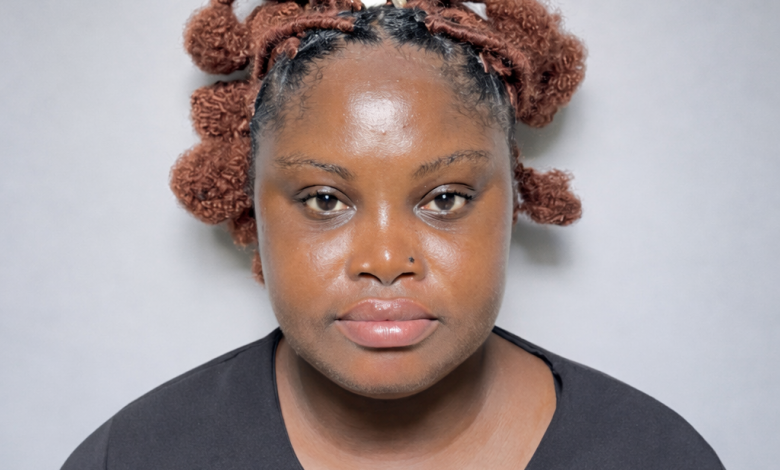
Jenifatu Oshiozuwe Yakubu is a legal practitioner, researcher, writer, and speaker whose work sits at the intersection of law, feminism, and social justice. Through critical analysis and lived experience, she examines gender equality, mental health, inclusion, and the structural forces that shape the lives of women and girls.
Committed to justice, compassion, and truth, Jenifatu uses legal practice, research, and writing to challenge harmful narratives and advance honest public conversations about gender, power, and dignity. In this conversation with Naija Feminists Media, she reflects on a feminist consciousness that preceded the word itself, the systemic issues demanding urgent confrontation, and what solidarity truly requires.


Insights from Jenifatu on Body Politics, Cultural Patriarchy, and Feminist Courage
- When and how did you personally come to feminism? Was there a moment, experience, or process that shaped your feminist consciousness?
For me, feminism did not begin with discovering the word. The values came first. Long before I encountered the term, I already had a strong instinct for justice and equality. As a child, I constantly questioned the expectations placed on girls and boys.
I never liked rigid gender roles or the idea that men and women should occupy unequal positions in society. Growing up as the first child in my family also shaped my perspective. I tried to model fairness in how I related with my siblings and often found myself questioning norms that seemed unjust. I was an inquisitive and strong-willed child who questioned everything.
One of the questions I asked most often was simply “why?” These questions sometimes led to intense arguments when I shared my perceptions about gender equality. But those conversations were part of how my worldview developed. It was not until my time at the university, during an English and Literature class, that I encountered the term feminism.
Learning about it felt like discovering a language for ideas I had always carried. I realised that the values I believed in were part of a broader movement and intellectual tradition. In that sense, feminism did not arrive suddenly in my life. It was recognition rather than discovery. The name came later, but the convictions had always been there.
- What issues affecting women and girls are you most focused on right now, and why do you believe these issues require urgent attention?
My current focus includes exclusion within feminist spaces, gender based violence, body politics and the systemic ways women are pushed out of full participation in society. One issue that concerns me is the growing tendency to conflate some cultural or religious doctrines with feminism, even when those doctrines are rooted in patriarchy.
When patriarchal systems attempt to wear the language of feminism, it distorts the meaning of feminist advocacy and weakens the struggle for genuine equality. Another issue is the pathologisation of women’s trauma while the root cause remains largely untouched.
Women are often expected to manage the psychological consequences of harm while the structural cause, which is male violence, is left to thrive without serious accountability. I am also deeply concerned about body politics and the way women’s bodies are policed and controlled. Poverty is another major factor that is often weaponised against women.
Economic marginalisation can function as a form of violence that impoverishes women, restricts their opportunities and prevents them from showing up fully in society. When women lack economic security, they are more vulnerable to exploitation, exclusion and abuse. These issues require urgent attention because they are systemic.
Women who speak their truth or challenge these structures are often harassed, threatened or silenced through intimidation and male violence. Violence becomes a tool used to keep women in line and maintain the status quo. Confronting these systems is necessary if women are to live with dignity and autonomy.
- From your perspective, which law, policy, or systemic change should be prioritised to improve the lives of women and girls, particularly in Nigeria?
Legal reforms are important, but they cannot succeed in isolation. For meaningful change to occur in Nigeria, we must confront the deeper cultural structures that sustain misogyny and patriarchy. When harmful beliefs remain embedded in culture and social values, even progressive laws can become ineffective in practice.
In many cases, it becomes like pouring water into a basket. The framework may exist on paper, but the social environment prevents it from working as intended. Misogyny and patriarchy remain deeply entrenched in Nigerian society and are often reinforced through culture and religion. These systems shape how women are treated in families, communities and institutions.
They also influence how violence against women is tolerated or dismissed. Culture, however, is not static. It evolves over time. Part of feminism’s work is to challenge harmful cultural narratives and create space for more egalitarian ways of thinking about gender and power. This requires critical engagement with both culture and religion, because these institutions have historically shaped gender expectations.
- What does feminist solidarity and collective action look like to you, and what message would you like to share with younger feminists?
Feminist solidarity means standing together in the struggle to dismantle patriarchal systems that limit women’s autonomy and dignity. It means speaking our truth and creating safe spaces where women can share their experiences without fear of intimidation or violence.
Solidarity also involves using our positions of power and privilege to advocate for women who are more marginalised. Feminism must always remember the women who are pushed to the edges of society and ensure that their voices are not erased.
For younger or emerging feminists, one lesson from my own journey is the importance of intellectual honesty. Feminism requires the courage to question systems that society often treats as unquestionable. Part of that process may involve decentering men and critically examining the influence of religion and culture in shaping gender inequality.
Sometimes this questioning begins within our own families and communities. Earlier in my life, I tried to reconcile feminist values with religious beliefs that conflicted with them. That process created significant internal tension and cognitive dissonance, trying to perform mental gymnastics to reconcile them.
Eventually, I had to confront the contradiction and choose the values that aligned most clearly with justice and equality. My message to younger feminists is to remain curious, courageous and principled. Ask difficult questions, challenge systems that limit women and continue building communities of solidarity that push society toward genuine equality.